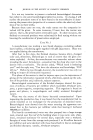
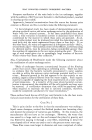
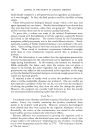
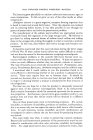
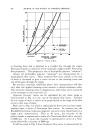
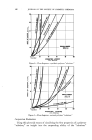
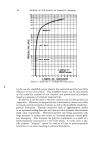
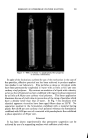
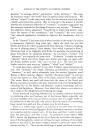
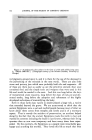
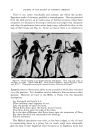
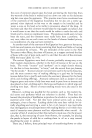
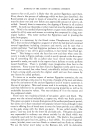
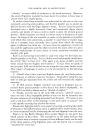
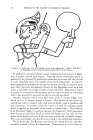
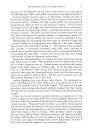
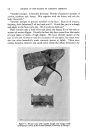
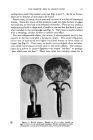
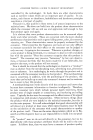
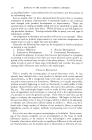
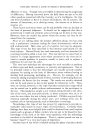
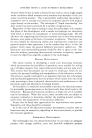
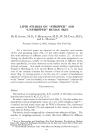
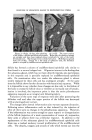
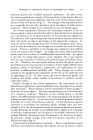
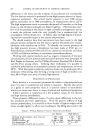
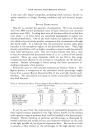
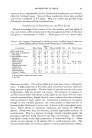
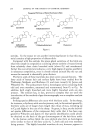
146 JOURNAL OF THE SOCIETY OF COSMETIC CHEMISTS $#•R/N• ( ......... o) Figure 2.--Types of flow. to shearing force and is depicted as a straight line through the origin. Most pure liquids or solutions of' low molecular weight exhibit Newtonian flow properties. This property is rare in hydrophilic polymer "solutions." Almost all hydrophilic polymer "solutions" are characterized by a pseudoplastic flow curve. These materials flow more readily as the rate of shear is increased to give a curve convex to the shearing stress axis and which goes through the origin. By contrast, materials exhibiting plastic flow characteristics will flow only after the applied shearing stress exceeds a critical minimum value. This minimum shearing stress is designated as yield value and is measured as the intercept on the stress axis (2). Apparent viscosity values can be calculated for any shear range as demonstrated in Fig. 2 in the case of the plastic flow curve. Viscosity for any range of shear is shown to be proportional to the slope of the flow curve in that area of shear. Refer now to Fig. 3 in which a typical plastic flow curve has been super- imposed upon a series of Newtonian flow curves. In common use, the Brookfield instrument expresses apparent viscosity of any liquid based on a single r.p.m. determination. Thus at 40 r.p.m., the viscosity of the plastic sample is represented in terms of a NewtonJan fluid with a viscosity of 2000 cps. At 5 r.p.m. the viscosity is represented in terms of a New- tonian fluid with a viscosity of 8000 cps. It will be noted in Fig. 3 that the plastic flow curve is characterized by

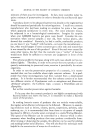
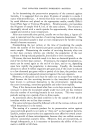
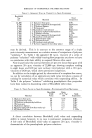
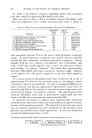
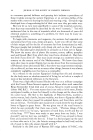
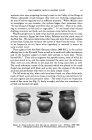
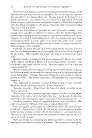
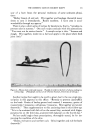
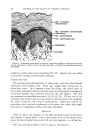
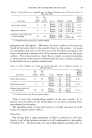
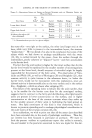
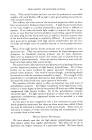
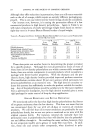
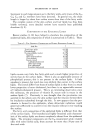
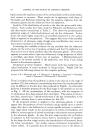
RHEOLOGY OF HYDROPHILIC POLYMER SOLUTIONS 147 0 • 20 • • •/• Fig. 3.•Plastic flow related to Newtonian flow. a rapidly increasing apparent viscosity as the r.p.m. is decreased. Although the absolute shear stress at 0 r.p.m. cannot be measured, extrapolation of the curve to 0 r.p.m. results in an estimated yield value which is acceptable for comparative purposes. This is approximated in the case of the Brook- field RVT instrument by (1) Brookfield Yield Value= (Apparent Viscosity at 0.5 r.p.m. -- Apparent Viscosity at 1 r.p.m.) 100 Polymer "Solution" Evaluation In Fig. 4 the specific flow curves for a series of representative synthetic polymer "solutions" are depicted. In this plot, a 25 per cent "solution" of low molecular weight polyacrylic acid is shown to be NewtonJan. Two per cent methyl cellulose is shown to be slightly pseudoplastic, whereas 1.5 per cent polyethylene oxide "solutions" are definitely pseudoplastic in nature. A plastic flow curve is found among the synthetic polymer "solutions" only in the case of 0.20 per cent Carbopol 934 (which will be referred to hereafter as a carboxy vinyl polymer). This polymer "solution" with plastic flow characteristics has been com- pared to a series of natural polymer "solutions" in Fig. 5. It is shown here that 3 per cent gum tragacanth prepared in a special manner exhibits a plastic flow curve. The curves for 2.5 per cent locust bean gum, 2.5 per cent sodium alginate, 1.5 per cent guar gum, and 3 per cent gum tragacanth (freshly prepared by low shear mixing) all are pseudoplastic in character.
Purchased for the exclusive use of nofirst nolast (unknown)
From: SCC Media Library & Resource Center (library.scconline.org)