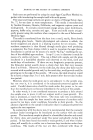
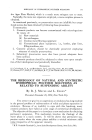
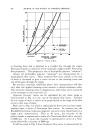
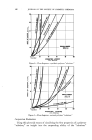
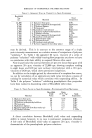
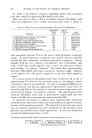
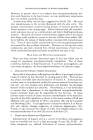
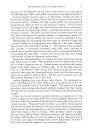
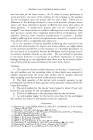
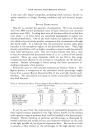
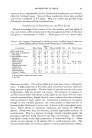
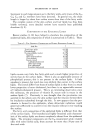
RHEOLOGY OF HYDROPHILIC POLYMER SOLUTIONS TABLE 1--APPARENT 20 R.P.M. VISCOSITY VS. SAND SUSPENSION 149 Brookfield V20, Sand cps. Material Suspension 22,800 2.5 % Locust bean gum 8 Hr. 9,740 3.0 % Gum tragacanth (homogenized) Permanent 8,360 2.5 % Sodium alginate 2 Hr. 8,040 1.5 % Guar gum 4 Hr. 6,350 0.25% Carboxy vinyl polymer Permanent 5,900 1.5 % Sodium carboxymethylcellulose 3 Hr. 3,200 2.0 % Methyl cellulose 1.5 Hr. 2,560 2.0 % Gum tragacanth (homogenized) 8 Hr. 2,420 0.18% Carboxy vinyl polymer Permanent 2,040 1.5 % Polyethylene oxide 3 Hr. 1,650 25.0 % Polyacrylic acid 1 Hr. 1,600 0.15% Carboxy vinyl polymer 48 Hr. 940 3.0 % Gum tragacanth (low shear prep.) 2 Hr. may be derived. This is in contrast to the common usage of a single point viscosity measurement as a relative means of comparison of polymer "solutions." In Table 1 the apparent 20 r.p.m. viscosity of a series of polymer "solutions" with widely varying flow properties are shown to have no correlation with their ability to suspend Ottawa silica sand. Note in particular the contrast between 2.5 per cent locust bean gum with an apparent 20 r.p.m. viscosity of 22,800 cps. showing complete settling in eight hours and 0.18 per cent carboxy vinyl polymer with a 20 r.p.m. viscosity of 2420 cps. which shows permanent suspension. In addition to the insight gained by observation of a complete flow curve, we can by calculation of an approximate yield value introduce a means of ranking by numerical value which correlates with suspending ability. In Table 2 the polymer "solutions" exhibiting pseudoplastic flow properties have been ranked in descending order of Brookfield yield value. TABLE 2--YIELD VALUE VS. SAND SUSPENSIoN--PsEuDOPLASTIC FLOW MATERIALS Brookfield Ratio Yield (Y.V./V•0) Sand Material Value 100 Suspension 2.5% Locust bean gum 80 0.14 8 Hr. 1.5% Polyethylene oxide 40 2.0 3 Hr. 1.5% Sodium carboxymethylcellulose 36 0.6 3 Hr. 1.5% Guar gum 32 0.4 4 Hr. 2.5% Sodium alginate 16 0.2 2 Hr. 3.0% Gum tragacanth (low shear make-up) 5 0.5 2 Hr. 2.0% Methyl cellulose 0 0 1.5 Hr. A direct correlation between Brookfield yield value and suspending ability is noted, however, in no case is permanent suspension obtained. A low ratio of Brookfield yield value to apparent 20 r.p.m. viscosity is characteristic of the pseudoplastic polymer solutions.

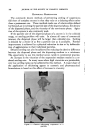
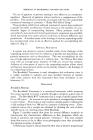
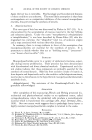
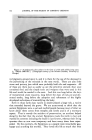
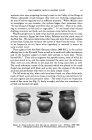
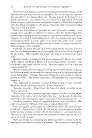
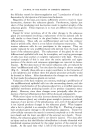
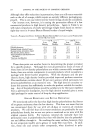
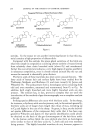
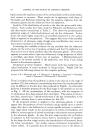
150 JOURNAL OF THE SOCIETY OF COSMETIC CHEMISTS In Table 3 the polymer solutions exhibiting plastic flow properties have been ranked by descending Brookfield yield value. Here not only is there a direct correlation between Brookfield yield value and suspension, but a critical minimum yield value is shown to TABLE 3--YIELD VALUE VS. SAND SUSPENSION--PLASTIC FLOW MATERIALS Material Brookfield Ratio Yield (Y.V./V=0) Sand Value 100 Suspension 0.15% Experimental carboxy vinyl polymer 500 6.4 0.25% Carboxy vinyl polymer 410 6.4 3.0 % Gum tragacanth (homogenized) 276 2.7 3.0 % Gum tragacanth (aged 2 months) 144 1.8 0.18% Carboxy vinyl polymer 136 5.6 0.10% Experimental carboxy vinyl polymer 124 7.2 0.15% Carboxy vinyl polymer 90 5.6 2.0 % Gum tragacanth (homogenized) 64 2.5 Permanent Permanent Permanent Permanent Permanent Permanent 48 Hr. 8 Hr exist somewhere between 90 and 124 above which permanent suspension results. In these laboratory evaluations, two months without noticeable settling has been arbitrarily considered permanent suspension. Several samples (0.18 per cent carboxy vinyl polymer) with a Brookfield yield value of 136 have actually aged for over a year in the laboratory without sand settling. In polymer "solutions" with plastic flow characteristics, the ratio of Brookfield yield value to apparent viscosity is high. Selection of the highest ratio will permit suspension in the most fluid appearing system. If a critical minimum Brookfield yield value of between 90 to 124 or approximately 107 exists for this particular sand, is it not logical to expect a minimum value for any material? In order to emphasize differences in sphere diameter and density, approximate experimental values were ob- tained for golf balls and for marbles in the same manner using various con- centrations of carboxy vinyl polymer solutions. The approximate critical minimum Brookfield yield value to permanently suspend golf balls was found to be 300, and to permanently suspend marbles, 900. It would be interesting to compare these experimentally determined minimum yield values with a theoretical value based on the physical charac- teristics of the particles involved. The theoretical force/unit area neces- sary to maintain suspension has been calculated for the particular sand, golf balls and marbles used in these experiments. In the case of spherical particles the following equation is valid-- Theoretical minimum Yield Value for permanent suspension in dynes/sq. cm. = Volume X Density'• •Volume X Density of• [ Acceleration '• of Particle ] -- k, Displaced Medium ] X k, due to gravity/ Cross Sectional Area of Particle
Purchased for the exclusive use of nofirst nolast (unknown)
From: SCC Media Library & Resource Center (library.scconline.org)