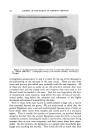
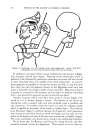
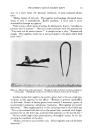
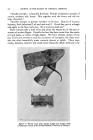
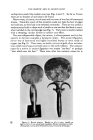
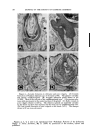
176 JOURNAL OF THE SOCIETY OF COSMETIC CHEMISTS and one was "sun" which perhaps derived from the most common shape of a mirror, a slightly flattened disk of the very shape by which the sun was depicted in the paintings and reliefs. Another name applied to a mirror is "life" and one can imagine a number of ways in which this might have come about. Mirrors were probably expensive objects, even the bronze ones, owing to the material and the amount of workmanship that went into producing one, and they were no doubt possessed only by the well-to-do. There is a plaintive line in a long text called "The Admonitions of an Egyptian Sage," a text which is full of disillusion and dismay, for it describes a period (2200- 2000 B.C.) after the disintegration of the highly centralized state in the Old Kingdom when everything in the country was topsy-turvy and in near anarchy, at least from the viewpoint of the somewhat conservative writer. The line that interests us describes, like many others in the text, the unfair upside down turn affairs have taken and illustrates the writer's objection to the destruction of the old ways and the disappearance of the good old days thus: "Behold, she who had no box now possesses a coffer. She who looked at her face in the water now possesses a mirror." CONSUMER TESTING AS A GUIDE TO PRODUCT DEVELOPMENT By N.H. ISHLER* Presented October 8, 1958, Seminar, New York City THE PRODUCT DEVELOPMENT function of a research laboratory is concerned with three principal areas of activity. These are: 1. Maintenance of quality of existing products while reducing cost or changing processing procedures or equipment. 2. Improvement of the quality of products already on the market. 3. Development of new products of adequate quality to secure and hold a consumer market. Quality is the key word in each of the preceding three statements. As used here, quality refers to those properties inherent in a product which can be altered or controlled by the chemist or technologist and which influence for good or bad the consumer's reception of that product. These properties include the appearance, convenience, flavor or odor and the texture of the product. Usually the package is also included, for it will have properties of utility, appearance and convenience which can be * Research Center, General Foods Corp., Tarrytown, N.Y.

CONSUMER TESTING A GUIDE TO PRODUCT DEVELOPMENT 177 controlled by the technologist. In foods there are other characteristics such as nutritive values which are an important part of quality. In cos- metics, such factors as cleanliness, healthfulness and deodorant principles constitute a vital part of quality. The point is, that quality in these terms is of utmost importance to the technical man. He alone can build into the product those characteristics which the consumer will see and use and appreciate well enough to buy that product again and again. It is obvious that some product characteristics can be measured objec- tively and rather precisely. These are concerned with the more absolute performance characteristics such as germ killing power, color, dirt removal, viscosity, etc. These characteristics cannot be properly evaluated by the consumer. Other properties like fragrance and taste are not only difficult to measure accurately but their effect on the consumer can be judged in only one way--by going to the consumer. Whenever a product changes, or a new product is being developed, it is necessary to deal not with standards but with the question "Does the consumer recognize that this product is better?" The consumer may perceive "bettemess" by her own observa- tions, or because she finds that the claims made for it are believable, but perceive she must, or the product will not succeed. Now it should be stressed that the technologist or chemist is a "product" man as distinct from the merchandising man, advertising man, promotion man or salesman. As a technologist, he works through the product and is concerned with the consumer reaction to that product. The merchandising man is concerned, in addition, with the positioning of the product the story that can be built up to catch the consumer's interest and to motivate her to want to buy this product. A merchandising man works directly with the consumer and knows that he must have consumer information to function intelligently. Therefore, he runs consumer tests which include personal depth interviews, blind product tests of single samples or comparisons, and marketing and selling tests. Typically he also tests the message and the effectiveness of his appeal in conjunction with product characteristics. Often he learns things about the product which are very helpful to the technical researcher, but this is not his main purpose. It is well acknowledged that good salesmanship will sell almost any product at least once, while repeat business must be built on the satisfaction of the consumer with actual characteristics or quality of the product itself. These are the same characteristics which we in Re- search and Development have as our responsibility to build into our prod- ucts. As "product" men we do not sell directly to the consumer, but we do deal directly with those product attributes which will be sold to the con- sumer. It follows then, that we must have a measure of product quality
Purchased for the exclusive use of nofirst nolast (unknown)
From: SCC Media Library & Resource Center (library.scconline.org)