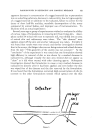
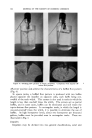
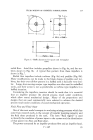
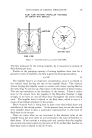
SOME THEORETICAL ASPECTS OF DENTAL CARIES CONTROL WITH DENTIFRICES AND MOUTH WASHES By L. S. FosmcI* Presented November 20, 195S, New York City DURING THE PAST few years attempts have been made to control dental caries by means of "oral hygiene" preparations. The results have not been uniformly successtiff either in regard to the degree of control, or in regard to reproducibility. It is quite probable that some of the varia- tions may be due to the inherent error entailed by the clinical examinations of the subjects. It is also quite likely that other uncontrolled variables are inherent in the carious process. Perhaps a review of the factors associated with the carious process may reveal some of these variables. It is generally believed that dental caries is caused by a characteristic acid decalcification of the inorganic portion of the tooth ibllowed by or accompanied by a degradation of the organic matrix (1). The acid is derived by an enzymatic glycolysis of the ingested carbohydrate in and under the dental plaque on the tooth surface. The carious lesion has definite morphological characteristics. It appears that the acid penetra- tion is through the highly organic cementing substance of the enamel. In many cases the penetration is such that the enamel rods simply fall out for want of support. When the acid reaches the dentine, it diffuses laterally as well as toward the pulp so that an inverted cone-type of lesion is pro- duced. THE TOOTH The inorganic portion of the tooth is essentially a hydroxy apatitc Ca•0(PO4)o(OH)a (2). The apatite is a polar compound and is completely ionized. It has a definite crystal structure. The apatite in dental enamel, however, contains numerous extraneous ions or impurities, in fact it con- tains every ion that is normally found in blood plasma. The exact location of these ions in the crystal structure is unknown however it is thought that they either occupy definite positions in the crystal lattice or that they are * Chemistry Dept., Northwestern University Dental School, Chicago 11,111. 283

284 JOURNAL OF THE SOCIETY OF COSMETIC CHEMISTS absorbed on the interface of the crystals. It is quite probable that both phenomena occur. These crystals are concentrated in the enamel rods which are almost purely inorganic. Around the periphery of the rods the cementing substance or organic matrix is dispersed. It is thought that tl• inorganic portion of this material is the same as the inorganic portion of the rod. However, it is highly contaminated with organic material, probably keratin, and hence is not so dense as the interior of the rods. If the apatite were pure, it would be converted to a soluble form, the di- or monophosphate at a pH of 5.2 (3). In so far as it is not pure, the solubility is modified depending upon the amount and type of other ions present (4). The ions such as carbonate, sodium, potassium and mag- nesium, have a tendency to increase the solubility. Ions such as fluoride tend to replace the hydroxyl group, and are bound more firmly so that enamel that has been treated with fluorides dissolves at a pH around 4.5, as contrasted with normal enamel which starts to dissolve at pH 5.2-5.6 (5). DENTAL PLAQUE The tooth in its normal environment tends to accumulate an organic coating. This coating, called the dental plaque (6-9), occurs in rather heavy masses on those surfaces of the tooth that are not normally cleansed by the act of mastication. It is about 70 to 80 per cent living and dead micro&rganisms contaminated with denaturized mucin, desquamated epi- thelial cells and various debris. It is primarily the micro6rganism con- tent of the plaque that furnishes the enzyme system for the glycolysis of sugars. The enzyme systems present presumably are a function of the type of organisms present. In caries active individuals the predominant plaque organisms are acidogenic. This is not true with caries immune individuals. The dental plaque can be readily removed by the usual oral hygiene pro- cedures when it is freshly deposited, but when permitted to accumulate it is held very tenaciously to the surface. Under ordinary circumstances, the plaques are removed by the normal brushing techniques from all of the readily accessible surfaces, but in those areas where dental caries normally occur tooth brushing does not remove the plaques. Hence it may be said that the normal tooth brushing procedures clean all the surfaces except those where caries are most likely to occur. The old slogan, a clean tooth will not decay, is probably correct, but it is impossible to clean those sur- faces where decay normally occurs by normal dental hygiene procedures. It is presumed that when sugars are taken into the mouth they penetrate the plaque and that portion of the acid that f•orms under the plaque on the tooth surface is protected by the plaque. The acids thus confined grad- ually penetrate and dissolve the tooth. It has been fully established that when sugars are placed upon caries active plaques in situ, acid potentials below pH 5.0 are fi'equently found from five to ten minutes after the appli-
Purchased for the exclusive use of nofirst nolast (unknown)
From: SCC Media Library & Resource Center (library.scconline.org)