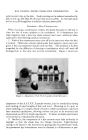
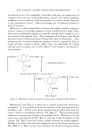
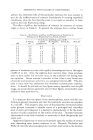
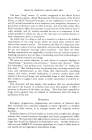
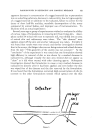
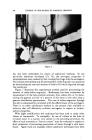
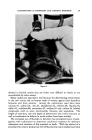
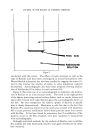
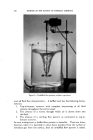
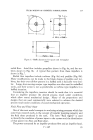
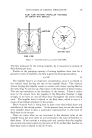
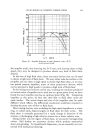
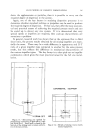
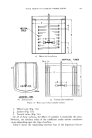
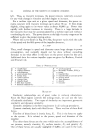
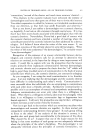
346 JOURNAL OF THE SOCIETY OF COSMETIC CHEMISTS Laboratory experiments should always be carried out with a range of impeller size to tank size ratios to determine how critical this' factor is. G^s-L•Qtr•r) CONTACTING Gas-liquid contacting is normally involved with absorption or stripping operations. In absorption, it is desired to absorb one or more of the components of the gas stream into the liquid phase. The gas may either remain dissolved in the liquid phase or may enter into a subsequent reaction with either a liquid reactant or a solid reactant. In stripping operations, an inert gas is passed through the tank and removes a com- ponent present in the liquid phase. In either of these operations, labo- ratory studies offer a very rigorous technique for scaling up to large size systems. By measuring the absorption rate as a function of mixer speed for three or four different speeds at a giv. en gas rate, and at one of these speeds for three or four different gas rates, it is normally possible to predict the ab- sorption characteristics of a full size system. These systems may be scaled up to batch or continuous operations or to multistage operations. By the use of standard impeller types in these studies, it is possible to accurately design the full size unit. In gas-liquid systems, mixing has a large effect on the absorption effi- ciency and it is desirable to accurately study the process characteristics of the system. Gas is normally admitted to the tank through an open pipe or sparge ring placed beneath the impeller (Fig. 12). Drawing gas down from the surface can work very well on small size units up to two or three feet in diameter. It does not work effectively in large diameter systems, unless gas is drawn down as a supplement to gas being introduced beneath the impeller. Laboratory mixers which draw gas down from the surface can be used ro give an indication of the process results, but they do not give the data needed for full scale design. BLENDING PROCESSES Blending of several miscible fluids is one of the most usual process requirements. Depending upon the tank size being used, different types of equipment are often encountered. The most effective flow pattern for blending is normally a baffled pattern, although in a very particular condi- tion of fluid viscosity and tank shape, unbafFled operation can be used. In vertical cylindrical tanks, blending may be accomplished by either top-entering or side-entering mixers. In tanks up to 100 gallons and fluids of 4000 centipoises or lower, portable or permanently mounted propeller type mixers are suitable (Fig. 1). These may be mounted in an angular off-center position to achieve the desired flow pattern. The power level

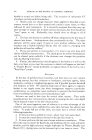
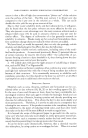
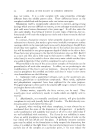
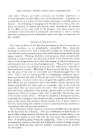
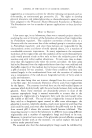
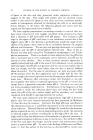
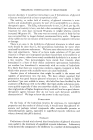
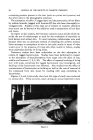
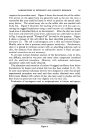
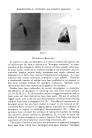
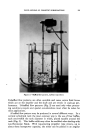
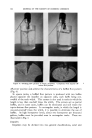
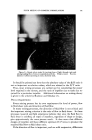
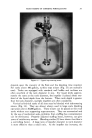
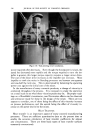
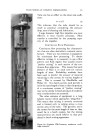
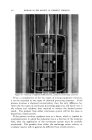
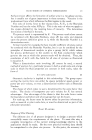
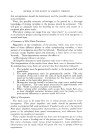
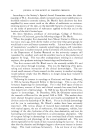
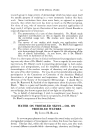
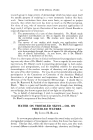
FLUID MIXING OF COSMETIC FORMULATIONS q47 Figure 13.--Typical top-entering mixer. depends upon the viscosity of the fluid and the blending time required. For tanks above 100 gallons, turbine type mixers (Fig. 13) are normally used, Tanks are equipped with standm'd wall baffles and turbines are often one-third of the tank diameter in size. For liquid levels approxi- mately the same as the tank diameter, the impeller is placed about one- third of the liquid depth from the bottom. When tank depth is greater than the tank diameter, multiple impellets are often considered. Vertical cylindrical tanks of all sizes may be blended with side-entering mixers (Fig. 14). They are almost always used in large scale blending operations above 20,000 gallons. These mixers can be placed on thin wall tanks without any supporting superstructure. They are economical and by the use of mechanical seals, problems from stuffing box contamination can be eliminated. Properly adjusted stuffing boxes, however, can give years of satisfactory service. Blending studies (2) have shown that flow is a controlling factor. A large ratio of impeller diameter to tank diameter is more effective than a small ratio. As the impeller size increases, the
Purchased for the exclusive use of nofirst nolast (unknown)
From: SCC Media Library & Resource Center (library.scconline.org)