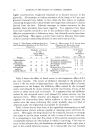
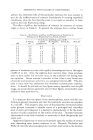
312 JOURNAL OF THE SOCIETY OF COSMETIC CHEMISTS of lipase in the skin and they presented rather impressive evidence in support of the idea. This might well explain why we obtained erratic results in the search for lipase in skin slices and very consistent positive results in homogenates obtained by disrupting the cells in an electrically driven blender in the latter, the sebaceous glands and canals were dis- rupted and the lipase made more available. We have applied preparations containing triacetin to normal skin sur- faces many times but in only roughly one-third of the instances has there been a decrease in pH detectable with pH papers. The decrease in pH stops in the region of pH 5 and since, in our conditions, normal skin is but slightly above pH 5, the decrease is probably just inside the range of reli- ability of the paper there seems to be no correlation between the original pH and acid formation. We are just now getting information on triacetin hydrolysis and the pH of dermatophyte infected skin. Most of the in- fections are tinea pedis caused by Trichophyton mentagrophytes and Tricho- phyton purpureum. There is no doubt in these infections that the pH of the skin is increased and in even moderately severe infections the pH may be neutral or even alkaline. Also, in these instances triacetin apparently is rapidly hydrolyzed and a pH in the area of 5.0 is obtained we are surprised that here again the pH does not go lower and we can not yet explain why it does not except, and this seems likely, that the skin is heavily buffered about this point. For the sake of convenience, our tests are made within 20-30 minutes after the first application and it might well be that this is not enough time since hydrolysis may be slowing up as the pH enters the lower area. However, after scanning a rather vast literature on the sub- ject we gather that there is no general agreement on the pH of normal skin except that it is generally somewhat below pH 6. Certainly our tests are not to be considered authoritative. Furthermore, if the biogenesis of free fatty acids is inside the sebaceous gland duct and along the hair shaft canal, the pH of the skin surface might well be secondary and variable compared with the pH in openings beneath the surface. We were quite impressed with the comparatively high pH of dermato- phytic skin but have recently learned from data presented by Rothman (5) that this may be common. Certainly this high pH must contribute to the infectious process as it solubilizes the protein in the microenvironment of the infection. Recently Burack and Knight (6) noted that the dermato- phytes in general are very active in deaminating amino acids the ammonia so released might contribute considerably to the high pH of the area. It might well be that the effectiveness of formulations of glycerol triacetate in treating dermatophyte infections is due to two factors: the inhibitory effect of the free acid upon the fungus and the return and maintenance of the area to a normal lower pH. In view of the findings of Bernstein and Herr- mann (7) that the surface of the skin has an elevated pH in certain non-

THERAPEUTIC POTENTIALITIES OF TRIGLYCERIDES 313 mycotic disorders it would be interesting to see if formulations of glycerol triacetate would provide at least symptomatic relief. The toxicity, or rather lack of toxicity, of glycerol triacetate is note- worthy and undoubtedly accounts for part of its acceptability as a chemo- therapeutic agent. The LD50, subcutaneously in rats, is 2.8 ml. per ks. (8). Likewise oral toxicity is low rats fed a diet containing 55 per cent glycerol triacetate for sixty days increased 90 grams in weight whereas controls increased 140 grams (9). The ester was not stored as such in body fat but was converted first to longer chained, unsaturated fatty acids. Irrigation of the rabbit eye for six minutes with triacetin caused no apparent irritation or damage. There is an area in the hydrolysis of glycerol triacetate in which some work should be done that is, the spontaneous hydrolysis by water when catalyzed by unknown substances. We have some observations here rather than real experiments. Some of us have made solutions of 25 per cent triacetin in 50 per cent isopropanol and have found them to be stable for at least three years others have noted considerable hydrolysis in a matter of a few months. Two dermatologists have stated that triacetin when formulated in a base of their choice underwent spontaneous hydrolysis yet another has formulated it extensively with no notice of hydrolysis. It is likely that there are nonenzyme catalysts, organic, inorganic or both, which when present with available water can cause hydrolysis. Another piece of information that might be useful is the extent and rapidity of penetration into the skin. We have always assumed that penetration was good because glycerol triacetate is very soluble in lipids and about 7 per cent soluble in water this belief has been fortified by the statement of Rothman (10) to the effect that lipid soluble substances pene- trate quickly especially if they are somewhat soluble in water. Is it likely that triglycerides of higher fungistatic fatty acids will not be as good chemo- therapeutic agents because they do not have such fortunate solubility characteristics ? We hope to know the answer in the near future. CONCLUSION On the basis of the hydrolysis kinetics by esterases, its toxicological properties and the results of clinical trials, it would seem that glycerol tri- acetate and perhaps related compounds offer considerable promise as chemotherapeutic agents, especially in superficial mycotic infections and where a lowered skin pH is desired. SUMMARY Preliminary clinical trials showed that formulations of glycerol triacetate were useful in the treatment of soperficial mycotic infections. Laboratory work showed the compound to be inhibitory to a number of dermatophytes
Purchased for the exclusive use of nofirst nolast (unknown)
From: SCC Media Library & Resource Center (library.scconline.org)