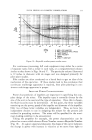
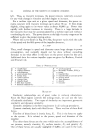
294 JOURNAL OF THE SOCIETY OF COSMETIC CHEMISTS the fact that it has not repaired any damage. Such dyes are perfect color- imetric indicators of the extent of damage suffered by the hair. When complexing anionic dyes with cationic agents to give these effects, it is sometimes necessary to use ethoxylated cationic materials for two reasons: they are less irritating, and they give a complex which is rather weak and more hydrophilic. In the same way, cationic dyes can be reacted with ethoxylated anionics and there are systems where it may be preferable (2, 3, 4, 9) to titrate anionics and cationic surfactants together in thepresence of dissolved dye. In the latter case, the dye then often partitions between the water of solution and the resulting water insoluble complex. It is wise to remember that such dye-surfactant complexes will not color the hair well except from a dispersion of relatively large particle size. Any agent which disperses them too well can destroy their effectiveness. On the other hand, if they agglomerate in very large micelies, they will produce gross surface films which rub off quite easily. Getting the proper dispersion is generally the most tricky part of formulating with such complexes. Many additives to the product--whether for reducing foam or enhancing it, for wetting or penetration purposes or for conditioning--may affect the final color yield quite drastically. T• Us• ov Gt•s ^st) S•Qt•s•rv•^•rxs Gums are used in hair dyes for the usual cosmetic reasons. They thicken the solution, make it feel richer, reduce dripping of the dye during applica- tion, may give wave setting properties and can reduce crocking. Methyl cellulose and other gums have been advocated (26, 29) as media for solid solutions of dyes in stick form. Gums may also be used to form dye com- plexes with special properties. Most natural gums are anionic and there- fore precipitate basic dyes. A cationic starch was recently introduced which shows some promise for formulations containing acid dyes. Sequestrants have many uses in a hair dye. Most dyes are sensitive to hard water and develop precipitates or color changes in the presence of some metallic ions. It is taken for granted that the manufacturer of hair color- ants realizes this and that he uses deionized water in his product. Even then however, he may occasionally contaminate it by such oversights as the use of copper or brass fittings in his plant. Also, his customer may dilute his product with very hard water. Precipitates formed under such condi- tions are not always visible in the bottle, but they tend to give streaky, dull effects (10) on the hair and the color will rub off more easily than usual. It is also wise to remember that keratin reacts with any polyvalent metal ion. Magnesium salts are used to "load" or build up the weight of wool in this manner, similarly to the weighting of silk with tin salts. Calcium, copper, iron, magnesium and the heavy metals will thus build up on hair which is constantly in hard or sea water. The body also excretes ingested

HAIR COLORING--MODERN FORMULATION CONSIDERATIONS 295 heavy metals by forming cysteine mercaptides in the hair and nails. Thus, there are many routes by which hair dyes may eventually contact and be precipitated by metallic ions. Since this is never desirable, sequestrants have a definite place in most formulations. THE EFFECT OF pH in most cases where a substantive dye is used to color the hair, the effect of pH is crucial. One of the reasons why the aromatic amines produce such wash-fast shades on the hair is that they swell it, due not only to their own pH but also to added alkali. They are thus able to penetrate into the hair somewhat before being oxidized into a pigment which no longer will wash out. Henna and other vegetable dyes have been applied from both alkaline and acidic media. Once frequently used in color shampoos to give color high- lights, the optimum pH for henna substantivity according to Harry (7) is pH 5.5. When dealing with simple solutions of acid dyes, it seems at first as if pH alone controls the color yield on the hair. Such solutions give relatively little color above pH 5, but as this is lowered below pH 3, the color yield in- creases dramatically. It is for this reason that the capsule rinses often con- tain 99 per cent dry organic acid. Even one of the more modern color rinse solutions which appeared a few years ago contained about 30 per cent citric acid to give an effective in-use pH of about 2.5. In this connection, it should be noted that the hair, being amphoteric, reacts with such acidic solutions and raises their pH during the dyeing operation. Therefore, if pH is critical to the particular formulation and yet for other reasons it con- tains very little free acid, it is wise to buffer well. Such hair-acid reactions take place quite quickly, substantial acid being absorbed from the solution long before the dyes will be picked up. The nature of the particular acid used is important as well as the pH it gives. Alexander and Hudson (30) give an excellent and very detailed dis- cussion of this phenomenon. When keratin is dipped in dye-acid mixtures, the anion sorbed by the fiber is controlled not only by pH but by the relative affinities of the two. If a dye anion and a simple acid such as HC1 are mixed and applied to the hair, the dye will be sorbed, but at very low pH values the acid will not combine at all. In contrast, HC1 alone is picked up in stoichiometric quantities. Furthermore, substituting benzene sulfonic acid for the HCI in the above dye-acid mixture results in more dye being sorbed at any given pH. It can be demonstrated that at any given pH, sulfuric acid gives better color yields on the hair than acetic or hydroxyacetic acids, which in turn are better than citric or phosphoric acids. There are cases where the use of the acid form of a gum or sequestrant will do quite well, thus simplifying the
Purchased for the exclusive use of nofirst nolast (unknown)
From: SCC Media Library & Resource Center (library.scconline.org)