293 JOURNAL OF THE SOCIETY OF COSMETIC CHEMISTS in this country. They are still of considerable interest to state and federal regulatory agencies and to the chemist, but the ultimate user seems to ig- nore the whole matter. The legally required warning label has apparently become such a common sight to the consumer that only those persons who know they are sensitive to such products pay any attention to it. Several advertising campaigns based on the safety aspect of products containing only certified dyes have fallen rather flat. /lcid Dyes. These are the principal type used in temporary hair color- ings. Many of the U. $. certified colors are acid (anionic) dyes their use presents the manufacturer certain advantages. He has the assurance that exacting quality control was maintained during their manufacture and has less fear that his product will cause allergic reaction. Although it seems that this safety angle does not have much advertising value, these "dyes with a pedigree" (13) give the manufacturer one tremendous advan- tage in a field noted for the nuisance lawsuit: they allow him to shift the onus for purity of active ingredient onto the federal government. There is a certain magic in the words, "Contains only government certified dyes," which tends to keep the customer honest, reducing get-rich-quick lawsuits to a minimum. Certified dyes commonly found in temporary hair colorings include the following: FDC Blue 1 DC Brown 1 Ext DC Green 1 Red 1 Black 1 Orange 3 Red 2 Violet 1 Red 11 Yellow 5 Red 37 Red 13 Yellow 10 Yellow 1 The main drawback to their use is the fact that no certified color will give a usable brown or black by itself, forcing the formulatot to work with mix- tures of primary colors which sometimes take quite differently on damaged hair than on normal hair. Trying to balance out such effects results in shade mixtures of five or six dyes which are difficult to control in production. Temporary hair colorings also often use uncertified acid dyes such as nigrosine, which has a long history of safe use over the past thirtv to forty years. Such harmless uncertified dyes may be used in hair products with- out including the caution statement on the label. However, the Food, Drug and Cosmetic Act states that the manufacturer who elects to do so assumes all responsibility should it be found that the colors used were in fact dangerous. Basic Dyes. Two of these (methylene blue and rhodamine) appear on the certified list, and many other uncertified ones such as safranine, Bismark brown, chrysoidine, methyl violet and thiofiavine have been used in hai• colorings. They are generally restricted to temporary tints because of their poor light fastness. They give very strong coloration on the hair, and

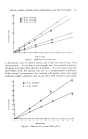
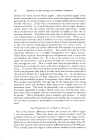
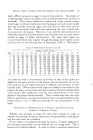
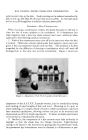
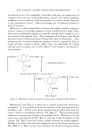
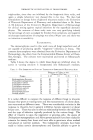
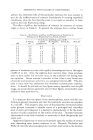
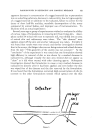
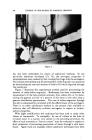
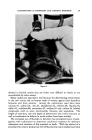
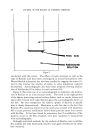
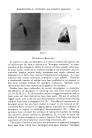
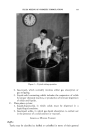
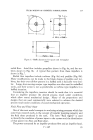
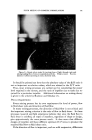
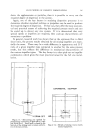
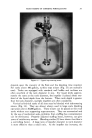
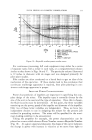
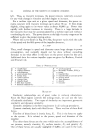
HAIR COLORING--MODERN FORMULATION CONSIDERATIONS 299 unfortunately also to the skin. Scalp staining can be reduced somewhat by pH control e.g., DC Red 19 will stain skin most at pH 8. It dyes hair quite well at any pH though best in alkaline solutions above pH 8. CHOOSING A DYE COMBINATION When choosing a combination of dyes, the shade they give to the hair is often the last of many qualities to be considered. It is elementary but often forgotten that a hair dye shade mixture must react uniformly when subjected to the following common treatmen rs: 1. Each of the components must come off at the same rate when the hair is washed. Otherwise, a brown shade made from primary colors may turn green if the red component should wash out first. This problem is fm ther magnified by the di•culty of choosing a combination which will wash off damaged hair at the same rate as flora normal hair. Figure 1 shows our adaptation of the A.A.T.C.C. Launder-ometer, used to standardize dyeing and washing of small samples of hair and wool. Rotating •t 45 r.p.m. to allow tmnbling, it is simply a block of wood to which standard jar caps have been attached upsidedown, allowing various size jars to be mounted and dismounted quickly for timed experiments. It allows multiple experiments to be carried out reproducibly and easily. 2. Similarly, the components of a dye mixture must fade uniformly in daylight so that the shade does not change character. Light-fastness ratings to be found in the literature are good guides for preliminary work, but permanent dye formulations must be checked in a Fadeometer or pre-
Purchased for the exclusive use of nofirst nolast (unknown)
From: SCC Media Library & Resource Center (library.scconline.org)