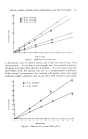
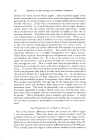
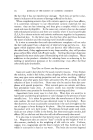
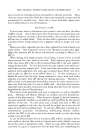
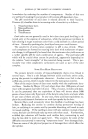
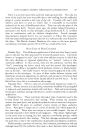
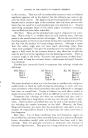
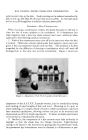
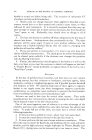
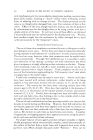
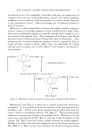
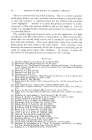
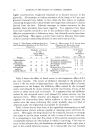
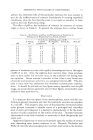
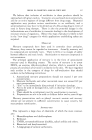
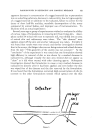
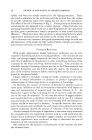
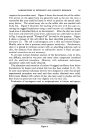
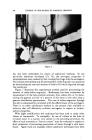
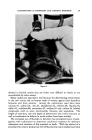
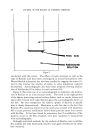
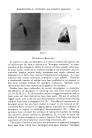
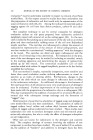
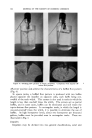
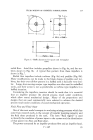
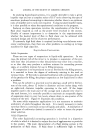
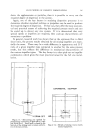
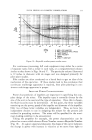
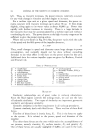
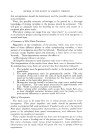
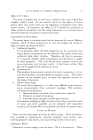
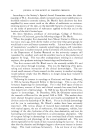
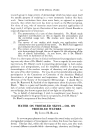
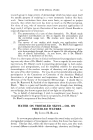
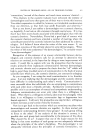
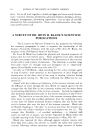
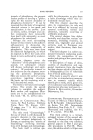
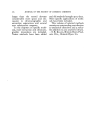
I)ENTAL CARIES CONTROL WITH DENTIFRICES AND MOUTH WASHES 287 2O ß : 12 yr. old tooth •1: 36 yr. old tooth / • = 56 2rr. old tooth / • i0 ß 1 2 • 4 5 6 7 ,?. 9 Time in Days Figure l.--I)iffusion of 1.0 molar urea. is destroyed, it has no sensory nerves, and •t has very •ew, • any, v•ta• characteristics. At one t•mc • was thought rhar th•s matcr•a• wou•d nor change •n any rcspcc• from •hc time o•crupt•on. •t • now known that h•rd Hfc•css shcU, the enamel, may act as a scm•pcrmcab•e membrane. Under norma• c•rcumsranccs •h•s matcr•a• w• permit water and smaU molecular weight substances that do no• reac• wkh cname• to pass • - • = 26 •. •e•pted 70 • • 19 •, e•ed A 5o • 40 o '• 20 10 0 • 0 i 2 3 4 5 6 7 8 9 iO •i •2 i3 14 T• in Days Figure 2. Diffusion of 1.0 normal NH4CI pH 6.5,

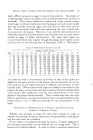
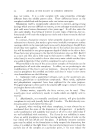
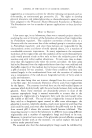
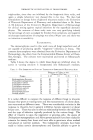
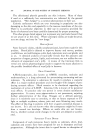
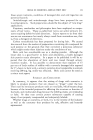
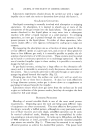
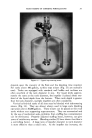
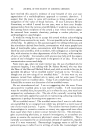
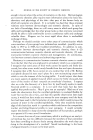
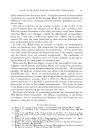
288 JOURNAL OF THE SOCIETY OF COSMETIC CHEMISTS between the saliva and the blood supply. Once the blood supply of the tooth is destroyed as in a treated tooth in which the pulp canal is filled with gutta-percha, the tooth no longer acts as a semipermeable membrane and no transfer will occur. Under these circumstances the tooth becomes dehy- drated and brittle. It is easily fractured and it will no longer develop a carious lesion with the typical inverted cone-type penetration. Under these circumstances the enamel rods decalcify as rapidly as does the ce- menting substance. It produces the same type of decalcification as when acid is placed upon an isolated area of an extracted tooth. When an ex- tracted tooth is set up in such a manner as to act as a semipermeable mem- brane, and acid is permitted to act upon it, then the lesion produced appears to have the typical morphological characteristics of a carious lesion. It would seem that under an osmotic differential the hydrogen ion penetrates the tooth along lines of least resistance. This would normally be in the cementing substances as it is highly impregnated with organic protein. Under these conditions the hydrogen ion will penetrate until it reacts with and displaces the calcium ion. In so far as the calcium ions are further apart, the penetration is much greater through the cementing substances than through the rods. Thus it would seem that the permeability of the teeth may be an important item in the rate of progress of a typical carious lesion. It has been demonstrated that the permeability of a freshly erupted tooth is much greater than that of an older tooth that has been subjected to the oral environment for a long period of time, Fig. 1, 2. An old impacted tooth however, that has not been subjected to the oral environment ex- hibits the permeability as great, if not greater, than a freshly erupted tooth. This change in permeability with age may be the explanation why young permanent teeth and deciduous teeth decay more rapidly than an old permanent tooth. This must be particularly true in animals where it is practically impossible to produce dental caries even with the most cario- genic diets, if the cariogenic diets are started after the animal has obtained its growth. This is particularly true in monkeys and baboons. It would seem th at a permeable tooth should decay more rapidly than an impermeable one and that a decrease in permeability is associated with its oral environ- ment. THE PERMEABILITY OF DENTAL PLAQUES One of the primary differences between the natural and refined sugars is the concentration. Most fruit juices and natural products, with the exception of honey, are essentially isotonic in respect to the sugar content. The penetration of any molecule or ion is dependent upon a number of vari- ables such as the character of the membrane, the size and shape of the dif- fusant, the viscosity of the solution and the diffusion pressure of the diffusant. Thus it would seem that sugar in dilute solution would not have nearly so
Purchased for the exclusive use of nofirst nolast (unknown)
From: SCC Media Library & Resource Center (library.scconline.org)