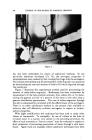
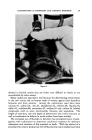
34:2 JOURNAL OF THE SOCIETY OF COSMETIC CHEMISTS will be observed in axial and radial flow impellers and depending upon the particnlar requirements of the process, selection of various other impeller shapes may be made. The key is to know what fluid regime is required in the process, and select the proper impeller type and speed and power level to satisfy that requirement. LIQUID-LIquID CONTACTING There are two types of emulsions encountered in mixing processes. The first type is an unstable emulsion, such as is desired when contacting one phase with another to carry out an extraction process. This may be for neutralization, purification or extraction. After extraction, the emul- sion is allowed to separate. In these cases, it is normally desired to put in a power level high enough to accomplish the process result, but not too high to produce unduly long settling times. This imposes a rigorous design requirement. The settling qualities of a given emulsion are usually not predictable except by labora- tory tests. The other type of emulsion is a permanent eminlsion in which it is desired to disperse one phase in the other, and to maintain a stable emulsion. In this case, mixing is a key factor, but of even more importance many times, is the formulation of the material itself. If we place two liquids in contact with each other, there will be no tendency for a dispersion to be produced. If we place a mixer in this tank, and produce a dispersion, the system always has a tendency to revert to the lowest interfacial area, which means returning to a separated condi- tion. If the mixer has produced a small particle size, and a greater inter- facial area, and the properties of the formulation are such that there is no marked tendency to separate, then we have what is termed a stable emul- sion. The term stable is a relative one, and depends upon the period of observation of the emulsion. If we desire a given emulsion, there are two requisites. One is that the system be inherently stable so that when the desired particle size is pro- duced, there is no tendency to return to separated state. Secondly, it is essential to have a mixing device which will produce the desired particle size and interfacial area. If the formulation is incorrect, then no amount of dispersion will produce a stable emulsion, since the dispersion will always tend to return to a stable condition. If the formulation is correct, then it is necessary to determine what degree of fluid shear is required in the system to produce the required degree of emulsion. We can classify mixers into their relative requirements for flow and fluid shear. Turbines and propellers are capable of providing high pumping capacity in relatively low fluid shear. However, by making

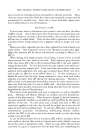
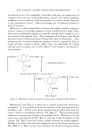
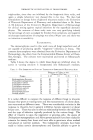
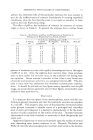
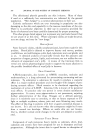
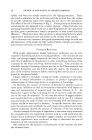
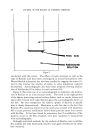
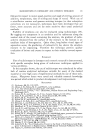
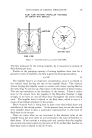
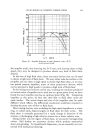
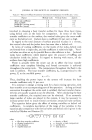
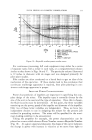
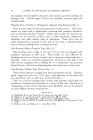
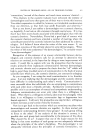
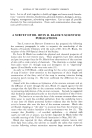
FLUID MIXING OF COSMETIC FORMULATIONS 343 801 [ I I I I 11 I I I I I I [ 60 • I I / I I II • • ?'•IMPELLER m i xNJ TYPE lI • 8 ---I k I\1 I I 0.02 01 1.0 D/T RATIO Figure 10.--Impeller diameter to tank diameter ratio, D/T, verx•x process result. the impeller small, thus lowering the D/T ratio, and running them at high speed, they may be designed to produce almost any level of fluid shear desired. In the area of high fluid shear, there are many devices that can be used to obtain a high level of fluid shear. We may either take the turbine or the propeller and run them at high speed to obtain high fluid shear, or we may use special purpose impellers, many of them proprietary devices, which can be operated at high speeds to produce a high level of fluid shear. In the mixing tests we have carried out, studying the emulsion produced at various ratios of impeller size to tank size at a given power level, we have found that each impeller type has an optimum point (Fig. 10). Comparing impellers at this point, we find that their flow to fluid shear ratios are quite similar. The actual shape and size of the impellets may be quite different which reflects the differential mechanical conditions required to develop the same ratio of flow to fluid shear. Most mixing devices, even including the high speed impellets in a stator ring, or colloid mills, depend largely on fluid shear for their action. The fluid shear is normally generated by a rapid change in direction of the streams or discharging a high velocity stream into a lower velocity area. Going further into the region of fluid shear, we encounter homogenizing valves. Still further we encounter devices which produce mechanical shear and grinding. In liquid-liquid dispersions, we are normally not con- cerned with mechanical shearing.
Purchased for the exclusive use of nofirst nolast (unknown)
From: SCC Media Library & Resource Center (library.scconline.org)