300 JOURNAL OF THE SOCIETY OF COSMETIC CHEMISTS ferably in actual use before being sold. The inclusion of substa•/ive UV absorbers can help such formulations. 3. Shades must not change character when applied to bleached or per- manent waved hair or to hair treated with cationic creme rinses, or when followed by such treatments. It is currently accepted that they may ap- pear stronger or weaker due to these common processes, but they should not "turn" green or red. Preferably, they should show no change at all of course. 4. The hair dye should not sublime off when subjected to the dry heat of electric hair driers. Anthraquinone dyes occasionally do this. The salon operator will be quite angry if some of your product sublimes into her machine and a freshly bleached blonde then sits under it, emerging with polka dots all over her coiffure! 5. If vou use solvents in your p•oduct, it is wise to use only dyes with similar solubility characteristics. The shade given by solvent formulations can be altered quite radically if the ultimate user changes the partition ratio by diluting with water. 6. Finally, the idealproduct should appear in the bottle as it will on the hair, or at least as you want the customer to think it will appear on the hair! A "Golden Brown" should preferably not appear black in the bottle, nor a "Steel Grey" purple. SOLVENTS In this day of polyfunctional cosmetics, hair dyes must not only contain coloring matter, but also softeners or hardeners, antistatic agents, sheen producers, curling or straightening agents, and if possible prevent dandruff and baldness as well! We chemists keep each of these agents in separate bottles in our supply room, but when management requests a particular combination, we sometimes need cosolvents to prevent the final product from resembling that famous seven-layered pousse car& Solvents are used in hair dyes for several other reasons. They make possible greater dye concentrations, thereby increasing the hair color depth which depends in part on the law of mass action. One of the more ingenious uses of solvents is to take advantage of the solubility partition ratio exhibited by some dyes between the solvent and water. To make full use of this trick, you must have a solvent with the following properties: 1. It must not be too soluble in water--about 5 per cent seems ideal. 2. It must be a much better solvent for the dye than water is. 3. It must sorb onto the hair out of water solutions or emulsions. When this is the case [as shown by Karrholm and Lindberg (14) for amyl and butyl alcohols, and for high molecular weight aldehydes by Widner, Buehler and Roesti (15) ], dyeing rates can be increased up to ten times or more. The

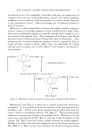
HAIR COLORING--MODERN FORMULATION CONSIDERATIONS 301 reason is that a film of high dye concentration "plates out" of the solution onto the surface of the hair. The film may contain 5 to 10 per cent dye compared to the 1 per cent in the solution as a whole. This can easily double the color yield for any given amount of dye. Due to their water solubility levels and hair substantivity, it will gener- ally be found that the less polar solvents are more effective for this use. They also present a cost advantage over the more common solvents such as ethanol which must (16) be used in amounts of forty to sixty per cent for similar effect. The degree of sulfonation of a dye generally controls its solubility in solvents. Shades made up for nonsolvent formulations there- fore sometimes change character radically when solvents are added. We have found, as would be expected, that not only the sparingly soluble alcohols and aldehydes give this effect, but also the following: l. Sparingly soluble nonionic surfactants, including some of the modi- fied lanolin products. As mentioned previously, Beste (1) patented the use of certain nonionics for exactly the reverse effect---the sotbed film of sur- factant forming a barrier to dyes insoluble in it, thus slowing down the dye- ing rate to give more control over the results. 2. Oil soluble dyes with just the right amount of solubilizing or disper- sion, such as DC Red 37 or Nigrosine SS. 3. Artion-cation surfactant complexes often combine low water solubility and high hair substantivity with the virtue of being excellent dye solvents because of their structure. It is occasionally necessary to solubilize such complexes somewhat, but this should not be done too well (17) or all effect is promptly lost and no additional color results on the hair. SWELLING AGENTS Materials such as urea, thiourea, urethane and formamide can be con- sidered either as dye solvents (18, 20, 2l) or hair swelling agents (19, 22). In the case of urea and thiourea at least, there has been considerable der- matological evidence that such agents stretch the hydrogen bonds and can disrupt the cystine of keratin, forming cysteine and thereby providing new dye sites for sulfonated dyes. This allows the hair to dye more deeply and more permanently. Therefore, it is unwise to add urea to a temporary hair coloring for two reasons: if the product contains color complexes, they may be solubilized to the point of reducing initial color, and that color which does take on the hair will be more difficult to wash out again later. It is beyond the scope of this general paper to go much into the contro- versy over why hair dyes take more deeply on newly permanent waved hair. Many feel that such a treatment merely makes the hair swell more than usual, therefore permitting it to take up more color than usual. It can be shown quite dramatically, however, that a chemical reaction also takes place, by using cystine as an analogue for hair. When it is mixed
Purchased for the exclusive use of nofirst nolast (unknown)
From: SCC Media Library & Resource Center (library.scconline.org)