302 JOURNAL OF THE SOCIETY OF COSMETIC CHEMISTS with disulfonated acid dyes in an alkaline thioglycolate medium, reaction takes place fairly readily, resulting in "dyed" cystine which withstands several hours of refluxing with no change of color. The shades produced are the same as on thioglycolate damaged hair, even from mixtures of four or five colors. Effects of this sort, though much less intense, can also be produced by substitutin• urea for the thioglycolate, or by using cysteine with just a simple solution of the dyes. In contrast, none of these effects are obtained if monosulfonated dyes are substituted for the disulfonated ones. We thus have another insight into the mechanism by which damaged hair is dyed rather permanently by the "temporary" colors. ANION-CATION COMPLEXES The use of these color complexes constitutes the most striking new trend in hair dyeing in recent years. At first they were often introduced accidentally during attempts to add substantive "conditioners" to make a better product. The time has come, however, when their properties nmst be studied much more systematically. Through their deliberate use, it is possible to add a new dimension to hair dyeing---a product not truly substantive but which gives transparent, strongly adhering surface coloration to the hair. If prop- erly formulated, it does not rub off, is water insoluble and yet can be com- pletely removed with a simple shampoo. These complexes are the core of most of the formulations approaching the "full intensity rinse" ideal which are appearing on the market today. Useful color complexes may be made in many ways. Anionic (acid) dyes have been reacted with cationic surfactants either directly or by being applied to hair previously treated with the cationic (5, 17, 23, 24, 25, 26) surfactant. The reverse has also been done--reacting cationic dyes with anionic agents (25, 26, 27, 28). Dyes have been applied in the presence of both, that is, in the presence of the reac/ion produc/of anionic and cationic materials (2, 3, 4, 9). Finally, hair colorings have been sold which contain both acid and bakic dyes, thus forming a dye to dye complex which is later partially solubilized for use in the final product. The use of such combinations has been growing steadily over the past few decades in textile dyeing and finishing. However, their full realization did not become apparent until they were applied more recently to cosmetic use where they have not been restricted only to hair dyes, but are being put to work as film formers in such items as hand lotions and creams. A number of apparently overlapping patents have appeared recently, using the princi- ple for such uses and also for hair colorants. The proper balance of ionic agents and dyes will give insoluble or slightly soluble precipitates which are essentially nonpolar, adsorb phenomenally on the surface of the hair from a water base, and in general show many of the partiti(m ratio effects already discussed under "Solvents." They can be

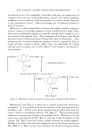
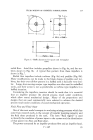
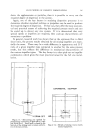
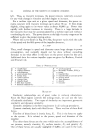
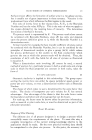
HAIR COLORING MODERN FORMULATION CONSIDERATIONS 303 formulated so as to be completely removable with just one application of shampoo since they are surface phenomena and are very often completely indifferent to the condition of the hair whether it is normal, freshly bleached or just permanent waved. These advantages are of immense interest to the hair chemist. Because it is almost impossible to discuss this subject without using pro- prietary names or revealing company secrets, I shall stretch a point some- what and use rhodamine stearate as a specific example even though it is not too typical of the general class. The complexes of acid dyes wash off the hair much more readily than those of basic dyes such as rhodamine. Also, producing the very finely dispersed complex in situ as is generally done in actual practice, results in better effects than are obtainable by simply melting a pure complex such as D.C. Red 37 and trying to incorporate it into a product. -(C•Hs)2N f/•/O•l•--N" (C.2H5)2 C1 •/J•(••/) -[- CHa(CH,)ioC0--• ,•COOH Cationic D & C Red 19 -1- Anionic Soap --• (C•U•).,N-- /O,N•N - (C•H•)• L O D & C Red 37 Figure 2.•--Rhodamine Stearate viewed as an anion-cation complex of D & C Red 19. - (00CC•7H:•.O Rhodamine itself (Fig. 2) is seen to be a cationic quaternary ammonium compound. It is normally made by the reaction of the free base with hy- drochloric acid. If that same base is reacted instead with stearic acid, the result is known as rhodamine stearate, D.C. Red 37. These are the normal methods of manufacture of these two certified colors. However, it is ob- vious that a precipitate of D.C. Red 37 will also result if solutions of the cationic D.C. Red 19 and the anionic sodium stearate are mixed together. Finally, it is evident that the ionic charges shown on the classic structure of D.C. Red 37 in Fig. 2 cannot exist, because the material, being insoluble,
Purchased for the exclusive use of nofirst nolast (unknown)
From: SCC Media Library & Resource Center (library.scconline.org)