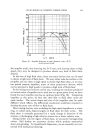
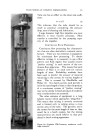
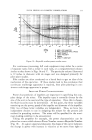
356 JOURNAL OF THE SOCIETY OF COSMETIC CHEMISTS this extrapolation should be determined, and the possible ranges of mixer sizes estimated. Then, the possible economic advantages to be gained by a thorough knowledge of mixing variables in the process should be estimated. This will give an adequate basis for deciding on the merits and extent of a proposed pilot plant study. Pilot plant studies can range from one "spot check" in a six-inch tank, t,) an extensive project covering several months of work with equipment in several tank sizes. ,4 Summary of Pilot Plant Procedures Regardless of the complexity of the process, which may even involve flows of three different phases or other complicating variables, a basic pattern of investigation must first be followed. Holding all other variables constant except impeller speed and diameter, a basic series of runs must be made. These experiments measure the effect of (a) Horsepower (three to six runs), (b) Impeller diameter to tank diameter ratio (one to three runs). The interpretation of the results from these basic runs is discussed below. In making these runs, there are several rules that should be followed: 1. The impeller must be geometrically similar to the proposed full scale installation. 2. The tank proportions must be geometrically similar. The only exception of this rule is that the ratio of liquid depth to tank depth need not be held constant. Corrections for this factor can usually be made to the basic pilot plant runs. 3. Horsep.o .wer must be varied in at least four steps over a tenfold range as a mm•mum. The total speed must thus be approximately two- fold. Wider variations in power are desirable. 4. When varying other variables, such as gas flow, liquid flow, etc., at least threefold variation between steps must be made, so that pronounced differences in process result will occur. Effect q/Horsepower The basic runs to be made first are to relate process result to mixer horsepower. Pilot plant impellets and tanks should be geometrically similar to projected full scale equipment if useful results are to be received. Pilot plant impellers whose power characteristics are known, enable horse- power to be calculated from speed measurements, and elaborate dyna- mometers are usually not necessary. These studies should be carried out from zero horsepower up to a value sufficient to cause a leveling out of the process result. From the slope of this curve of process result versus mixer horsepower, many preliminary observations can be made which will point the way to proper follow-up experiments.

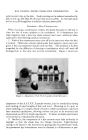
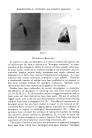
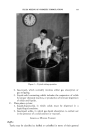
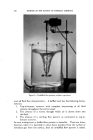
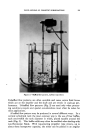
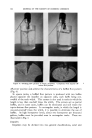
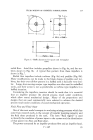
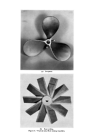
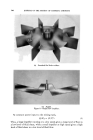
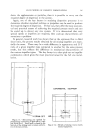
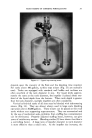
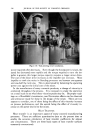
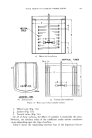
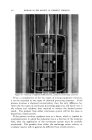
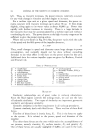
FLUID MIXING OF COSMETIC FORMULATIONS 357 EfiFct of D/T Ratio The ratio of impeller size to tank size is related to the ratio of fluid flow imp•!ler velocity head. In the remarks above on the effects of horse- power, these runs many times can be neglected or calculated from other known factors. If necessary, the effect of D/T should be evaluated at either constant horsepower and the result measured, or at constant result and the horsepower measured to achieve this result. Measurement of Power Input The power input to a mixing vessel can be measured by several different methods. Each of these methods has its own advantages and disadvan- tages and these are discussed below: A. Calibrated Impellers In an operation where the fluid properties can be accurately eval- uated, power consumption can be obtained from power curves and calibrated pilot plant turbines. Therefore, all that is necessary is to measure impeller speed and position and the factor to apply for fluid properties. This is by far the most common method, the most convenient and the least costly. A fiat blade turbine (Fig. 8a) can be supplied with calibration curves. B. Dynamometers The simplest dynamometer consists of a motor mounted on a trun- nion bearing with an attached pulley running to a scale. The torque reaction on the impeller gives an equal and opposite reaction on the frame of the motor. C. Electric Power Input For small scale equipment, it is often very difficult to get accurate power measurements from wattmeter readings. The problems norm ally encountered are: 1. Operation below one-third of the rated motor capacity. 2. Excessive no-load friction losses. 3. Unknown losses through variable speed devices. If wattmeter readings of high accuracy can be taken and if the losses of motor and drive assembly can be obtained with reasonable accuracy, this should offer an acceptable calculation for power input. TYPES OF MIXERS There are four basic types of mixers for fluid mixing. These are labora- tory, portable or permanently mounted propeller type mixers, side- entering propeller type mixers, and top-entering turbine type mixers. Laboratory Mixers Laboratory mixers range in size up from 1/20 of a horsepower. These
Purchased for the exclusive use of nofirst nolast (unknown)
From: SCC Media Library & Resource Center (library.scconline.org)