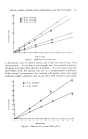
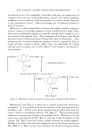
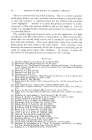
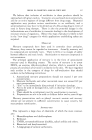
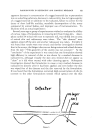
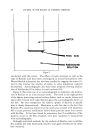
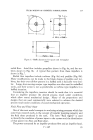
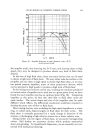
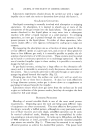
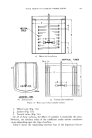
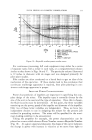
FLUID MIXING OF COSMETIC FORMULATIONS 343 801 [ I I I I 11 I I I I I I [ 60 • I I / I I II • • ?'•IMPELLER m i xNJ TYPE lI • 8 ---I k I\1 I I 0.02 01 1.0 D/T RATIO Figure 10.--Impeller diameter to tank diameter ratio, D/T, verx•x process result. the impeller small, thus lowering the D/T ratio, and running them at high speed, they may be designed to produce almost any level of fluid shear desired. In the area of high fluid shear, there are many devices that can be used to obtain a high level of fluid shear. We may either take the turbine or the propeller and run them at high speed to obtain high fluid shear, or we may use special purpose impellers, many of them proprietary devices, which can be operated at high speeds to produce a high level of fluid shear. In the mixing tests we have carried out, studying the emulsion produced at various ratios of impeller size to tank size at a given power level, we have found that each impeller type has an optimum point (Fig. 10). Comparing impellers at this point, we find that their flow to fluid shear ratios are quite similar. The actual shape and size of the impellets may be quite different which reflects the differential mechanical conditions required to develop the same ratio of flow to fluid shear. Most mixing devices, even including the high speed impellets in a stator ring, or colloid mills, depend largely on fluid shear for their action. The fluid shear is normally generated by a rapid change in direction of the streams or discharging a high velocity stream into a lower velocity area. Going further into the region of fluid shear, we encounter homogenizing valves. Still further we encounter devices which produce mechanical shear and grinding. In liquid-liquid dispersions, we are normally not con- cerned with mechanical shearing.

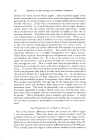
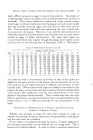
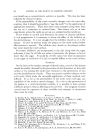
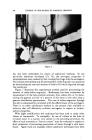
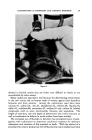
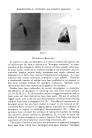
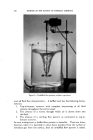
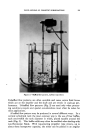
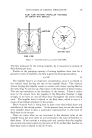
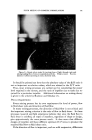
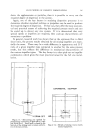
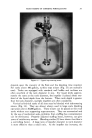
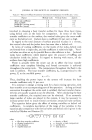
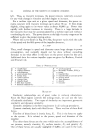
344 JOURNAL OF THE SOCIETY OF COSMETIC CHEMISTS In studying liquid-liquid systems, it is usually desirable to take a given impeller type and run a complete series of D/T ratios observing the type of emulsions produced attempting to determine whether there is an optimum ratio of impeller size to tank size required. Using standard impeller types, it is then possible to relate the experimental conditions to the program. Scale-up on these operations involves the consideration of the flow to fluid shear required as well as the power level involved in the system. Usually of utmost importance is to determine in the experimentation whether the desired level of flow to fluid shear can be achieved with standard design and will be of proven performance. If extremely high fluid shear is required involving very elaborate rotor- stator combinations, then there are often problems on scaling up to large machines for high capacities. LiQum-Soi. m Solids Suspension There are two types of suspensions in liquid-solid operations. In one case, the primary job of the mixer is to produce a suspension of the par- ticle sizes that are present so that the particles may enter into a reaction, or so that they may produce a uniform mixture for succeeding process steps, or a uniform mixture for use in filling processes. If a suspension is to be produced to use as the feed for the filling process, it is essential to know the degree of uniformity existing in the tank at various times. If the tank is operated batchwise with continuous draw-off of the product for filling, the proper suspension at low liquid level is often a problem. This can be solved in a practical way by placing a small well in the bot- tom of the tank, about 12 inches in diameter and ten inches deep, with an eight-inch diameter impeller operating in the well. If the larger impeller used in the main part of the storage tank is placed very close to the tank bottom, it is normally possible to maintain an acceptable degree of suspension down to very low levels, almost down to one-quarter of the volume of the well. Figure 11 illustrates this condition. On some solids suspension applications it is not necessary to maintain uniformity of solids throughout the tank. It is merely necessary to make sure that there is a continual contact of liquids and solids. A description of the degree of uniformity desired is essential in order to insure the proper mixer selection. Solids Dispersion The other liquid-solid contacting operation is involved in a dispersion of solids in which it is desired to reduce the size of agglomerates or particles in the system. The main characteristic of a fluid mixing system is the production of fluid shear. If fluid shear is sufficiently high to break
Purchased for the exclusive use of nofirst nolast (unknown)
From: SCC Media Library & Resource Center (library.scconline.org)