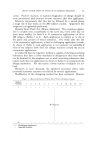
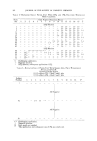
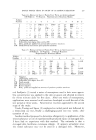
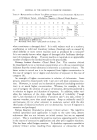
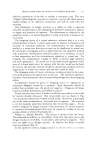
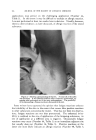
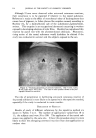
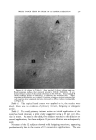
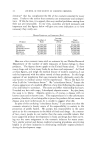
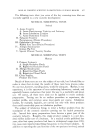
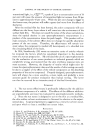
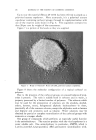
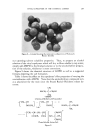
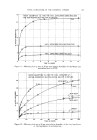
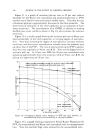
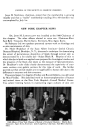
INSULT PATCH TESTS IN STUDY OF CUTANEOUS REACTION 255 defensive mechanism of the skin to combat a cutaneous noxa. The term "fatigue" physiologically connotes no reaction used in the above sense it implies fatigue of the defensive mechanism and will be used with this meaning. This exhaustion, or fatigue reaction, is a replica of what is observed clinically and discussed in the aforegoing of dermatitis potential in relation to degree and duration of exposure. The phenomena as observed in the repetitive study is an interesting phase in study of primary cutaneous irri- tant action. The fatiguing action of a tested substance indicates that it is a sub- clinical primary irritant it exerts such action in relation to frequency and duration of cutaneous exposure. Its determination by the repetitive method is a severe test that may or may not be duplicated in actual use. In correlation of fatiguing action as determined by the repetitive method with actual use, considerations should be given to its incidence, its early or late appearance and the circumstances operative in actual use. For example, the antiperspirant studied in Table 4 showed high incidence and early appearance. Its actual use in the axilla would approach condi- tions of a closed patch test its contact with the skin would not be brief. In contrast the waterless cleanser (Table 2) showed low incidence and late appearance in actual use contact with the skin would be brief. The fatiguing action of many substances as demonstrated in the repet- itive method may not be operative in actual use. The repetitive method is therefore of more practical value in determining allergenicity than fatiguing action. Consideration should be given to fatiguing action in explanation of dermatitis allegedly caused by a cosmetic. Such dermatitis should be milder than an allergic one the patch test negative. Diagnosis of fatigue reaction would be presumptive and difficult to prove. If such reaction does occur, I think it would be more likely in the axilla for reasons already discussed. One occasionally sees (as shown in Fig. 1) an eczematous dermatitis confined to both axilla the history is prolonged use of the same antiperspirant, the patch test is negative. The eruption is not for example, seborrheic dermatitis that favors this region. An ob- stacle in diagnosis of fatigue reaction is the occurrence of a similar eruption in nonusers of antiperspirants that may be caused by chafing of two op- posing surfaces covered with perspiration. Fatigue rs../I//ergic Reaction: The former is distinct from the latter. The enhanced irritability, or reactability of the skin that gives rise to the fatigue reaction is reversible re-test after a short period is negative. This does not apply to an allergic reaction. In addition the latter is usually more pronounced (Fig. 2). In the repetitive method, fatigue reaction on the last of tke c• •secutive

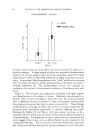
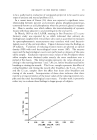
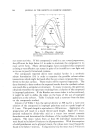
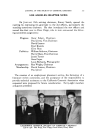
256 JOURNAL OF THE SOCIETY OF COSMETIC CHEMISTS applications may persist on the challenging application (Number 44, Table 5). In this event it may be difficult to exclude an allergic reaction. A re-test performed at least two weeks later is decisive. Usually, however, there is other evidence as later discussed, of allergic reaction of the tested substance. ß . .z Figure 1.--Showing a disappearing dermatitis. At onset all of the axilla was involved. It was bilateral without other cutaneous involvement, ap- pearing after prolonged use of the same antiperspirant. The possibility of its representing a fatigue reaction is discussed in the text. Some writers have expressed the opinion that fatigue reactions enhance the irritability of the skin to the extent that causes false positive reactions to other substances concomitantly tested. That has not been my observa- tion fatigue reactions are not that pronounced. The enhanced irrita- bility is confined to the site of application of the fatiguing substance its site of application at a different area is negative. Occasionally fatigue reactions may occur (Number 44, Table 5) at an immediate adjacent site but usually does not (Number 14, Table 5). Positive reactions at the latter site more likely indicate an allergic reaction (Number 48, Table 5
Purchased for the exclusive use of nofirst nolast (unknown)
From: SCC Media Library & Resource Center (library.scconline.org)