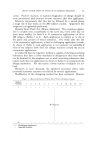
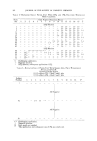
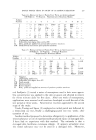
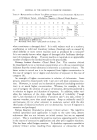
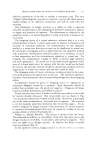
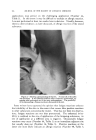
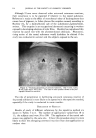
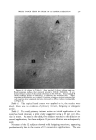
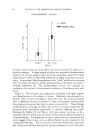
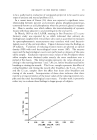
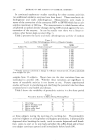
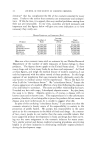
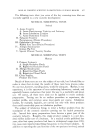
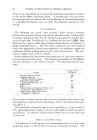
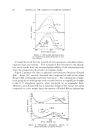
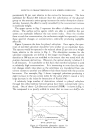
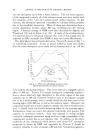
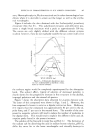
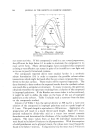
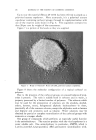
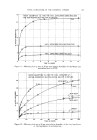
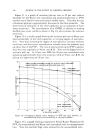
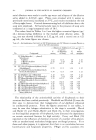
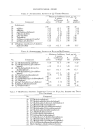
INSULT PATCH TESTS IN STUDY OF CUTANEOUS REACTION 261 negative and opposed allergic interpretation of the 2 plus reaction of this subject on challenging application. Table 6: Study of this insecticide in contrast to the preceding tables showed negative reactions up to suddenly appearing, strongly positive reactions on the twelfth application. The reaction of one subject is shown in Fig. 2. Additional evidence of allergenic action was the delayed ap- pearance of the reaction about forty-eight hours after removal of the patch. On subject Number 37, the site of the twelfth application was adjacent to that of the eleventh application the site of the latter "flared up" concomi- tantly with the positive reaction of the twelfth application. This evidences high degree of allergenicity. Consistently, re-test (conservatively per- formed) of one subject two months after challenging application showed delayed 2 plus reaction to three drops (open patch test) on the arm of the subject. Prior tests were conducted on the back. SPECIFICITY OF PATCH TEST STUDIES It would be desirable to know the comparative value of the aforemen- tioned methods in determining allergenicity. I know of no such reported study. An approach to this was reported by Traub, Tusing and Spoor (2). They studied three lotions and three ointments by their aforegoing described method and also by the prophetic patch test but not to its second phase---usage test. They stated the opinion that this phase has been deemphasized in practice. On of the ointments showed allergenic action that was not shown by the prophetic patch test. The allergic index (incidence of allergic reactions) of a known cutaneous allergen in terms of percentage in an X number of persons is not known. It can be extrapolated from a limited amount of data. As Rosentberg pertinently stated, there are here two variables. A biological variable and a statistical variable. The two are independent. Knowledge of the incidence of allergic reactions of known cutaneous allergens is gleaned from experience, from the literature and frequency of its contact with the skin. This is expressed in comparative terms such as, very rare, rare, not common, frequent. On this basis one can estimate that, for example: nickel is more allergenic than dichromate the latter more allergenic than mercury paraphenylenediamine more allergenic than all of the aforementioned. In discussing specificity of patch test study prophetic test employing 200 subjects and the repetitive test employing 50 to 100 subjects, I would estimate that such tests would begin to detect allergenicity at about the midregion of a scale at one end of which allergenicity is very rare (lanolin), at the other end it is frequent (paraphenylenediamine). Detection of allergenicity would increase in ratio to the increase in the allergic index of the tested substance.

262 JOURNAL OF THE SOCIETY OF COSMETIC CHEMISTS In my experience and that of others as reported in the literature, these studies detect allergenicity in such range that the use of the tested substance is interdicted or to such degree that allergenicity would be an important issue. The methods now in vogue may be compared to that of a coarse sieve. The use of a finer sieve, so to speak, is ideal but not practical. I refer to one shortcoming of the tests now in vogue the number of subjects used. To use, ideally, one thousand or more subjects is not practical. For this reason, depending upon circumstances inherent to actual use--usage tests should be considered as a subsequent procedure. SUMMARY Discussion is made of four purposes of the patch test: (a) to determine primary cutaneous irritant action (b) to determine (diagnostic) if the skin is allergic to the tested substance (c) to determine by several appli- cations (prophetic patch test) or repeated applications (repeated insult patch test) if the tested substance has allergenic capability (d) to deter- mine other untoward cutaneous reactions. Definition is given of a primary cutaneous irritant of a cutaneous al- lergen. Discussion is made of closed patch test--the site of the tested substance on the skin is covered for an open patch test this site is un- covered. The prophetic patch test determines only primary irritant and aller- genic action. The repeated patch test by virtue of 10 to 15 consecutive applications elicits, in addition, other untoward cutaneous reactions notably fatigue action. This represents cummulative primary irritant action from fatigue or exhaustion of' the defensive mechanism of the skin. It defines dermatitis potential in actual use. Discussion is made of results obtained with different substances tested by the repetitive method. The specificity of patch tests in determining allergenicity is discussed. REFERENCES (1) Brunner, M. J., and Srniljanic, A.,/1. M./1./lrch. Dermarc/., 66, 399 (1954). (2) Traub, E. F., Tusing, T. W., and Spoor, H. J., Ibid., 69, 399 (1954). (3) Klauder, J. V., and Gross, B. A., Ibid., 63, 1 (1951). (4) Klauder, J. V., and Brill, F. A., Jr.,/lrcli. DermatoL and $ypliilol., 56, 197 (1947). (5) Buckley, W. R.,/1. M./1./lrch. Dermatol.. 78, 454 (1958). (6) Goldman, 1.., Preston, R. H., and Scheen,'S. R., Ibid., 76, 208 (1957).
Purchased for the exclusive use of nofirst nolast (unknown)
From: SCC Media Library & Resource Center (library.scconline.org)