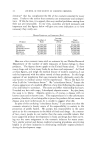
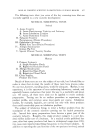
THE BEAUTY OF THE ENZYME SCREEN By V. F. LxsANmx* Presented December 2, Z959, New York Ci O, As YOU MAY well know beauty is defined by Webster as follows: "The quality or aggregate of qualities in a thing which gives pleasure to the senses or pleasurably exalts the mind." Screen--to sift, to separate, to sort out and to project. It is our belief that people working in the field of enzymology both receive pleasure and are exalted by the utility and in- formativeness of the study of tissue metabolism, normal and abnormal as elucidated by enzymological techniques. There are three thoughts to be developed. The first is to review briefly recent contributions to the under- standing of h,man health and physiology made as a result of the study of enzymes. The second is the nature of the oral cavity in whose confines we have been working for some years, and, thirdly, the presentation of some in- formation relative to basic studies made in oral enzymology. Historically, the measurements of enzymes in human tissues and secre- tions has developed supposedly in the last decade or two. Blood and urine glucose can be measured specifically with glucose oxidase. Great diagnostic value is derived from measurements of phosphatases, of dehydrogenases, and transaminases. Enzymes are being used to facilitate wound healing, to remove tissue debris in surgery, and to dissolve blood clots. As the functions of enzymes become clearer their role in normal physiology be- comes better understood. This has enabled us to take the succeeding steps in the case of several which have been linked to disease for which inhibitors have been found. An example of these is carbonic anhydrase whose role in the secretion of gastric acidity led to the discovery of Diamox, well known for its efficacy in the control of water balance (1, 2). Another excellent example is monoamine oxidase which has been found to be related to men- tal health, and for which specific inhibitors were found to be effective and hence of medicinal value. Enzymes have played a role in the mechanism of antibiosis of hexetidine (a synthetic hexahydropyrimidine antibacterial agent). Dr. Lionertl of Boston University School of Medicine noted several enzyme systems in the formed elements of human b16od which were particularly sensitive to the inhibitor. Simultaneously, it was found by * Institute of Stomatological Research, Sias Research Laboratories, Brooks Hospital, Brookline, Mass. 263

264 JOURNAL OF THE SOCIETY OF COSMETIC CHEMISTS Halvorson and his colleagues at Michigan that similar inhibitions in ternIs of growth of micro6rganism were observed. An interesting fact was discov- ered when these studies were compared. It was found that the micro- organisms when compared with the leucocytes and erythrocytes were 300 times more sensitive to hexetidine showing the selectivity of the anti- bacterial agent for the microbial species. Thus indicating at the cellular level that mammalian cells would not be damaged in potential use concen- tration (3). Turning now briefly to a consideration of the practical advantages of the enzymes as methodological tools, several properties make them highly ad- vantageous in the search for medicinal agents, or where applicable, in clinical testing procedures. First, enzyme methods are specific. A given enzyme will respond ordinarily only to the correct substance. Second, enzyme procedures are the most sensitive of the analytic procedures with few exceptions in the biologic field. This frequently makes possible the facility for multiple tests using several systems or methods for assay on small amounts of materials. Frequently, histochemistry reveals with clarity enzymes at the micro micro level of substrate in small samples of tissue. Responses to inhibitory agents may also be shown in this manner. Let us consider very briefly the nature of the human oral cavity in order to better understand the application of enzyme measurements to be dis- cussed. The oral cavity is an area of the human body composed of a variety of tissues, hard and soft, glandular secretions and excretions supplying the ubiquitous environment for all these tissues. Cellular components de- rived from the epithelial layers of the mucous membranes and gingival tissues as well as the tongue, are found in whole saliva. Included in the cells of mammalian source are leucocytes and erythrocytes. Also habiting the oral cavity. under both "normal" and "abnormal" conditions are various forms of the micro flora and fauna. It is therefi3re implicit that many forms of "normal and abnormal" metabolism coexist in the "normal" state. They also coexist for varying periods of time in disharmony during clinical and subclinical phases of the "abnormal" state. Since all of these tissues and cells pass through the cycles of reproduction and destruction they have become fruitful areas for the study of anabolic and catabolic processes, associated with various physiological activities found in the human. The comparison of these processes can be best described at the cellular and sub-cellular level by evaluating the enzyme systems at their sources with their relationship to, or with the state of the cells or tissues being observed. Some of these enzymes are secreted or excreted from the salivary glands or contained in the cells which make up the various tissues of the oral cavity. The other enzymes seem to have as their source micro- organisms wlfich are normal inhabitants of the human oral cavity or those
Purchased for the exclusive use of nofirst nolast (unknown)
From: SCC Media Library & Resource Center (library.scconline.org)