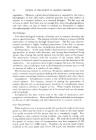
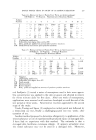
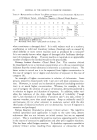
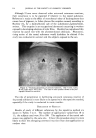
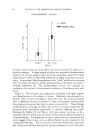
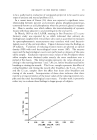
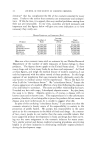
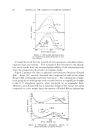
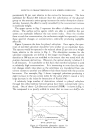
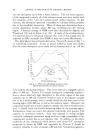
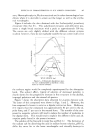
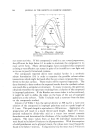
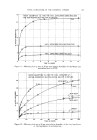
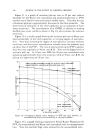
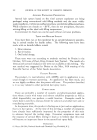
THE BEAUTY OF THE ENZYME SCREEN 265 which are only found under diseased conditions or during pathological states. As more and nqore basic knowledge is provided, more specific con- notations can be made concerning the desirability or undesirability of cer- tain enzyme activities in the oral cavity. At the present time the simplest working hypothesis would be, that the enzyme by-products of the bacterial invaders of the human oral cavity, in general, are not desirable components. Some of the findings of oral enzymes taken from a variety of studies, each with a particular advantage and for a special purpose will be presented to illustrate various points of interest. Table 1 will illustrate a property TABLE 1 Enzyme Range Mean Parotid Saliva Acid phosphatase 0.100-1.130 0. 432 Total esterases 0.006-0. 216 0. 050 Cholinesterase 0. 013-0. 860 0.036 Lipase (laurase) 0.000-0.165 0.032 Beta-glucuronidase 0.000-350.0 84.85 I•hole Saliva Acid phosphatase 0.50 -11.0 3.94 Total esterases l. 20 -13.40 3.69 Cholinesterase 0. 046-0. 212 0. 105 Lipase (laurase) 0.60 -5.00 1.55 Beta-glucuronidase 74.0 -1000.0 462.8 Note: In all cases, the differences between the mean parotid saliva and mean whole saliva levels were significant to less than the 1% level. The greater degree of activity exhibited by whole saliva was attributed to the presence of oral micro•Srganisms and cellular debris found in the total mixture. which is very important in all considerations of oral enzymology and must be considered, therefore, in any screening or evaluating type of procedure. The enzyme encountered may be a product of a secretion of a gland, may exist in the desquamated epithelial cell, may be associated with other par- ticulates or may be of bacterial origin. The hydrolytic enzymes shown in this table reveal that with regard to one of the glands, namely the parotid gland, that the level of activities with •espect to the enzyme shown, differs significantly between the secretion and activity occurring in the whole saliva mixture (4). The interpretation of the enzyme titers must always be evaluated in light of their source. The glandular and tissue sources may in the long run reflect systemic changes while microbiological sources may reflect changes induced by bacterial in- vaders. Figure 1. This is a graphic demonstration of the changes in hyaluroni- dase titer in the saliva of 30 students. The students were studied before and during "colds" or upper respiratory disturbances. The salivary hy- aluronidase titer levels while the students demonstrated symptoms were 3.2 times the normal level compared to the bar without colds (5).

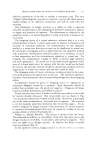
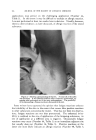
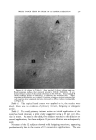
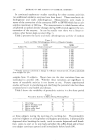
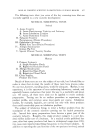
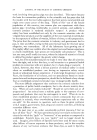
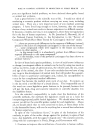
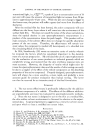
266 JOURNAL OF THE SOCIETY OF COSMETIC CHEMISTS HYALURONIDASE ACTIVITY .6- - N Z UJ WITHOUT )RANGE I STANDARD ERROR WITH COLDS Figure 1. Another study conducted along these same lines involved 155 subjects se- lected at random. A single sample of saliva was assayed for hyaluronidase activity, 95 of these subjects were free from symptoms, while 60 of these subjects had "colds" or described symptoms of upper respiratory involve- ment. It was found that those patients with "colds" exhibited an elevated titer 21/2 times the activity of the normal of those individuals not demon- strating symptoms (6). The hyaluronidase activity was assayed ac- cording to the method of viscosimetric reduction of hyaluronic acid sub- strate. Figure 2. The lysozyme titer depression associated with upper respira- tory disturbances on 62 subjects is shown. Definitely demonstrated is a pattern which several investigators have seen that the normal lysozyme titer is depressed during the course of colds as the patient recovers from the symptoms lysozyme titer tends to return to normal (6). These findings confirmed those of Joseph and Shay who in 1951 (7) demonstrated that the lysozyme titers diminished appreciably in patients suffering from colds. Fleming (8), Ridley (9) and Meyer (10) have shown lysozyme to be a mucolytic enzyme which may be related to the natural defense mechanism in human beings. Its appearance in tears, nasal secretions, leucocytes and saliva suggests that it may serve as defense barrier in areas exposed to the external environment. It is not known at this time whether the actual out- put of lysoxyme which is derived from the parotid gland, as far as the saliva
Purchased for the exclusive use of nofirst nolast (unknown)
From: SCC Media Library & Resource Center (library.scconline.org)