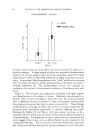
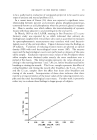
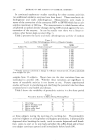
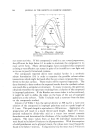
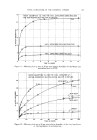
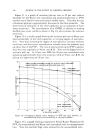
290 JOURNAL OF THE SOCIETY OF COSMETIC CHEMISTS transmitted light, i.e. (-20percent , x-,10/z , a path of $/• or a concentration error of 50 per cent will cause the amount of transmitted light to increase from 20 per cent to approximately 45 per cent. While the per cent change is bigger in the former case, the patient will suffer a great deal more from the effects of the latter. After the residual film has been formed, the active compounds will soon diffuse into the horny layer where it will come into the environment of the surface lipid film. This does not cancel the value of the above calculations, since the optical density in any spectrophotometric measurement is a product of the concentration times the path length. This product will re- main constant, if the solvent effect does not change the specific absorption powers of the sun screen. Therefore, the effectiveness will remain con- stant unless the compound is washed off, decomposed, or is absorbed into the circulating fluids of the body. In 1954, Stambovsky (18) wrote an extensive series of articles wherein he reviewed the factors which he considered important to the develop- ment of a suntan preparation. He criticized the use of a spectrophotometer for the evaluation of sun screen products on technical grounds which are completely wrong, and insisted that the skin erythema response tests are more accurate. However, the disparity of results which might exist be- tween the spectrophotometric data and the results of skin testing can easily be due to a neglect of the effect of the vehicle components on the absorbing properties of the active compound. Properly designed, spectrophotometric tests will always be a more sensitive, a more rapid, and probably a more accurate guide for product evaluation than human testing. The latter can then be reserved for an intensive study of the final formulation. SUMMARY 1. The sun screen effectiveness is profoundly influenced by the addition of different components of a vehicle. The effects of the different additives are unpredictable and must be evaluated by spectrophotometric methods. 2. Since the sun screen is designed to act on the skin as a residual film, the skin surface solvent environment is discussed in relation to the experi- mental data. Isopropyl pahnitate is suggested as a tentative solvent stand- ard upon which to base a modified sun screen index. REFERENCES (1) Petit, E., and Nicholson, S. B., Astrophys. •7., 75, 195 (1933). (2) Moon, P., y. Franklin Inst., 230, 583 (1941). (3) Hauser, K. W., and Vahle, W., Strahlentherapie, 13, 59 (1922). (4) Coblenz, W. W., and Stair, R., y. Res. Natl. Bur. Standards, 12, 14 (1934). (5) Crew, W. H., and Whittle, C. H., 7. Physiol., 93, 335 (1938). (6) Kumler, W. D., and Daniels, T. C., 7. Am. Pharrn..4ssoc., Sci. Ed., 37, 474 (1948). (7) Kumler, W. D., Ibid., 41,492 (1952). (8) Riegelman, S., Allawala, N. A., Hrenoff, M. K., and Strait, L. A., y. Colloid Sci., 13, 208 (1958).

VINYL COPOLYMER 1N THE COSMETIC COSMOS 291 (9) I.e Rosen, A. L., and Reid, C. E., y. Chem. Phys., 20, 233 (1952). (10) Riegelman, S., •. ztm. Pharm. ztssoc., Sci. Ed., 49, in press, May, 1960. (11) Kreps, S. I., y. Soc. Cosmetic Chemists, 10, 98 (1959). (12) Signore, A., and Woodward, F. E., Ibid., 9, 358 (1958). (13) Knox, J. M., Guin, J., and Cickerell, E.G., y. Invest. Dermatol., 29, 435 (1957). (14) Mackie, B. S., and McGovern, V. J., zt. M. zt. ztrch Dermatol., 78, 218 (1958). (15) Robinson, R. A., and Biggs, A. I., ztustralian y. of Chem., 10, 128 (1957). (16) Barnett, G., and Powers, D. H., Proc. Sci. Sect. Toilet Goods ztssoc., No. 24, Dec., p. 24 (1955). (17) Ippen, H., and Betzler, H., drzneimittel Forsch., 7, 446 (1957). (18) Stambovsky, l•., Drug and Cosmetic Ind., 75, 311,460, 770 (1954), 76, 44 (1955). VINYL COPOLYMER IN THE COSMETIC COSMOS By P^t:L W•:i•rz * Presented December 2, ]959, New York City 'FEs ¾E^RS ^O0 the cosmetic industry had not yet been foreseen by our company as a potential market for its resin products. At that time we were oriented along two major lines--packaging adhesives and starches for paper, food and textile purposes. Our vinyl acetate polymer research program was moving into high gear, but our marketing plans were focused mainly on industries where its binding and sizing properties could be exploited. More recently, however, a polyvinyl acetate lacquer was introduced for aerosol Christmas snow, and as our technical market development special- ists gained greater familiarity with the burgeoning aerosol industry, they set their sights on hair lacquers as a prime target. After screening many polymers, a copolymer which was previously a laboratory curiosity was found to fill the bill very nicely. Today this product is in limited use in the aerosol hair sp•ay field and a number of companies are exploring nonaerosol cosmetic uses. This paper will serve to acquaint the reader with polyvinyi acetate generally, and one unique copolymer specifically. It will describe its derivation and polymerization, as well as the preparation of' vinyl acetate copolymers. A complete review of the properties of polyvinyl acetate and its copolymer will follow, with emphasis on properties useful in cosmetics. Data will then be given covering the properties of our copolymer (1), as prepared for hair sprays. Information will be presented on its aerosol properties, as well as tests for safety run by an independent laboratory. The patent position on resins for hair sprays will be described, and details given on field experience in hair sprays. * National Starch and Chemical Corp., Plainfield, N.J.
Purchased for the exclusive use of nofirst nolast (unknown)
From: SCC Media Library & Resource Center (library.scconline.org)