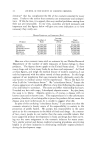
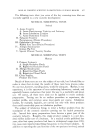
VINYL COPOLYMER 1N THE COSMETIC COSMOS 291 (9) I.e Rosen, A. L., and Reid, C. E., y. Chem. Phys., 20, 233 (1952). (10) Riegelman, S., •. ztm. Pharm. ztssoc., Sci. Ed., 49, in press, May, 1960. (11) Kreps, S. I., y. Soc. Cosmetic Chemists, 10, 98 (1959). (12) Signore, A., and Woodward, F. E., Ibid., 9, 358 (1958). (13) Knox, J. M., Guin, J., and Cickerell, E.G., y. Invest. Dermatol., 29, 435 (1957). (14) Mackie, B. S., and McGovern, V. J., zt. M. zt. ztrch Dermatol., 78, 218 (1958). (15) Robinson, R. A., and Biggs, A. I., ztustralian y. of Chem., 10, 128 (1957). (16) Barnett, G., and Powers, D. H., Proc. Sci. Sect. Toilet Goods ztssoc., No. 24, Dec., p. 24 (1955). (17) Ippen, H., and Betzler, H., drzneimittel Forsch., 7, 446 (1957). (18) Stambovsky, l•., Drug and Cosmetic Ind., 75, 311,460, 770 (1954), 76, 44 (1955). VINYL COPOLYMER IN THE COSMETIC COSMOS By P^t:L W•:i•rz * Presented December 2, ]959, New York City 'FEs ¾E^RS ^O0 the cosmetic industry had not yet been foreseen by our company as a potential market for its resin products. At that time we were oriented along two major lines--packaging adhesives and starches for paper, food and textile purposes. Our vinyl acetate polymer research program was moving into high gear, but our marketing plans were focused mainly on industries where its binding and sizing properties could be exploited. More recently, however, a polyvinyl acetate lacquer was introduced for aerosol Christmas snow, and as our technical market development special- ists gained greater familiarity with the burgeoning aerosol industry, they set their sights on hair lacquers as a prime target. After screening many polymers, a copolymer which was previously a laboratory curiosity was found to fill the bill very nicely. Today this product is in limited use in the aerosol hair sp•ay field and a number of companies are exploring nonaerosol cosmetic uses. This paper will serve to acquaint the reader with polyvinyi acetate generally, and one unique copolymer specifically. It will describe its derivation and polymerization, as well as the preparation of' vinyl acetate copolymers. A complete review of the properties of polyvinyl acetate and its copolymer will follow, with emphasis on properties useful in cosmetics. Data will then be given covering the properties of our copolymer (1), as prepared for hair sprays. Information will be presented on its aerosol properties, as well as tests for safety run by an independent laboratory. The patent position on resins for hair sprays will be described, and details given on field experience in hair sprays. * National Starch and Chemical Corp., Plainfield, N.J.

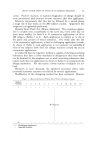
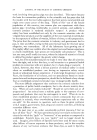
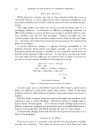
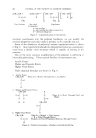
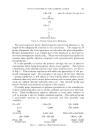
292 JOURNAL OF THE SOCIETY OF COSMETIC CHEMISTS POLYVINYL ACETATE While polyvinyl acetates are new to the cosmetics field, they have a successful history in many applications where important properties such as product stability, lack of skin irritation, odor and color are prime require- ments. The single largest and oldest use of this versatile synthetic resin is as a packaging adhesive. A multitude of different packaging materials are effectively bonded and many of these uses require a product which is odor- less, colorless, and safe for food packages. Typical examples are milk cartons, paper cups and containers, paper straws, food cartons and bags, etc. In recent years po[yvinyl acetate has become popular for remoistening gums on envelopes. A second important category is pigment binding, exemplified in the popular emulsion based paints and paper coatings. As a raw material for paints, polyvinyl acetate is notable for its strong film which does not discolor when exposed to light and heat. In the latter case the resin binds clay and other low-cost pigments and adheres them to paper and board to provide a smooth surface suitable for printing and coating. CaO q- 3C --• CaC,• q- CO (gas) Lime Coke CaC2 + 2H,•O --,- Ca (OH)2 q- CeHe(gas) CH•CH q- CHaCOOH --,- CH.,:CH O--C:O CHa Vinyl acetate Monomer Figure 1.--Chemical derivation of polyvinyl acetate. Another major use is in the field of nonwoven fibe• binders, where textile fibers are adhered to each other rather than woven. Some of the many products made are table cloths and napkins, disposable diapers and sanitary napkins. The last major category to be mentioned, although there are many other important uses, is textile finishing. Polyvinyl acetate is widely used on many classes of textile goods. It is common to find clothing such as shirts, blouses, underwear, pajamas and accessories such as handkerchiefs given a lustrous and moderately soft finish through the use of a resin sizing. A noteworthy though minor and old-time use of polyvinyl acetate is as a base in chewing gum. CHEMISTRY OF PVAc Polyvinyl acetate is a synthetic •esin derived from abundantly available natural raw materials. The chain of events starts with lime and coke
Purchased for the exclusive use of nofirst nolast (unknown)
From: SCC Media Library & Resource Center (library.scconline.org)