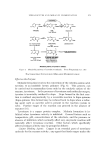
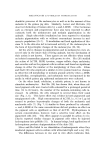
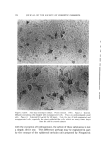
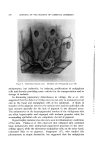
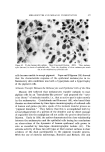
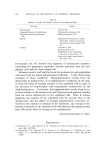
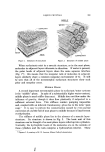
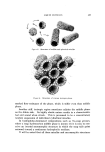
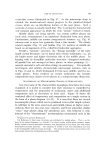
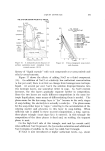
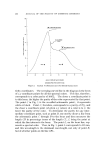
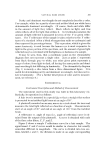
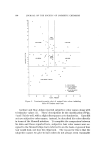
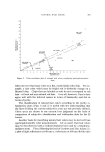
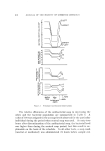
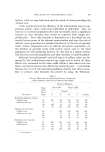
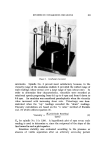
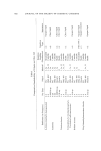
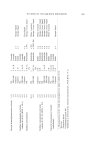
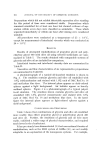
LIQUID CRYSTALS 585 Figure 3. Structure of rodlike and spherical micelies Figure 4. Structure of viscous isotropic phase marked flow-resistance of the phase, which is stiffer even than middle phase. Another stiff, isotropic region sometimes adjoins the middle phase on the dilute side. Its highly elastic nature results in a characteristic feel and sound when struck. This is presumed to be a concentrated, random suspension of individual cylindrical micelies. In hydrophobe-dominated compositions such as Na-soap greases, where a soap/hydrocarbon middle phase is known (8) it is easy to con- ceive an inverted mesomorphic structure in which the soap tails point outward toward a continuous hydrophobic medium. It will Ee noted that all these miceliar and mesomorphic structures

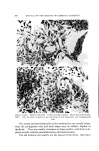
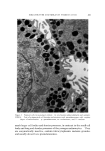
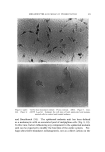
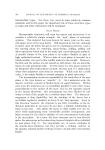
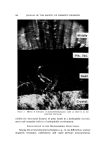
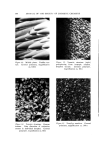
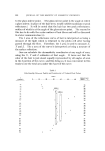
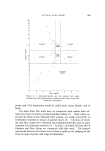
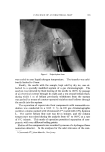
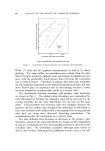
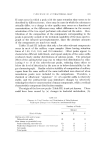
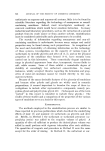
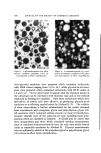
586 JOURNAL OF THE SOCIETY OF COSMETIC CHEMISTS Vis. Iso. .... . . .. .. . . • . .. •.• ,• , .. .• • .. :•... . :-. . • .• •-. •-. • . •:.y• . -,,• .... .. -- • • • . '.•' .... '.•, ' .... " • "'•' ' ...... '• { ..... '"X" ' :-• .• : -• :• • • . , - . •, • • : .:.• ' '-•:. ':•...-• • . .• .•..• .... .. • '•' .• .. '• ß .... ::•? ,.-• . • •'• .•. •, • '• •. Figure 3. Effects of hydration of dodecyldimethylamine oxide as obsen-ed by the polarizing microscope exhibit the structural features of polar heads in a hydrophilic environ- ment and nonpolar tails in a hydrophobic environment. RECOGNITION OF THE MESOMORPHIC STRUCTURES Among the several physical techniques, e.g., X-ray diffraction, nuclear magnetic resonance, calorimetry, and vapor pressure measurements,
Purchased for the exclusive use of nofirst nolast (unknown)
From: SCC Media Library & Resource Center (library.scconline.org)