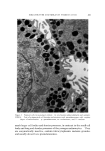
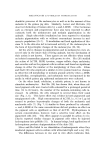
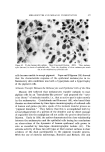
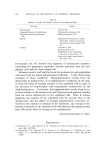
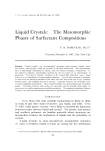
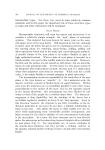
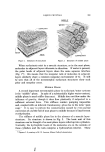
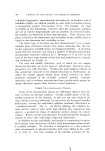
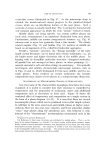
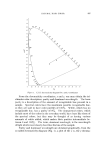
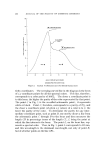
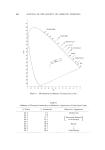
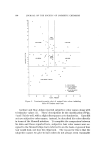
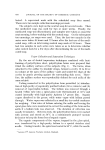
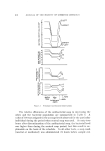
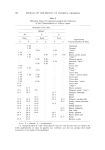
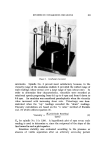
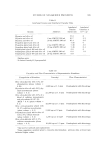
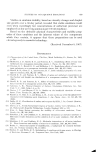
NATURAL HAIR COLOR 597 95 ,90 ß 85 520 525 ,75 510 505 .es ,,,,,• .to '• ß 55 500 '""•' .30 .25 .15 .10 0 .05 .10 .15 .20 ,25 .30 ,35 .40 .45 .50 .55 .60 .65 .70 .?5 % Figure 1. C.I.E. chromaticity diagram for x and y coordinates From the chromaticity coordinates, x and y, one may obtain the tri- stimulus color descriptors, purity and dominant wavelength. The term purity is a description of the amount of recognizable hue present in a sample. Spectral colors have the maximum possible recognizable hue, so they are said to have color purities of 100%. White, which has no recognizable hue, has a purity of 0%. The nonspectral colors, which include most of the colors in the everyday world, have hues like those of the spectral colors, but they may be thought of as having various amounts of white added, which makes their purities intermediate be- tween 0 and 100%. The term, dominant wavelength, is the wavelength of light which most closely describes the hue of the sample. Purity and dominant wavelength are obtained graphically, from the so-called chromaticity diagram (Fig. 1), a plot of the x rs. the y chroma-

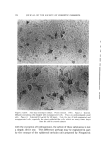
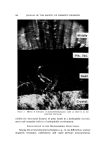
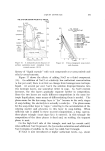
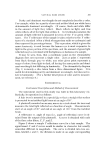
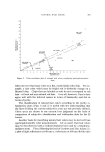
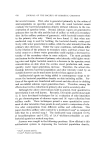
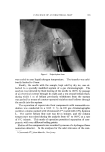
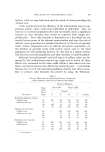
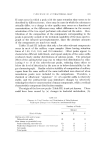
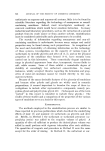
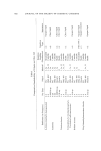
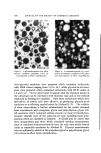
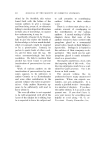
598 JOURNAL OF THE SOCIETY OF COSMETIC CHEMISTS "'•,*'" PEAK REFLECTANCE 40 50 60 70 GLASS/•IR ROR ..,,• POINT •.•.•.• PE•___K REFLECTANCE A I I I 80 90 100 ANGLE OF REFLECTANC E, DEGREES I'MEASURED FROM THE INCIDENT BEM4) Figure 2. Typical Yreflectance curve for blonde human hairs ticity coordinates. The sweeping curved line in the diagram is the locus of x,y coordinate points for all the spectral colors. This line, therefore, corresponds to a color purity of 100%. The closer a coordinate point is to this locus, the higher the purity of the color represented by that point. The point C in Fig. 1 is the so-called achromatic point it represents white or black. Point C, therefore, corresponds to a purity of 0%, and the closer a coordinate point (of given x,y values) of a color is to C, the lower the purity of the color. To determine the purity for any inter- mediate coordinate point, such as point B, one merely draws a line from the achromatic point C through B to the locus and then measures the length CB in percentage terms of the length CL, L being the point at which the line intersects the locus. The point L, on the locus line, rep- resents a spectral color. Thus, in Fig. 1, point L corresponds to 585 nm, and this wavelength is the dominant wavelength, not only of point B, but of all other points on the line CBL.
Purchased for the exclusive use of nofirst nolast (unknown)
From: SCC Media Library & Resource Center (library.scconline.org)