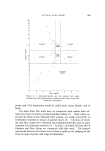
J. Soc. Cosmetic Chemists, 19, 595-609 (Aug. 19, 1968) An Instrumental Description and Classification of Natural Hair Color MARION DEN BESTE and ALAN MOYER, B.S.* Presented September 21-22, 1967, Seminar, Chicago Synopsis--Representative natural hair colors have been characterized in physical terms using a specially designed gonioreflectometer and the tristimulus system. Dominant wavelength varies very little most samples fall in the range from 586 to 588 nm. Purity varies between 10 and 60% luminosity between about 2 and 90%. Measured purity correlates with the subjective descriptors ashen and warmth. Hair colors of low purity are ash or drab and those of high purity warm or red. Similarly, measured luminosity correlates with the subjec- tive assessment of dark or light hair of low luminosity is dark and of high luminosity light or blonde. The tristimulus data for natural hair colors can be classified and correlated with subjective descriptions as "dark brown," "medium brown," "warm blonde," etc. Similar measurements of several earlier workers are in good agreement with these classifications. INTRODUCTION Research concerned with hair color and coloring is often hampered by a difficulty in describing hair color in clear unambiguous terms. One reason for this is that color names do not have universal meaning (1). That which is light warm brown to one observer may be dark reddish blonde to another. The result has been that each worker has had to develop his own scheme of color naming. Trotter (2) presented a sum- mary of some 40-50 such schemes. One of the more detailed and uni- versally applicable schemes was proposed by Garn (3) who named hair colors by matching samples with the standard Munsell color chips (4). These chips are carefully arranged, classified, and spaced to represent equal color differences. To name a hair color, Garn systematically searched the Munsell book until he found the color chip most closely ap- * The Toni Co., Chicago, Ill. 60654. 595

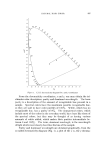
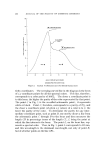
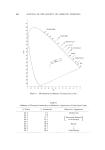
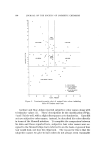
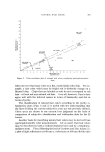
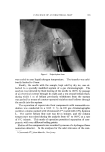
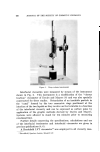
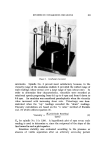
590 JOURNAL OF THE SOCIETY OF COSMETIC CHEMISTS proximating the color of his hair sample. He then called the hair color by the Munsell notation of the matching chip. Garn's system seems workable, but it has not been widely used. One reason for this may be that the color matches are not easy to make because hair and chips are dissimilar materials and differ in texture. Also, while a given worker might be able to match colors repro- ducibly, there is reason to doubt that different workers would neces- sarily agree with each other because different observers often see colors differently (1). As early as 1934, Gardner and Mac Adam (5) demon- strated an instrumental measurement of hair color. They measured color spectrophotometrically and succeeded in presenting a classification of several hair colors based on reflection spectra. There are several prob- lems with their method one is economic because spectrophotometric color instruments are expensive. The less expensive color difference in- struments, such as used in the coatings and textile industries, are usually unsatisfactory because most hak colors fall in the range of least instru- ment sensitivity. A second problem is that hair color is not a constant quantity, i.e., it may be different at different orientations of the hair with respect to the angles of incidence, reflection, and viewing. The commercially available instruments are not designed to measure color conveniently at several angles of incidence and reflection. To overcome these problems, Den Beste (6) designed and built a scanning goniore- flectometer capable of making light reflectance and color measurements over a wide range of both angle of incidence and of reflection. This instrument, which measures color in the accepted terms of C.I.E. tri- stimulus notation (7), was used for the work described here. It is useful to review the tristimulus system briefly. By this scheme, colors are described in terms of the amount of red, green, and blue light they reflect. Thus, to describe a color in this notation, three separate measurements are necessary. In the first measurement, a beam of light is passed through a red or X filter, and the amount of light reflected by t•he sample is determined. The measurement is repeated a second and third time using a green or Y filter and a blue or Z filter. The amount of light reflected in each instance is referred to as the X, Y, or Z reflectance, respectively, and these data are used to calculate the so-called tristimulus chromaticity coordinates, x and y. These coordinates are mathematical representations of color. They take into account the reflectance of all three colors, X, Y and Z, and are not mere reductions in size of the X and Y, as might be inferred from the choice of symbols. The methods for calculating x and y have been described (7).
Purchased for the exclusive use of nofirst nolast (unknown)
From: SCC Media Library & Resource Center (library.scconline.org)