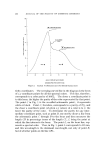
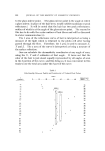
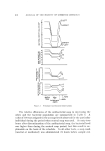
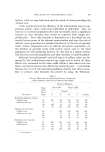
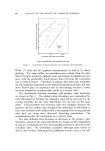
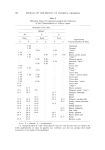
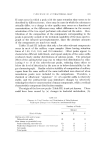
INFLUENCE OF ANTiBACTERIAL SOAP 625 the same axilla remained the same. The efficiency of odor control varied with the individual and was not directly related to the efficiency of bacterial control. After discontinuing the use of the antibacterial soap, the bacterial population density tended to rise to high levels faster than did the odor intensities. Even after 48 hours, some residual control of odor was evi- dent. It is concluded that (a) odor intensity and composition are dependent only in part on the total bacterial population density, (b) several pro- cesses are responsible for generation of odor-relevant components, and (c) antibacterial agents act on these processes with some selectivity. A thesis is advanced that odor intensity is regulated by (a) the rate of apocrine sweat generation and its dilution by eccrine sweat, (b) only odor-producing microorganisms, and (c) the concentration of antibac- terial agents and their activity with respect to various microorganisms. The odor generation in garment sites is further influenced by the amount of the nutrients and microorganisms transferred by sweat and skin debris to the garment, by the efficiency of transport of the antibacterial agent from the axillary skin to the garment, and by the humidity of the garment. All these factors acting together lead to differences in the efficiency with which antibacterial agents control bacterial population and odor. Measurements of the reduction in total bacterial population density when antibacterial soap is used do not constitute a good correlative measure of the efficiency of odor control for the same case under observa- tion. A measurement of odor-intensity reduction in vapors from the axillary vault gives some indication of the odor reduction from the gar- ment for the same individual. For different individuals, a normalizing factor to account for nutrient, microorganism, and antibacterial agent transport from the axilla to the garment must be introduced before odor control for the garment can be predicted from odor intensity of the axil- lary vault. (Received November 6, 1967) REFERENCES (1) Krotoszynski, B. K., Drawticks, A., Jungermann, E., and Taber, D., Comparison of vaporous effluents for axillae, (in preparation). (2) Draynicks, A., and Krotoszynski, B. K., Collection and processing of airborne chemical information, .L Gas Chromatog., 4, 367 (1966). (B) Dravnieks, A., and Krotoszynski, B. K., Collection and processing of airborne chemical information: fluidized bed technique, Ibid., 6, 144 (1968).

626 JOURNAL OF THE SOCIETY OF COSMETIC CHEMISTS (4) Shelley, W. B., Hurley, H. J., Jr., and Nichols, A. C., Axillary odor, experimental study of the role of bacteria, apocrine sweat, and deodorants, Arch. Dermatol., 68, 430 (1953). (5) Pachtman, E. A., Vicher, E. E., and Brunner, M. J., The bacteriologic flora in seborrheic dermatitis, J. Invest. Dermatol., 22, 389 (1954). (6) Meyer-Rohn, J., t}ber die Ursachen ltistigen K6rpergeruches, Fette, Seifen, Anstrichmiltel, 67, 353 (1965). (7) White, C., The use of ranks in a test of significance for comparing two treatments, Bio- metrics, 8, 33 (1952).
Purchased for the exclusive use of nofirst nolast (unknown)
From: SCC Media Library & Resource Center (library.scconline.org)