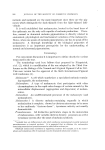
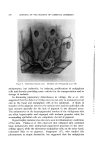
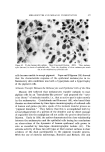
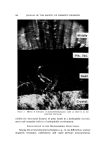
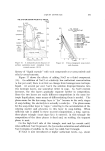
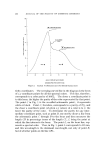
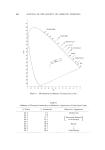
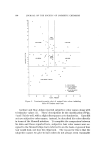
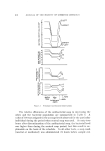
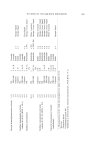
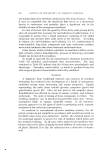
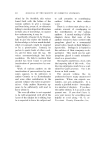
INFLUENCE OF ANTIBACTERIAL SOAP 617 Bacterial Count The axillary bacterial flora was sampled by means of the glass cup method of Pachtman et al. (5). Three ml of 0.1% buffered Triton X-100* were pipetted into a 3.8-cm 2 glass cylinder held firmly against the axillary skin of the subject, who was placed in the supine position. The liquid was gently agitated with a glass rod for 60 seconds. One ml of the solution was added to 9 ml of sterile distilled water containing 1% Tween 80, t and serial dilutions were then made. Ali- quots of 1 ml were added to a sterile Petri dish and plated in tryptic soy aõar, containing 1% Tween 80, incubated for 48 hours, and counted. RESULTS AND DISCUSSION Odor Intensity Figure 2 summarizes the principal trends observed. The levels of the bacterial densities etc. during axillary care with the neutral and the antibacterial soaps were, in each case, the averages of four to ten ob- servations over several weeks. The circled points represent one ob- servation each and show the aftereffect of discontinuing the use of the antibacterial soap. The subjects differed very much in their average bacterial population densities during both the neutral and the medicated soap periods. The antibacterial soap consistently depressed the bacterial population den- sity, the primary odor intensity, and the secondary odor intensity but did not cause any consistent variation in production of water, which ap- proximately represents the rate of eccrine sweat generation. After discontinuing the use of the medicated soap, the bacterial population restored itself to the level typical for skin cared for with the neutral soap. The odor intensity from the secondary sites remained low for 48 hours and then tended to climb toward the levels typieal of the neutral soap regime. The intensity of odor from the primary sites also remained low for 48 hours and then appeared to return to the normal neutral soap regime levels with a greater hesitancy. These differences can probably be explained by residual quantities of the antibacterial agent in the skin that might be sufficient to inhibit odor-producing bacterial activity on skin but not in garments. The data are insufficient to conclude that there is a real difference in the odor intensity return rate as compared with the bacterial level return rate. * Triton X-100 ©, Rohm and Haas, Philadelphia. I Tween 80 ©, Atlas Chemical Industries Inc., Wilmington, Del.

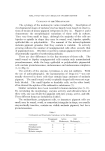
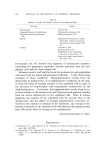
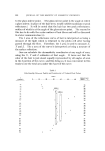
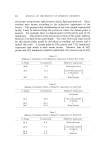
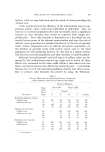
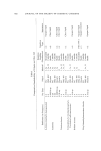
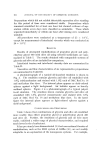
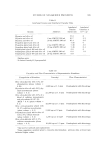
618 JOURNAL OF THE SOCIETY OF COSMETIC CHEMISTS LEFT •//•\•o U RIGHT RIGHT LEFT '.'• '•',•.,\ / /u õ,I 8 x,,o..• Z õ •o • •½ø1- ,,, _z f /.'x. x p z•: ß \ b.I 0 /.,..•% .,,,•,M, ,•- • •'l:r / •o Neutrol S•p hr Soop L_48hr Anfibacferial Agenfs Figz•re 2. Principal experimental observations The relative efficiencies of the antibacterial soap in depressin• the odors and the bacterial population are summarized in Table I. A value of 100 was assigned to the average levels observed for the particular individual during the period when neutral soap was used. Seventy-two hours after discontinuation of the antibacterial soap, the bacterial level was higher than during the neutral soap period, but this result is ex- plainable on the basis of the schedule. In all other tests, a soap wash (neutral or medicated) was administered 24 hours before sample col-
Purchased for the exclusive use of nofirst nolast (unknown)
From: SCC Media Library & Resource Center (library.scconline.org)