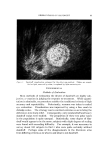
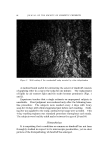
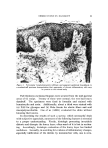
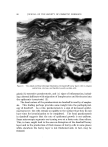
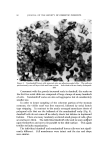
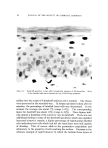
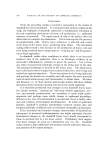
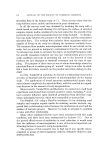
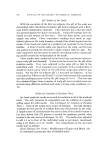
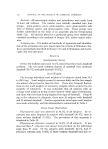
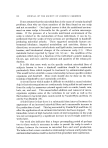
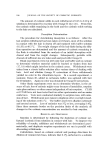
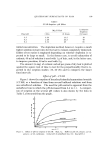
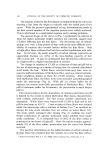
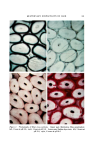
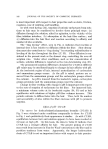
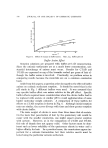
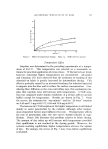
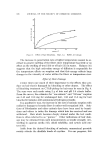
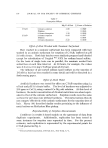
92 JOURNAL OF THE SOCIETY OF COSMETIC CHEMISTS .... . •:.: - :,• •:• r •. ..... •.. : •.• - .. • :•. :.•- :• ."•:, •'•%.•.. •? '"•' •:•2•.. ':• • %::..-• • % :7• ..... . •" e.. '• ' m-? . • • • '• •. •". ,•) -.: .... • • • e j -•..•. •½-•. ' r• -• : :• E "• ::•:•:-:•'•: • F::'• •:-•: '• ' '.•F .... •: ' • • ' •" 'e • •: ..... X. .... •:•Z' .... • :•" •. ß .. ' •-' • "- •'• •'•a ':.'•..%• - 2•'. ' :' '• . ' •: ' .... •..• .... ... .• •. • . :• • •:. .: : . •. :.:':u .• • :. •l : -- ,• •:--: ....... '• :•. .'• :T .j . :• •.:•: "::.t": ':: '½ . "' . .. 7' :- : 'Z •:... ":([• • :%• :/:•".½- -" '• •: f :• :'":' /- tY'" 5• - :"•:&. '•i '• • •' ': .• * . ..... :'" :q* :.. •" .}':El" '•S•..• -.½•...: .'. (• :"•h •. , '::•' ........• ..... •%-•g ..- ..... .. •'-•. ½,: ,.::'..,..• ...... '•% •. ...•. .'.• •: '.•: Figure 9. Nondandruff horny cells removed onto an adhesive•oated slide. The calls are predominantly one cell layer thick and form a sheet. IndividuM cells are clearly distinguish- able Consonant with th• grossly increased scale • dan•uff, the scales on the first few s•rial slides ar• composed of large clumps of many hun•eds of cells. Nondandruff scales are also call aggregates but of considerably s•all•r size. In order to insur• sampling of th• coherent portion of the stratum comeurn, the visible scurf was first removed, followed by serial Scotch tape stripping. In contrast to the neatly arranged monolayer sheets of polygonal c•11s that are the hallmark of the nondandr• scalp (Fig. 9), dandruff cells do not come off in orderly sheets but dehisce in haphazard fashion. There are many randomly scattered small groups of cells, often several layers thick. The individual dandruff calls tend to warp andlcurl upon themselves and not to li• paralld to the slid• surface. Ths again test•es to faulty organization. The individual dandruff and nondandruff horny calls were-not sigffifi- cantly d•erent. C•11 membranes were intact and th• siz• and shap• w•r• similar.

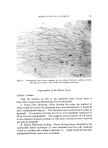
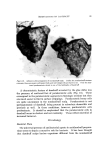
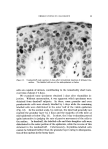
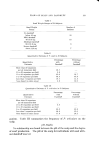
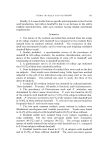
OBSERVATIONS ON DANDRUFI• ,..• • ? -"• . :.• .•::-- .,:•.• • • '• ..• • •. ß .:' •..•-•. ß .•: •,• •... • =-%- ' v-. .... .. .%•. • . ß .. • ...... •}:•. . .. '.: .... :. .•..? .: ..•: . ..... Figure 10. Adhesive slide preparation froln dandruff scalp. Unlike the nondandruff stratum corneum, these are many cell layers thick and individual cells are hard to see. Note the scat- tered parakeratosis which is one of the hallmarks of dandruff A characteristic feature of dandruff revealed by the glue slides was the presence of scattered foci of parakeratotic cells (Fig. 10). These correspond to the parakeratotic segments in histologic sections but they are much easier to find in surface strippings. Parakeratotic horny cells are quite uncommon in the nondandruff scalp. Parakeratosis is not pathognomonic of dandruff, being present in seborrheic dermatitis and psoriasis as well. In these conditions, however, parakeratotic cells predominate. It should be emphasized that the parakeratotic cells in dandruff occur in clusters and not randomly. These reflect microfoci of increased turnover. Microbiology Bacterial Flora The universal presence of antibacterial agents in antidandruff prepara- tions seems to imply a causative role for bacteria. It has been thought that dandruff scalps harbor organisms different from the nondandruff
Purchased for the exclusive use of nofirst nolast (unknown)
From: SCC Media Library & Resource Center (library.scconline.org)