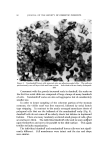
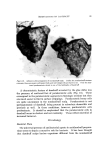
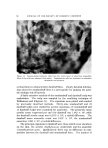
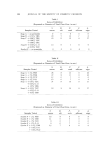
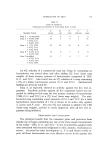
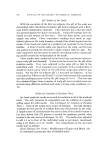
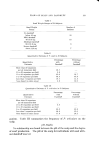
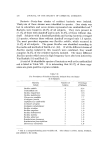
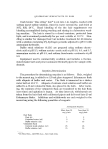
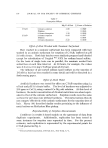
122 JOURNAL OF THE SOCIETY OF COSMETIC CHEMISTS Bacteria--All microscopic studies and subcultures were made from 24-hour old cultures. The isolates were initially classified into four groups: gram-positive .cocci, gram-negative cocci, gram-positive rods with or without spores, and gram-negative rods. These groups were [urther subdivided on the basis of an anaerobic glucose fermentation study (32). All bacteria placed in a particular group were studied and classified according to the methods of Bergey (33), unless stated other- wise. Actinomycetes--The media and methods of separation and identifica- tion of the actinomycetes were based upon the criteria of Waksman (34). Keys and methods described in Bergey (35) and in Waksman and Leche- valier (36) were also used. RESULTS Questionnaire Survey Of the 502 students surveyed, 70.1% stated that they had a dandruff problem. The two most common degrees of dandruff were moderate dandruff (33.7%) and mild dandruff (30.3%). Scurf Weights The average individual scurf weights of 52 subjects varied from 13.3 to 200.0 mg. Scurf weights seemed to increase daily and the last sample was almost always heavier than the first. There were frequent fluctua- tions in the scurf weights of successive samples which occurred in the majority of volunteers. It was noticeable that all subjects with an average scurf weight of 40 mg or more showed visible signs of exfoliation, and those with less than 40 mg displayed no signs of dandruff. Using 40 mg as the criterion for diagnosis, there were 28 subjects with dandruff and 24 without dandruff. Further separations based upon scurf weights were made arbitrarily, and this information is summarized in Table I. Direct Smear Observations ?ityrosporum ovale was observed in 86.5% of all subjects. Its oc- currence was more frequent in subjects with dandruff (96.4%) than in those without dandruff (75.0%). The prevalence of this organism is tabulated in Table II. ?ityrosporum orbiculare occurred in 76.9% of all subjects. It was observed that ?. orbiculare was always less prevalent on the individual scalp than P. ovale. Of the subjects with dandruff, 82.1% had _P. orbiculare whereas only 70,8% of those without dandruff had this or-

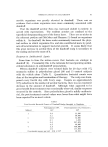
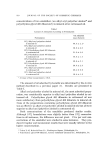
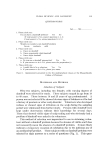
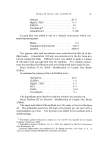
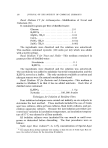
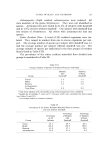
FLORA OF SCALP AND DANDRUFF Table I Scurf Weight Ranges of 52 Subjects 123 Scurf Weight Number of Range Subjects No dandruff below 40 mg 24 Mild dandruff 40-79.9 mg 15 Moderate dandruff 80-119.9 mg 6 Severe dandruff above 120 mg 7 Table II Quantitative Estimate of P. ovale in 52 Subjects Percentage Percentage Quantitative with without Estimate Dandruff Dandruff More than 30 organisms per oil immersion field 21 to 30 organisms per field 11 to 20 organisms per field 1 to 10 organisms per field Less than 1 organism per field None found in entire smear 10.7 3.6 25.0 46.4 10.7 3.6 ß o ß 16.7 45.8 12.5 25.0 Table III Quantitative Estimate of P. orbiculare in 52 Subjects Percentage Percentage Quantitative with without Estimate Dandruff Dandruff More than 30 organisms per oil immersion field 21 to 30 organisms per field 11 to 20 organisms per field 1 to 10 organisms per field Less than 1 organism per field None found in entire sinear 50.0 45.8 28.6 25.0 17.9 29.2 ganism. Table III summarizes the frequency of t:'. orbiculare on the scalp. pH Studies No relationship was found between the pH of the scalp and the degree of scurf production. The pH of the scalp for individuals with and with- out dandruff was 5.2.
Purchased for the exclusive use of nofirst nolast (unknown)
From: SCC Media Library & Resource Center (library.scconline.org)