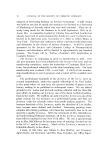
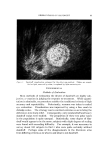
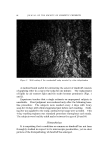
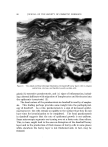
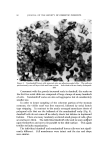
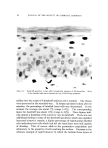
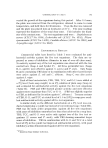
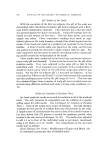
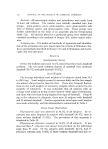
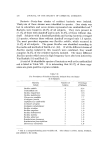
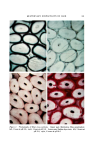
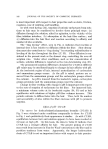
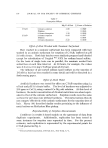
•4 JOURNAL OF THE SOCIETY OF COSMETIC CHEMISTS ß : . '. -•: ... • ::• .. ..•: ?.'i'•:: • --. 2•,.. ...-.:.• , •.. • . [: .½• •:"•.. •'•J: .... 5.%.: • • '• •2 • .... . .... '2: ::: -•'• Figure 11. Giemsa-stained adhesive slide from the horny layer of seborrheic dermatitis. Most of the cells have retained their nuclei. Parakeratotic cells are dmninant in seborrheic dermatitis and psoriasis or that there is a characteristic dandruff flora. Clearly detailed informa- tion about the nondandruff flora is a prerequisite for judging the possi- ble etiologic role of bacteria. A fairly extensive analysis of the nondandruff and dandruff scalp was undertaken. The scalp was sampled by the scrubbing technique of Williamson and Kligman (8). The organisms were plated and counted by previously described methods. Thirty-nine nondandruff and 24 dandruff scalps were studied for aerobic organisms 27 nondandruff and 15 dandruff scalps were examined for anaerobes. The geometric mean aerobic count (expressed per cm •') for dandruff was 1.482 X 10 •, while the dandruff aerobe count was 0.2513 X 10 •, a sixfold difference. The dandruff mean anaerobic count was 2.527 X 10 •, the nondandruff anaerobes 1.260 X 10 •, a twofold difference. The principal organisms in dandruff were those which occur elsewhere on the skin, the aerobic Staphylococcus epidermidis and the anaerobic Corynebacterium aches. Qualitatively there was no difference in com- position between the dandruff and nondandruff flora. The number of

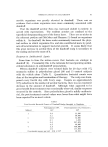
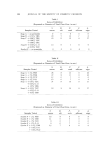
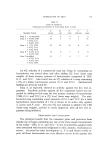
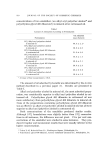
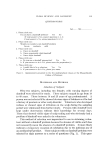
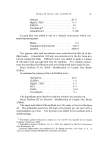
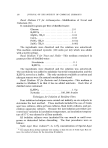
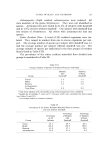
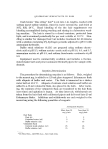
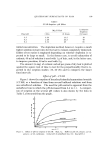
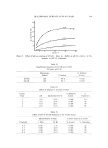
OBSERVATIONS ON DANDRUFF 95 aerobic organisms was greatly elevated in dandruff. There was no evidence that certain organisms were more commonly associated with dandruff. That the dandruff aerobic flora was increased sixfold is entirely in accord with expectations. The resident aerobes are confined to the superficial desquamating part of the horny layer. There are no niches in the coherent portion and McOsker and Harmon (5) found no organisms within it. In dandruff, the loose scales enormously increased the phys- ical surface in which organisms live and also contributed more by-prod- ucts of keratinization to support bacterial growth. It seems likely that this great increase in aerobic flora of the dandruff scalp is secondary to the scaling and not the cause of it. Response to A ntibacterial A gents From time to time the notion recurs that bacteria are etiologic in dandruff (9). Presumably this is the rationale for incorporating antimi- crobial substances in antidandruff preparations. Fifteen dandruff subjects were treated daily for 20 days with 1% neomycin sulfate in polyethylene glycol 200 and 15 control subjects with the vehicle alone (Table I). Quantitative bacterial counts were done at the inception and termination of therapy. The scalp was sham- pooed every fourth day with Ivory soap. Despite an approximately 97% reduction in the number of aerobic bacteria, there was no consistent decrease in the amount of dandruff. Although what appeared to be great benefit from treatment was occasionally observed, similar responses occurred in the controls. Since polyethylene glycol is mildly antibacte- rial, the post-treatment control values were lower than what might have been expected for an inert vehicle. Table I Total Aerobic Bacterial Counts of Dandruff Scalps Sampled in Duplicate Pretreatment (106), Post-treatment (1% Neomyein), Subject cm 2 cm 2 1 5.8 3.2 2 0.01 0.7 3 3.5 4.5 4 3.5 2.9 Gravimetric means per cm • 0.51 X 10 • 22 300 56 000 73 000 1 67O 357 879 46 666 459 696 177 879 16 197
Purchased for the exclusive use of nofirst nolast (unknown)
From: SCC Media Library & Resource Center (library.scconline.org)