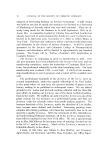
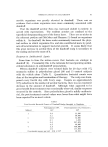
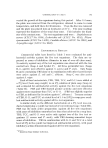
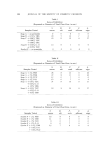
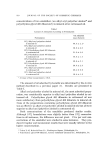
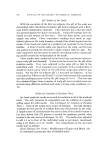
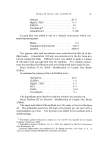
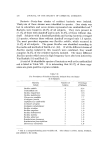
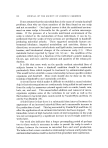
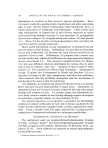
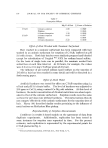
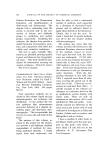
126 JOURNAL OF THE SOCIETY OF COSMETIC CHEMISTS Bacteria--Forty-four strains of resident bacteria were isolated. Thirty-six of these strains were identified to species. One strain was lost in subculture and seven strains represented one unidentified rod.* Bacteria were found in 42.3% of all subjects. They were present in 57.1% of those with dandruff and in only 25.0% of those without dan- druff. Subjects with a dandruff problem and having bacteria averaged 2.3 species whereas those without dandruff averaged only 1.3 species. The most prevalent organism was Bacillus subtilis, which occurred in 15.4% of all subjects. The genus Bacillus was identified according to the media and methods of Smith et al. (32). If all the different strains of Bacillus species isolated in this research were combined, they would comprise 52.3% of the resident bacteria isolated. The many different Bacillus species which occur in high frequency have also been noticed by Van Buskirk (10) and Beal (5). A total of 16 identifiable species of bacteria as well as the unidentified rod is listed in Table VII. It is interesting that 90.5% of these orga- nisms are gram-positive or gram-variable. Table VII The Prevalence of Resident Bacteria Isolated from the Scalps of 52 Subjects Bacteria Number of Percentage Isolate Isolates of Subjects Bacillus subtills 8 Unidentified rod 7 Bacillus megaterium 5 Bacillus pulvifaciens 5 Micrococcus candidus 4 Alcaligenes faecalis 2 Staphylococcus epidermidis 2 A erobacter aerogenes 1 Alcaligenes metalcaligenes 1 Bacillus circulans 1 Bacillus coagulans 1 Bacillus lichenif ormis 1 Bacillus pumilus 1 Bacillus s phaericus 1 Brevibacterium brunneum 1 Brevibacterium:•insectiphilium 1 Micrococcus caseolyticus 1 15.4 13.5 9.6 9.6 7.7 3.8 3.8 1.9 1.9 1.9 1.9 19 19 19 19 19 19 * This is a nonspore-forming gram-variable rod. The colony is yellow, raised, wrinkled, and adheres to the media.

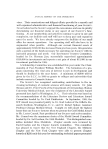
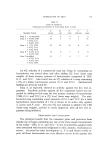
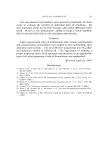
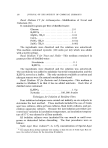
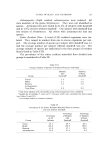
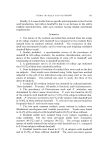
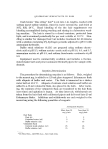
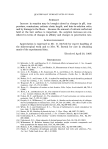
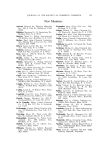
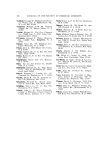
I•LORA OF SCALP AND DANDRUFF 127 Actinomycetes--Eight resident actinomycetes were isolated. All were members of the genus Streptomyces. They were not identified to species. Actinomycetes were found in 21.4% of subjects with dandruff and in 4.5% of those without dandruff. One subject with dandruff had two strains of Streptomyces. All others with actinomycetes had one species. Entire Resident Flora--A total of 225 resident organisms were iso- lated. They ranged in number from one to eleven organisms per sub- ject. The average number of species per subject with dandruff was 5.5 and the average number per subject without dandruff was 3.0. The average number of species per individual in the four groups of resident flora is listed in Table VIII. The prevalence of the entire resident microbial flora divided into groups is considered in Table IX. Table VIII Average Number of Species of Resident Flora per Individual Group Subjects Subjects with without Dandruff a Dandruff a Yeasts • 1.4 1.1 Molds 3.1 2.3 Bacteria 2.3 1.3 Actinomycetes c . ..... Total Flora 5.5 3.0 • Only those subjects with the specific group of microorganisms were considered. b Results do not include P. ovale and P. orbiculare which were considered by direct smear (see Tables II and III). c Not enough isolates to warrant inclusion. Table IX Prevalence of the Entire Resident Microbial Flora in Persons with and without Dandruff Group Percentage Percentage Percentage of Subjects of Subjects of All with without Subjects Dandruff Dandruff Yeasts 44.2 56.4 29.2 Molds 100.0 100.0 100.0 Bacteria 42.3 57.1 25.0 Actinomycetes 13.5 21.4 4.5
Purchased for the exclusive use of nofirst nolast (unknown)
From: SCC Media Library & Resource Center (library.scconline.org)