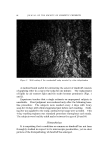
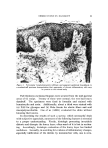
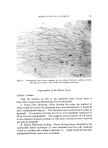
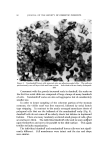
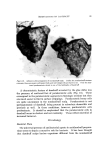
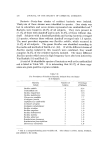
JOURNAL OF THE SOCIETY OF COSMETIC CHEMISTS We would like to reiterate that accurate evaluation of the efficacy of antidandruff therapy is very difficult. Any shampoo regularly applied is helpful, if only by washing out scurf. Therefore, only consistent or marked diminution in the amount of dandruff can be deemed thera- peutically significant. In our estimation, neomycin eliminates aerobic bacteria, but not dandruff. Anaerobes were not studied. These experiments do not contradict the evidence that some anti- bacterial agents, zinc pyridine thione for example, diminish dandruff. We postulate, however, that the elimination of bacteria is probably not the mechanism by which these chemicals suppress dandruff. We sup- pose that they inhibit the rate of proliferation of epidermal cells. Fungal flora Of the microorganisms mentioned in the pathogenesis of dandruff, none have been more consistently invoked than ?ityrosporum ovale. This lipophilic yeast, which is part of the normal cutaneous flora, has achieved fame as the supposed cause of dandruff (10). It has its headquarters on the scalp where it is the dominant fungal element. Actually, recent studies reveal two Pityrosporum, P. orbiculare as well as P. ovale (11). The quantity of ?ityrosporum species on the scalps of dandruff and nondandruff subjects was estimated in two ways: 1. Direct visualization by application of adhesion slides to the scalps of 25 dandruff and 1,5 nondandruff subjects and then staining of the slides with periodic acid Schiff reagent. 2. A more quantitative method using the Millipore filter method in • dandruff and ,5 nondandruff subjects (12). Both methods yielded similar results. Every hairy scalp had abun- dant numbers of ?ityrosporum, predominantly ?. ovale. The number of Pityrosporum present on the dandruff scalp greatly exceeded that of the nondandruff. Our interpretation is that the greatly increased scaling in dandruff enables larger quantities of organisms to grow. The enhanced fungal • ora is probably secondary. Response to •t ntifungal •t gents In order to try to assess the possible causative role of Pityrosporum species, we undertook to eliminate these yeasts without affecting the bacterial flora. Fifteen dandruff scalps were treated once daily for 20 days with 3% aqueous Amphotericin B,* $ with 1% aqueous nystatin, t * Fungizone lotion (8%) Squibb. • Neomycin sulfate (1%).

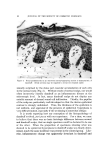
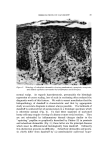
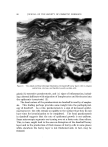
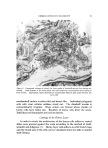
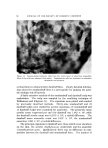
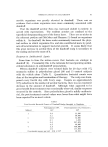
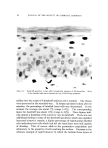
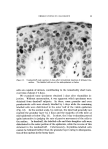
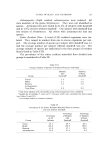
OBSERVATIONS ON DANDRUFF 97 and $ with water. Amphotericin and nystatin dramatically reduced the number of Pityrosporum as gauged by glue slides, but, despite almost total eradication of yeast, heavy dandruff persisted in all but three subjects. It seems likely that the yeasts multiply more abundantly as the amount of scale increases and that they are not in themselves responsible for the increased scaliness. Epidermal Kinetics Epidermal turnover refers to the time required for the entire popula- tion of epidermal cells, dead and alive, to be replaced. The epidermis grows continually by virtue of random cell divisions in the basal or germinative layer. The rate of loss of horny cells at the surface is necessarily in equilibrium with the production of new cells in the basal cell layer. If more scales are produced in dandruff, then cell turnover must be accelerated. At any given time, there should be more cells in mitosis and the time required for a basal cell to traverse the dandruff epidermis and be cast off at the surface (transit time) should be less. Heretofore, there has been no direct demonstration of these signs of increased turnover in dandruff. Although our observations are incom- plete, they are sufficiently clear to merit disclosure. Our earliest study, in collaboration with Dr. Eugene Van Scott, mea- sured the mitotic index, the percentage of dividing cells per thousand basal cells. While, on the average this value was about twice normal in dandruff subjects, there were difficulties. This procedure is tedious and difficult, especially in Negroes whose melanin-packed epidermal cells obscure mitoses. In addition, some dandruff subjects had normal values, probably reflecting experimental error. Radioautographic techniques for studying epidermal kinetics are more crisp and accurate. Weinstein and Van Scott (13) and Epstein and Maibach (14) have pioneered the technique of intradermal injection of radiolabelled substances into human skin. When, for example, tritiated thyroidinc is injected, this nucleic acid is quickly incorporated into the nuclear chromatin. Biopsy within the next 30-45 minutes shows the number of basal cells which are in the stage of DNA synthesis, a step preparatory to mitotic division and thereafter an index of the latter. Furthermore, biopsies on successive days after injection of tritiated thyroidinc enable one to determine when the first cells reach the base of the horny layer. In the skin of the back there is fairly good agreement that the turnover time of the living epidermis is about two weeks. We injected 0.1 ml of a saline solution containing 5-10 •c of 3H-thy-
Purchased for the exclusive use of nofirst nolast (unknown)
From: SCC Media Library & Resource Center (library.scconline.org)