128 JOURNAL OF THE SOCIETY OF COSMETIC CHEMISTS ]_)ISCUSSION Questionnaire Survey As previously mentioned, there are disadvantages to this type of questionnaire in which conclusions are based upon personal opinion. The fact that 70.1% of our students stated they had a dandruff problem agrees with the estimate of 70% incidence of this affliction in the United States (44). The prevalence of dandruff in our survey also agrees with other estimates that dandruff occurs in 75 to 95% of American scalps (45). Levine (46) and Templeton (47) consider it a "rarity" to find human subjects who are "normal," that is, those who are not "infected" in some way or who show no evidence of excessive oiliness, dandruff, inflamma- tion, or baldness. Templeton's evidence is based on the visual observaq tion of several hundred scalps and the finding of only 26 "normal" sub- jects. Our results show that while it is difficult to find subjects with unaffected scalps, it is not as rare as reported by these workers. The Relationship of Scurf Weights to Dandruff The separation of subjects into those with dandruff and those without dandruff was based upon the obvious relationship of scurf weights to dandruff. In this research 40 mg was the weight selected for separation for the reasons explained under "Materials and Methods." However, it should be fairly stated that individuals with a scurf weight above 40 mg do not necessarily have dandruff. This figure was true for the specific group of subjects which we studied using the two- minute HairVac technique, following the specified regimen, and during the sampling period of March to May. If any one of the above criteria is varied, the scurf weight will change. Mitsutsugu and Abe-Tsutomu (48) noted that the total scurf weight was lowest in mid-August and greatest in mid-June. Therefore, if the sampling period were in August, the separation figure might be lower than the 40 mg and if the sampling period were in June, then the figure might be higher. It was observed by VanderWyk and Roia (8) that, after continued use of antimicrobial agents, there was a leveling off of scurf weights which could not be lowered. These levels were referred to as "threshold levels," and they varied from 13 to 95 mg in different individuals. How- ever, in seven of the nine subjects studied, the "threshold level" was below 40 rag. In all instances, when the "threshold level" was reached, regardless of scurf weight, there was a marked alleviation of dandruff.

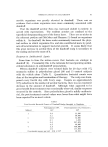
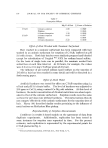
FLORA OF SCALP AND DANDRUFF 129 Since this "threshold level" varies for each individual, it is difficult to establish a definite scurf weight which can be used as a separation crite- rion. It is conceivable that in a future study there might be a subject with no visible exfoliation which would have a scurf weight higher than an individual with visible exfoliation. The reason for this is that the lipid content of scurf varies from individual to individual and is affected by environmental factors of humidity and temperature (48). It has often been noted in our work that large quantities of scurf may weigh con- siderably less than smaller quantities because of visible differences in oiliness. Relationship of Resident Flora to Dandruff As can be seen in "Results," the average number of microbial species per individual (Table VIII) is higher and the prevalence of specific groups of organisms (Table IX) is uniformly greater on the scalps of persons with dandruff than on those persons without dandruff. How- ever, from these results a definite etiologieal relationship between the microbial flora and dandruff cannot be made. It is very difficult to prove a definite microbial relationship. There are at least four possible reasons for this difficulty. First, it is possible to have more than one etiological factor (11) in dandruff production even though the physical appearance of excessive desquamation is the same. These factors might be related to or in- dependent of each other. It can be postulated that the contributing factor in one subject is different from that in a second subject while the combination of both is the etiological factor in a third subject. Our re- search suggests that there is a relationship between microorganisms and certain cases of dandruff. This raises the often asked question of whether dandruff is the result of microbial invasion or whether the microbial invasion is brought about by the presence of abundant scurf which serves as a source of nutrient. It is our belief that both questions can be answered affirmatively. Some dandruff problems are the result of microbial invasion, and by eliminating the flora, the dandruff problem can be eliminated (8). It is also believed that once dandruff is established an increase in the micro- bial flora will follow. This increase in microbial flora may contribute further to the dandruff•ondition as an additional factor regard•qs of original etiology. Thus, a self perpetuating cycle betwecrt scurf produc- tion and the microbial flora is established.
Purchased for the exclusive use of nofirst nolast (unknown)
From: SCC Media Library & Resource Center (library.scconline.org)