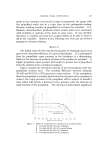
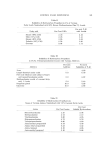
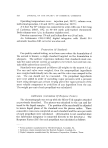
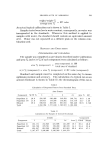
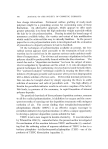
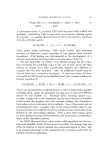
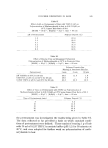
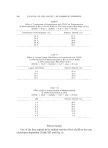
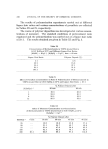
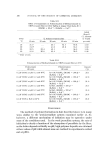
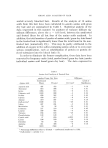
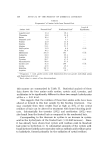
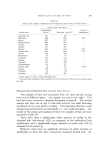
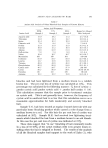
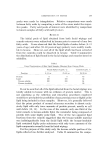
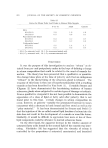
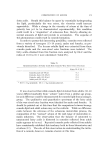
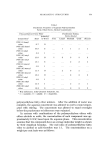
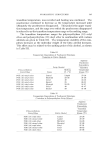
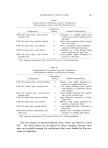
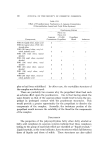
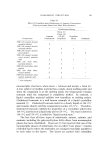
AEROSOL FOAM DISPENSING Table II Solubility of Hydrocarbon Propellant in 4% of Various Fatty Acids Neutralized with 50% Excess Diethanolamine Plus 2% Amide 521 Per cent P-46 Fatty acid Per Cent DEA with Amide Stearic (98% C18) 2.25 3.54 Oleic (72% C18) 2.25 2.41 Stearic (50% C18) 2.35 2.03 Palmitic (20% C18) 2.50 1.82 Coconut 3.03 1.71 Table III Solubility of Hydrocarbon Propellant in 14.3% Triisopropanolamine Cocate with Various Additives Per Cent Per Cent Additive Additive Solubility of P-46 None Lauryl dimethyl amine oxide Five mole ethylene oxide adduct of lauric acid monoethanolamine amide Diethanolamine amide of coconut fatty acid, 1:1 ratio Propylene glycol Glycerine ... 4.65 0.6 6.00 5.0 4.92 5.0 5.40 10.0 4.30 10.0 3.90 Table IV Solubility of Hydrocarbon Propellants in Soaps of Various Amines Neutralized with 7.5% Coconut Fatty Acids Per Cent Amine Per Cent Amine Soluble Hydrocarbon Monoethanolamine 2.20 Diethanolamine 3.75 Triethanolamine 5.36 Diisopropanolamine 4.75 Triisopropanolamine 6.80 Aminomethyl propanediol 3.75 Amino ethyl propanediol 4.25 Amino butanol 3.16 Aminomethyl propanol 3.16 3 O6 2 72 4 95 3 78 4 6O 4 O0 4 32 4 95 3 86

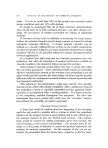
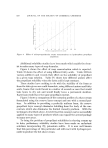
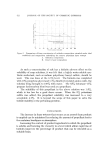
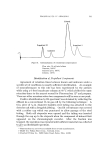
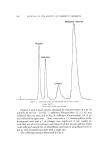
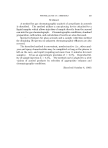
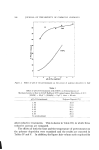
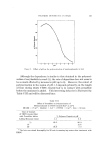
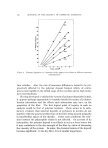
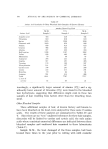
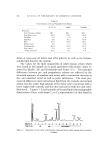
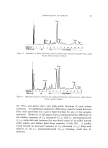
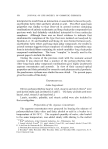
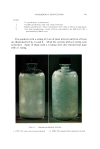
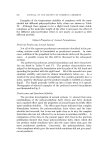
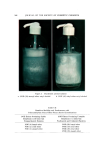
522 JOURNAL OF THE SOCIETY OF COSMETIC CHEMISTS i 0[ 0 10 20 for su•table• foams- ___ - j 30 40 50 60 70 80 90 100 Percent product extruded Figure 5. Comparison of foam consistencies of orthodox composition extruded under ideal conditions and composition embodying the reserve propellant layer concept A. Orthodox composition B. Reserve layer composition As such a concentration of salt has a definite adverse effect on the solubility of soap solutions, it was felt that a highly water-soluble syn- thetic surfactant, such as sodium polyethoxy lauryl sulfate, should be used. This was done at the 6.5% level. The formula was completed with 10% propylene glycol and 1.5% dimethyl myristyl amine oxide, the solution being brought to 100% with water. The 83% isobutane-17% propane hydrocarbon blend was used as a propellant. The solubility of this propellant in the above solution was 1.4%, which is too low for a good shave cream. When the 9% potassium sulfite was added, the propellant solubility was increased to a very acceptable 4.2%. It is beyond the scope of this paper to solve the bubble stability or the perfuming problem. CONCLUSIONS The increase in foam wetness that occurs as an aerosol foam product is emptied can be minimized by reducing the amount of propellant lost to the container headspace or atmosphere. Increasing the content of product ingredients in which the propellant is soluble and lowering the viscosity to a levd which allows rapid rise of bubbles improves the percentage of product that can be extruded as a suitable foam.
Purchased for the exclusive use of nofirst nolast (unknown)
From: SCC Media Library & Resource Center (library.scconline.org)