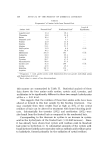
fi66 JOURNAL OF THE SOCIETY OF COSMETIC CHEMISTS Previous studies (5, 6) have suggested that certain components of the comedo were capable of initiating an inflammatory response in the dermis similar to that seen in ache. Recent evidence has suggested that this "irritancy" can reside in the fatty acids obtained from human skin lipids (sebum) (7). In addition, evidence has been obtained that certain antibiotics, notably the tetracyclines, which are beneficial in the manage- ment of ache bring about a reduction in the amount of unesterified fatty acids in the sebum (8). The purpose of this investigation was to analyze the composition of human sebum before and after puberty as well as that lipid found in the formed comedo. St•ecific attention was given to the presence of compo- sitional differences which might be reasonably ascribed as an "irritant" fraction. EXPERIMENT•xL Materials All of the reagent chemicals and solvents used during this study were of Fisher Scientific's "Certified Reagent" grade or the best grade other- wise available. All chemical reagents were used without purification. Solvents were routinely redistilled prior to use. Mallinckrodt silicic acid labeled "suitable for chromatographic analysis by the method of Ramsey and Patterson" was used throughout. Methods Collection of Clinical Samples Samples of facial surface lipid were obtained via a "dry wipe" technique. Each subject was instructed to wash his face thoroughly with a detergent facial bar soap. Two hours after cleansing, the fore- head and cheeks were wiped with a previously defatted swatch of cotton flannel. Care was taken to avoid the areas around the mouth and lower chin as collection sites. Gloves were worn by the collector in order to minimize contamination of the sample from ambient oils present on the hands. Lipid so obtained was removed from the flannel via extraction with diethyl ether and pooled. This collection process was repeated on groups of 18 to 25 human subjects on a daily basis until such time as a sufficient quantity of lipid had been obtained (usually 2(•0 to 300 mg). Comedos were obtained via gentle removal with a Shamberg comedo extractor. Prior to removal, the area over and around the comedo was

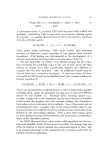
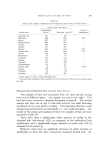
COMPOSITION OF SEBUM 567 cleaned by firm wipings with 70% ethyl alcohol. Care was taken to include only those comedos that were not associated with a pustular area of the face or would not otherwise be unduly contaminated with tissue fluids as a result of damage inflicted during their removal. Com- edos obtained in this manner were immediately transferred to a mixture of chloroform-methanol (1:1) and defatted. The solvent was removed in vacuo and the residual lipid was pooled until a quantity of approxi- mately 100 mg had been obtained. All collected lipid was stored frozen in an atmosphere of dry nitrogen until used. Repeated freeze-thawing of a sample was avoided wherever possible. Fractionation of Lipid $anzples Hexane solutions of the various lipids collected were initially frac- tionated into free fatty acids (FFA) and neutral lipid (NL) by partition between hexane and 1•\ r potassium hydroxide. The FFA were con- verted to their methyl esters with BF,•-MeOH (9) and stored for subse- quent gas-liquid chromatography (GLC). The neutral lipid was further fractionated into lipid classes via silicic acid column chromatography according to the method of Haahti (10), modified to meet the performance of the silicic acid employed. Each sample was placed onto the silicic acid column in a small volume of hexane. The column was then developed with increasing amounts of benzene in hexane in a stepwise manner and finally stripped of "polar" material with absolute methyl alcohol. The progress of the elution was followed by evaporation of each fraction, usually 10 ml, under a gentle stream of nitrogen and visually examined for residual lipid mass. A change to a new eluant mixture was not initiated until two or three fractions were observed to be free of eluted lipid. Appropriate fractions were then combined and analyzed according to the following scheme: ?arafins and Squalene--These two lipids were eluted from the silieie acid with hexane. The combined fractions for each lipid were evapo- rated to dryness in an atmosphere of nitrogen and the residual mass was weighed. Waxes and Sterol Esters--•These lipid classes were eluted from silicic acid as a single fraction with hexane-benzene (80:20). The total frac- tion was weighed. The amount of sterol ester present was estimated directly by the procedure described by Hanel and Dam (11) and ex- pressed as cholesterol stearate. It was possible to demonstrate that
Purchased for the exclusive use of nofirst nolast (unknown)
From: SCC Media Library & Resource Center (library.scconline.org)