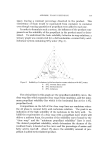
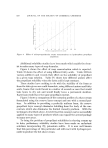
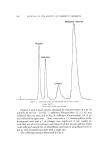
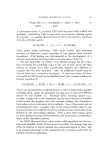
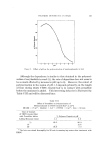
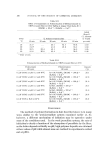
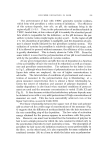
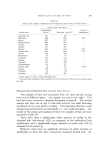
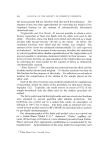
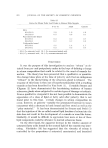
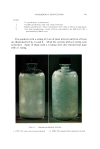
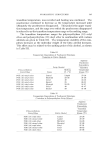
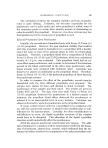
AEROSOL FOAM DISPENSING space, leaving a constant percentage dissolved in the product. This consistency of foam would be maintained from container to container even though varying quantities of propellant were added to each one. In order to formulate such a system, the influence of the product com- ponents on the solubility of the propellant in the product must be deter- mined. To understand the basic solubility behavior in soap solutions, a ternary graph was constructed for a diethanolamine-coconut fatty acid- isobutane system containing 80% water (Fig. 3). c /•, 18 //,*/' /', ,,• /, /', Figure •. Solubility of •sobutane in diethanolamine cooate solutions with 80• water A. 20• coconut fatty acids B. 20• diethanolam•ne C. 80• isobutane The critical lines in this graph are the propellant solubility curve, the clear soap line which separates clear soaps from emulsions, and the mini- mum propellant solubility line which is the horizontal line at the 1.4% propellant level. Compositions on the left of the clear soap lines are emulsions where the oil phase is coconut fatty acid-isobutane solution. The peak is an indication of the high solubility of the isobutane in the fatty acid. To fulfill the requirements of a clear soap with a propellant layer which will deliver a uniform foam, the portion of the solubility curve bound by the "clear soap" and the "minimum propellant solubility" lines is used. The desired propellant solubility, which determines the dryness of the resultant foam, is located on the curve and the percentage of amine and fatty acid is read off. About 1% above the solubility amount of pro- pellant is added to the finished product.

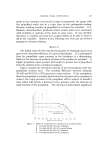
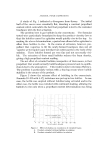
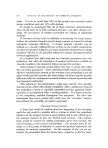
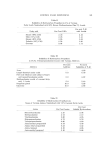
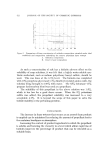
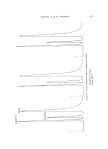
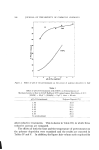
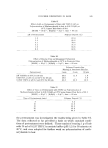
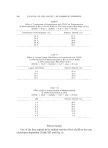
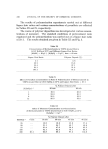
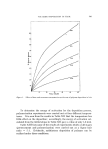
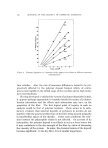
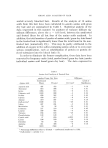
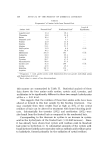
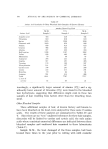
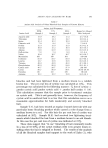
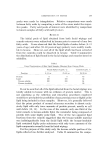
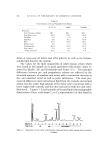
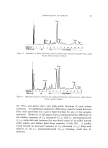
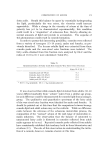
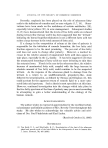
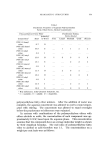
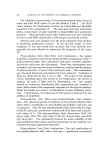
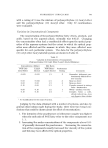
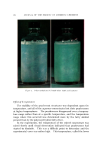
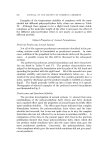
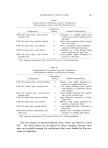
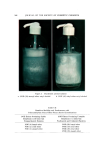
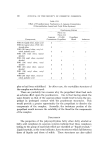
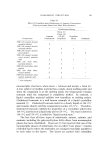
520 Figure 4. JOURNAL OF THE SOCIETY OF COSMETIC CHEMISTS 7, •2! oL// o • 4 • 8 -•0 • •4 •6 Percen• tmsop[opanolamlne cocate 18 20 Effect of triisopropanolamine cocate concentrations on hydrocarbon propellant solubilities Additional solubility studies have been made which enable the chem- ist to make many types of soap formulas. Figure 4 shows the effect of soap concentration which is expected. Table II shows the effect of using different fatty acids. Table III lists various additives and records their effect on the solubility of propellant in a given soap solution. Table IV shows how different amines affect the propellant solubility when the fatty acid is kept constant. These studies have nothing to do with the stability of the foam as from the data given one could formulate, using d Liferent amines and fatty acids, foams that would break in a matter of seconds or ones that would take hours to dry out and would finally leave a permanent skeleton. Each foam would have the same propellant content. Figure 5 shows a comparison of the extrusion profiles of a shave cream formulated using the reserve layer concept and one with a normal pat- tern. In addition to providing a perfectly uniform foam, the reserve propellant layer concept eliminates bubbling from the body of the con- centrate which also eliminates the limited viscosity problem. With the techniques described above, it is felt that this concept can be successfully applied to many types of products which can expand the aerosol package to many new areas. To bring the problem of propellant solubilities in shaving creams up to data, preliminary solubility studies have been made on surfactant solutions incorporating 9% potassium sulfite. It is now well known that this percentage of this particular salt will react with hydrogen per- oxide to produce the hot shave cream.
Purchased for the exclusive use of nofirst nolast (unknown)
From: SCC Media Library & Resource Center (library.scconline.org)