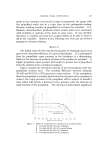
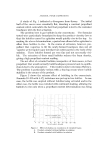
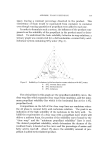
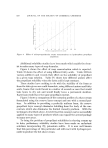
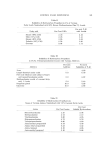
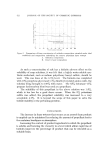
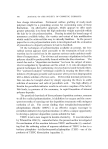
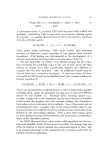
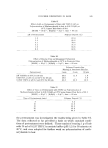
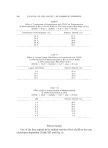
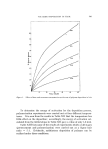
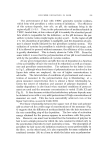
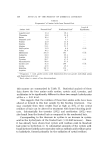
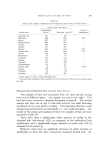
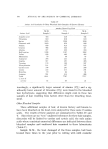
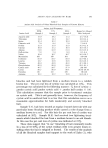
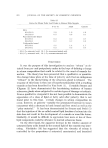
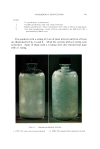
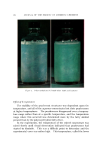
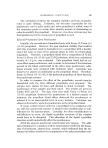
POLYMER DEPOSITION IN HAIR P(CH=0H)4 Cl •- P(CH=0H)a --[- CH=0 --[- HCl THPC THP A subsequent study (7), in which THP itself was used, fully verified this postulate, establishing THP as one o[ the _most potent reducing agents for keratin. A valuable characteristic of THP is its selective reactivity towards oxidizing agents. P(CH=0H)a -t-- '/•0•--- 0 = P(CH20H)a (2) Thus, under acidic conditions, THP reacts readily with hydrogen peroxide or dissolved oxygen (equation 2) but appears inert towards persulfates. This finding was instrumental in the development of a polymer deposition system operable in an atmosphere of air (8). The fact that THP (or THPC) is an efficient reagent for the reduc- tion of keratin has particular value in the case of hair, where the high density of cystinc cross links considerably impedes the diffusion of reagents into the fiber structure. Also, an additional benefit may be derived from such a reductive treatment. It has been shown (6) that, as a result of THP attack on the disulfide bond, two cysteine residues are formed (equation 3). P(CH2OH)a -}- KSSK -}- H20-- 2KSH -}- O = P(CH2OH)a (3) These can subsequently be utilized to form a redox couple with a suitable oxidizing agent again, the persulfate ion appears to be the most efficient species for this purpose (3). Although other reducing agents (e.g., bisulfite, thioglycolic acid) commonly used for the reduction of disulfide bonds in hair also produce, inter alia, cysteine residues, they themselves form redox systems with most of the oxidants thus, if they were used for prereducing the hair, a lengthy rinse of the reduced fibers prior to the polymerization step would be needed to avoid excessive formation of the polymer in the surrounding solution. Such a rinse often brings about at least partial reversal of the reduction and thus leads to irreproduci- bility of the deposition process. As THPC does not form a redox system with persulfate mid its reac- tion with disulfide bonds in hair is not reversible, the rinsing step can either be omitted or kept to almost any convenient length of time this is an obvious advantage in the examination of a system as well as for its possible practical application.

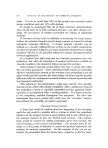
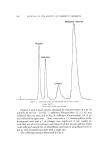
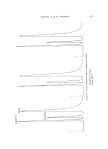
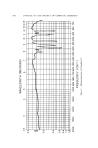
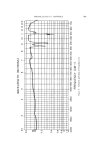
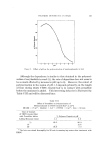
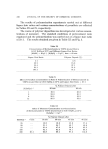
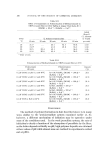
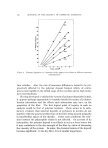
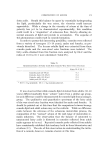
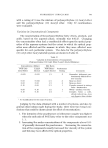
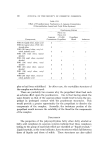
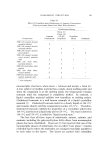
542 JOURNAL OF THE SOCIETY OF COSMETIC CHEMISTS EXPERIMENTAL 3laterials Human Hair Brown European hair* was purified by successive Soxhlet extraction with absolute alcohol and ether followed by thorough rinsing in distilled water. Tetrakis(hydroxymethyl)phosphonii•m Chloride ( THPC) An 80% solution• was used without further purification. g[ethacrylamide and 2Potassium Persulphate Laboratory grade reagents were used. Tris(hydroxymethyl)phosphine ( TtlP) This reagent was prepared by synthesis from phosphine and formal- dehyde (9). The waxy crystalline solid melted at 52-3øC. The elementary analysis of THP gave the following results: C 29.7 H 7.4ere P 24.3ere (calculated for CaH9OaP: C 29.1% H 7.3% P 25.0%). 3Jethod Polymerization technique Unless otherwise stated, a 1-g sample of air-dried (65% RH) hair was treated at 40øC for 30 min with 20 ml of 0.221/I THPC in acetate buffer (pH 5.2) in a 50-ml Edenmeyer flask. After a specified time the solution was removed, the hair was rinsed for 10 seconds in running tap water, 50 ml of an aqueous solution of monomer and persulfate was added, and the polymerization was timed from this moment. At the end of the reaction period, the sample was removed from the flask, washed in running tap water, dried, and weighed. In the subsequent tables and figures each value for the gain in weight of the sample is expressed as a percentage of the original weight of the air-dried untreated sample. * Purchased from De Meo Brothers, New York. t Supplied by Hooker Co., Niagara Falls, N.Y.
Purchased for the exclusive use of nofirst nolast (unknown)
From: SCC Media Library & Resource Center (library.scconline.org)