J. Soc. Cosmetic Chemists, 20, 539-553 (Au.g. 19, 1969) Modification of Hair by Deposition of Polymers Internal L. J. WOLFRAM, Ph.D.* _Presented before the •Ye•e England Chapter, February 27, 196'8 Synopsis--A method of hair modification by the internal deposition of vinyl polymers is described. The unique combination of a reducing agent, tetrakis(hydroxymethyl)phos- phonium chloride, with persulfates allows for efficient polymer formation within the fiber without exclusion of air. The parameters of the deposition process are studied and the properties which may be imparted to hair by this modification are briefly indicated. INTRODUCTION The utilization of synthetic and natural polymers in the field of hair cosrnetics initiated new concepts of hair modification and, in conse- quence, generated an impressive array of new products. Hair sprays, polymer setting gels, and protein conditioners have become indispensable beauty aids of the modern woman. However, while the functional effectiveness of the polymeric products is high and has probably been one of the overriding elements in their wide acceptance, the permanence of the effect leaves much to be desired. This is not surprising in view of the fact that in most cases the attachment of the polymer to hair relies either upon purely physical factors (film formation) or readily displaceable sur- * Gillette Research Institute, Inc., 1413 Research Blvd., Rockville, Md. 20850. 539

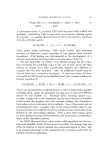
540 JOURNAL OF THE SOCIETY OF COSMETIC CHEMISTS face charge interactions. Permanent surface grafting of ready-made polymers might be a promising avenue for overcoming some of these limitations. An alternative approach, which appears to offer much greater potential, is to form the high molecular weight materials within the hair by in situ polymerization. Bearing in mind the broad range of monomers available today, the variety' and extent of hair modification which could be achieved this way is virtually limitless. In the present paper the in situ polymerization route is investigated and the evaluation of procedures to deposit polymers in hair is described. Of the techrdques of polymerization available at present, the free- radical system appears most amenable to the treatment of hair as the reaction can be carried out in the aqueous systems under ambient condi- tions of temperature. The obvious and necessary stipulation is that the polymer should be preferentially formed within the fiber structure. The search for such a "deposition mechanism" has been the subject of inten- sive investigation by Speakman and his school (1-3) who developed two general techniques for synthesizing vinyl polymers inside keratin fibers. The "anchored catalyst" technique consists in treating the fibers with a mixture of hydrogen peroxide and toohomer after previous impregnation with a dilute solution of ferrous salts. Preferential internal polymeriza- tion can also be brought about by simply exposing the fibers to acidic solution of toohomer and salts of persulfuric acid. The high affinity of keratin for persulfate initiator results in extensive sorption of the latter this leads, in presence of the monomer, to rapid formation of internal polymer deposits. The practical drawback of these polymer deposition systems, common to all free-radical polymerization, is inhibition by oxygen and the conse- quent necessity of carrying out the deposition treatments with stringent exclusion of air. The recent finding that tetrakis(hydroxymethyl)- phosphonium chloride (THPC) is an effective oxygen scavenger in persulfate-initiated vinyl polymerization (4) offers a unique opportunity to develop a polymer deposition system suitable for hair. THPC is not a new reagent in keratin chemistry. It was introduced by Whewell in 1960 (5) somewhat later, the present author investigated the mechanism of the reaction between THPC and keratin (6), conclud- ing that the reducing action of aqueous solutions of THPC is due to a tertiary phosphine--tris(hydroxymethyl) phosphine (THP)---one of the products of THPC dissociation (equation 1).
Purchased for the exclusive use of nofirst nolast (unknown)
From: SCC Media Library & Resource Center (library.scconline.org)