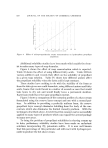
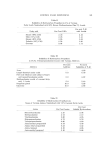
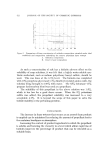
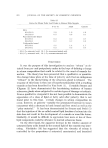
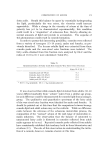
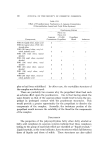
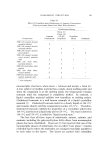
574 JOURNAL OF THE SOCIETY OF COSMETIC CHEMISTS Recently, emphasis has been placed on the role of sebaceous fatty acids in the initiation of comedos and/or ache vulgaris (5, 7, 18). Obser- vations have been made on the usefulness of certain antibiotics (19), especially tetracyclines (20), in ache management. Subsequent studies (8, 21) have demonstrated that the levels of free fatty acids are reduced during tetracycline therapy and it has been suggested that the "irritant" initiating the ductal hyperkeratinization is not a different fatty acid but rather a large increase in the total amount of fatty acid. If a change in the composition of sebum at the time of puberty is responsible for the initiation of comedo formation, the free fatty acid fraction appears to be the most promising. The per cent of free fatty acid does not seem to change after puberty. However, a marked in- crease in the relative amount of unsaturated fatty acid does appear to take place, especially in the C•6 family. It has been suggested (22) that the unsaturated homologs of fatty acids are more irritating to skin than the saturated ones. If such is the case in the sebaceous duct, the relative increase of unsaturated fatty acid, coupled with the large increase in absolute amount of free fatty acid, could combine to be the suspected irritant. As the response of the sebaceous gland to damage from the irritant is a return to an undifferentiated, prepuberty-like, state followed by keratinization, as defined by Strauss and Kligman (2), this could account for the apparent return of comedo lipid to a more satu- rated fatty acid spectrum. Such a thesis is most speculative at this time. However, continued investigation into the changes which take place in the free fatty spectrum at the time of puberty may prove most rewarding in attempting to gain a better understanding of the etiology of the human comedo. ACKNOWLEDGMENTS The author wishes to express his appreciation for the excellent techni- cal assistance and infinite patience of Mrs. Beverly Teter throughout this study. He also wishes to acknowledge the valuable advice and criti- cisms of Drs. Paul Finkelstein and Karl Laden. (Received October 31, 1968) REFERENCES (1) Van Scott, E. J., and MacCardle, R. C., Keratinization of the duct of the sebaceous gland and growth cycle of the hair follicle in the histogenesis of acne in human skin, J. Invest. Dermatol., 27, 405 (1956).

COMPOSITION OF SEBUM 576 (2) (3) (4) (5) (6) (7) (8) (9) 10) 11) 12) 13) 14) (15) 16) 17) 18) 19) (20) (21) (22) Strauss, J. S., and Kligman, A.M., Pathologic patterns of the sebaceous gland, Ibid., 30, 51 (1958). Shelley, W. B., and Kligman, A.M., The experimental production of aene by penta- and hexaehloronaphthalenes, Arch. DerinatoL Syphilol., 75, 689 (1957). Ilambriek, G. W., The effect of substituted naphthalenes on the pilosebaeeous ap- paratus of rabbit and man, J. Invest. DermatoL, 28, 89 (1957). Strauss, J. S., and Poehi, P. E., Intraeutaneous injection of sebum and eomedones. Histologieal observations, Arch. ])erinatol., 92, 443 (1965). Smith, M. A., The role of comedos in aene vulgaris, Brit. J. ])erinatol., 74, 337 (1962). Kellum, R. E., Aene vulgaris, studies in pathogenesis: relative irritaney of free fatty adds from C2 to Cz6, Arch. ])erinatol., 97, 722 (1968). Freinkel, R. K., Strauss, J. S., Yip, S. Y., and Poehi, P. E., Effect of tetraeyeline on the composition of sebum in aene vulgaris, zYew Engl. J. g/Zed., 273, 850 (1965). Metealfe, L., and Schmitz, A., The rapid preparation of fatty add esters for gas ehro- matographie analysis, Anal. Chein., 33, 363 (1961). EIaahti, E., Major lipid constituents of human skin surface with special reference to gas-ehromatographie method, Scan& J. Clin. Lab. Invest., 13, 1 (1961). EIanel, It. K., and Dam, EI., Determination of snmll amounts of total cholesterol by the Tsehugaeff reaction with a note on the determination of lathosterol, Acta Chein. Scan&, 9, 677 (1955). Stahl, E, Thin Layer Chroinatography .4 Laboratory Manual, Academic Press, New York, N.Y., 1965. Montagna, W., The sebaceous glands in man, Advan. Biol. Skin, 4, 19 (1963). Suskind, R. R., The chemistry of the human sebaceous gland, I. EIistoehemieal ob- servations, J. Invest. ])erinatol., 17, 37 (1951). Nieolaides, N., and Foster, R. C., Esters in human hair fat, J..4 in. 0½l Chemists' Soc., 33, 404 (1956). Nicolaides, N., Human skin surface lipids--origin, composition and possible function, Advan. Biol. Skin, 4, 167 (1963). Unpublished data, Lab. Report, The Toni Co., Div. of Gillette Corp., Chicago, Ill. Strauss, J. S., and Kligman, A.M., The pathGiGgle dynamics of aene vulgaris, Arch. Derinatol., 82,779 (1960). Stewart, W. D., Maddin, S., Nelson, A. J., and Danto, J. L., Therapeutic agents in aene vulgaris: I. Tetraeyeline, Can. Med. Assoc. J., 89, 1096 (1963). Fry, L., and Ramsey, C. A., Tetraeyeline in aene vulgaris, Brit. J. Derinatol., 78, 643 (1966). Strauss, J. S., and Poehi, P. E., Effect of orally administered antibacterial agents on titratable acidity of human sebum, J. Invest. Derinatol., 47, 577 (1966). Lane, C. G., and Blank, I. H., Action of soap on the skin, Arch. Derinatol. Syphilol., 56, 419 (1947).
Purchased for the exclusive use of nofirst nolast (unknown)
From: SCC Media Library & Resource Center (library.scconline.org)