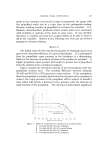
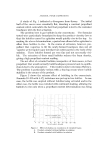
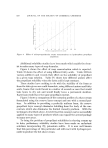
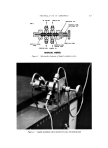
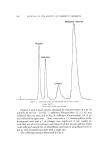
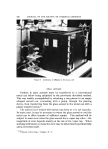
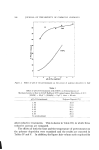
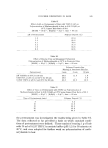
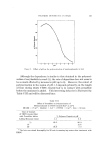
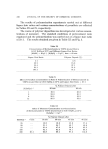
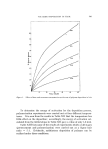
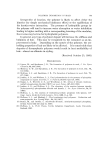
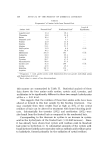
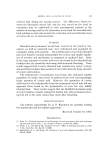
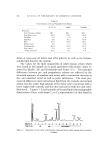
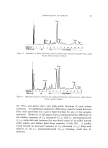
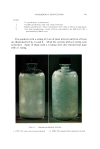
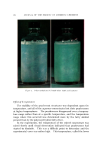
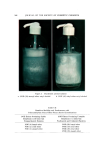
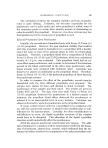
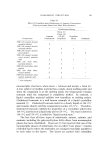
AEROSOL FOAM DISPENSING point in the extrusion, care must be taken to pressurize the gauge with the propellant under test to a value close to the anticipated reading, thereby avoiding transfer of propellant to or form the container. Pre- liminary determinations produced erratic results which were associated with bubbling or spitting of the foam in some cases. It was decided, therefore, to conduct the tests in 6-oz glass bottles to be able to observe all of the variables. Bottles in the following test were put up without purging or vacuum crimping. RESULTS The initial series of tests was for the purpose of studying factors that govern the extrusion efficiency of a given formulation. It is anticipated that the propellant vapor pressure in the headspace is a determining factor in the increase in wetness of foam as the product is extruded. A higher propellant vapor pressure will result in a greater loss of propellant from the solution to the container headspace. Figure 1 graphs the extrusion behavior of two formulations with two propellant systems each. The essential difference between formulas 33-42B and 33-421 is a 33% increase in soap content. If the assumption that the propellant is actually dissolved in the oil phase of the emulsion is correct, the vapor pressure of the propellant will be subject to RaoulCs Law which will dictate a decrease in the pressure with the decrease in mole fraction of the propellant. The decrease is particularly significant •-1 ] Mmlmurn propelkSnt level_ ' ' _ l_ forsu•tablp foams •-. x--- O- •O -'20--- 30 40 50 60 70 8'0 - 90 100 Percent product extruded Figure 1. Effect of composition on consistency of extruded foams A. Formula 33-42B with 4% isobutane B. Formula 33-421 with 3% normal butane C. Formula 33-421 with 3% isobutane D. Formula 83-42B with 3% isobutane

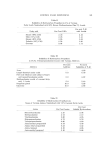
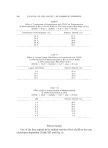
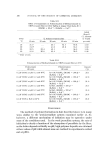
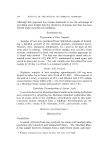
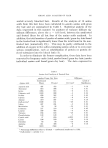
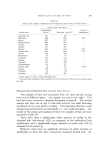
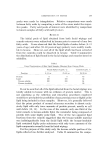
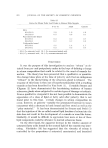
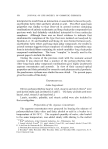
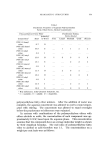
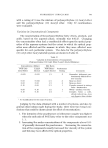
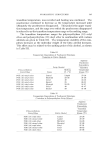
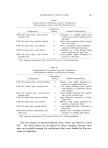
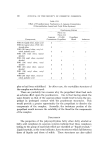
516 JOURNAL OF THE SOCIETY OF COSMETIC CHEMISTS toward the end of the extrusion where the per cent propellant and there- fore the mole fraction will be lower. It is in this area that an increase in soap content of the formulation could result in a lower vapor pressure, hence less propellant loss and better extrusion efficiency. Pressures were taken at a point of about 85% extrusion. Although correlation here is difficult with single readings because of varying propellant con- tents, all pressures were 2 and 4 pounds below the 31-pound pressure of isobutane at the temperature readings were taken (21øC), which is considered significant. A comparison of the curves 33-42B and 33-421 both pressurized with 3% isobutane shows an improvement in the extrusion efficiency with increase in soap content. It would follow from these considerations that if the vapor pressure were lowered using a less volatile propellant that a further improvement in extrusion efficiency would be observed. This is confirmed when 3% normal butane is substituted in formula 33-421. The anticipated effect of increased propellant content is shown with the curve of formula 33-42B with 4% isobutane. These results and the exact formulas are tabulated in Table I. It is, therefore, apparent that extrdsion efficiency can be improved with a higher soap concentration, with a propellant of lower vapor pres- sure, and with an increase in the propellant concentration Increasing the propellant concentration must be ruled out to avoid having an initial dry foam. Lower vapor pressure propellants do not give an aesthetically appealing foam. The utilization of higher soap concentrations, however, is recommended as a method of improving extrusion. Table I Compositions of Test Solutions Shown in Figure 1 Ingredients Propellant 33-42B 88-42I 3% Isobutane 4% Isobutane 8% Isobutane 8% n-Butane Triisopropanolamine 4.4 4.4 5.7 5.7 Palmitic acid 5.8 5.8 7.7 7.7 Dimethyl laurylamine oxide 1.0 1.0 2.0 2.0 Dimethyl myristylamine oxide 1.0 1.0 ...... Propylene glycol 10.0 10.0 10.0 10.0 Water 74.8 73.8 71.6 71.6 Per cent extruded with suitable foam 83.0 93.0 89.0 95.0
Purchased for the exclusive use of nofirst nolast (unknown)
From: SCC Media Library & Resource Center (library.scconline.org)