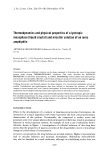
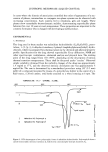
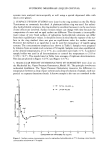
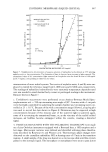
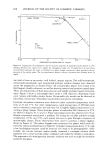
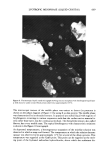
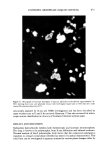
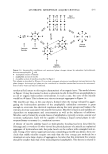
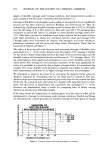
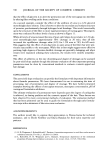
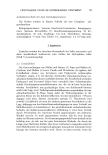
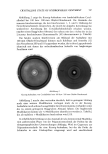
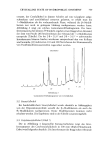
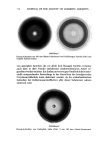
LYOTROPIC MESOPHASE (LIQUID CRYSTAL) 671 Figure 11. Micrograph of lyotropic mesophase of aqueous nafoxidine hydrochloride (approximately 70- 90%) showing focal conic and spherulite texture with birefringent liquid layer at 43X objective under crossed Nicol prisms observed at 25øC. structurally analyzed by X-ray and NMR investigations and has been described by many workers (see ref 5 and 6 for reviews). Rosevear (7) has also reviewed his micro- scopic texture classification in a Society of Cosmetic Chemists seminar paper. RESULTS AND DISCUSSION Nafoxidine hydrochloride exhibits both thermotropic and lyotropic mesomorphism. The drug is known to be polymorphic from X-ray diffraction and infrared evidence. Thermal analysis of the/• polymorphic form shows that the compound undergoes a transition to a liquid crystal phase identified as smectic by optical characteristics. This solid form can be investigated in aqueous systems for various phase changes either by

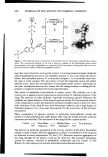
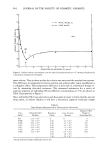
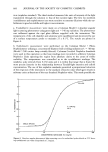
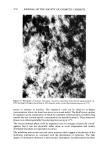
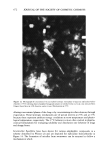
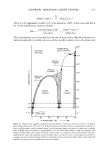
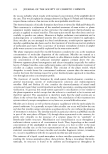
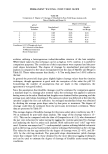
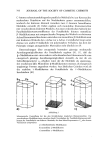
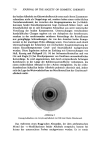
672 JOURNAL OF THE SOCIETY OF COSMETIC CHEMISTS Figure 12. Micrograph of concentrated viscous turbid lyotropic mesophase of aqueous nafoxidine hydro- chloride (•95%) showing microcrystalline hexagonal isolates in rod-like forms in a focal conic textured bire- fringent liquid layer at 43X objective under crossed Nicol prisms at 25øC. diluting concentrated phases of the drug or by concentrating miceliar solutions through evaporation. These lyotropic mechanisms are of special interest at 25øC and at 37øC because these represent ambient storage conditions at room temperature and physio- logical temperature, respectively. The 37øC behavior is most often studied in pharma- ceutical formulations for evaluating solubility and dissolution rate behavior of drugs and dosage forms. Intermicellar Equilibria have been shown for various amphiphilic compounds in a scheme described by Winsor (2) and are depicted for nafoxidine hydrochloride in Figure 14. The formation of micelies from monomers can be assumed to follow a mechanism in which
Purchased for the exclusive use of nofirst nolast (unknown)
From: SCC Media Library & Resource Center (library.scconline.org)