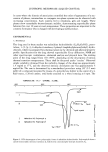
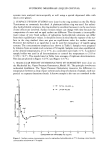
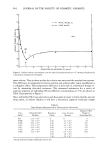
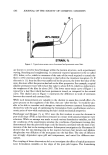
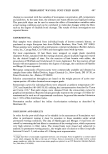
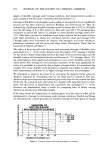
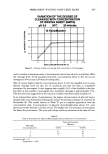
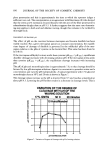
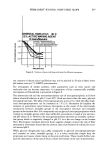
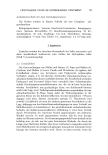
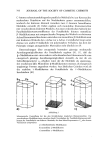
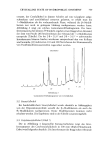
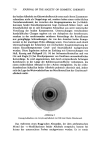
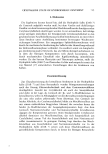
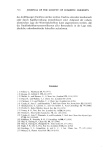
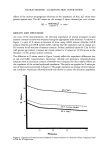
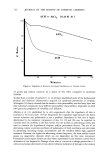
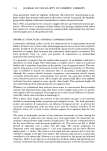
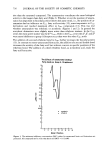
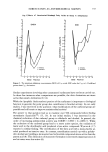
CHARACTERIZING ALUMINUM SKIN INTERACTION 721 effects of the various antiperspirant solutions on the impedance of skin, AZ values were plotted against time. The AZ values are the average Z ratios obtained per unit of time, AZ = treatment Z = ratio control Z RESULTS AND DISCUSSION As a test of the instrumentation, the electrical impedance of several untreated excised stratum corneum sections was measured using the appropriate rinse solutions. As shown in Figure 3, a plot of Z values as function of time, using O.09M sodium chloride, O.05M sodium chloride and O.05M acetate buffer, indicate that the impedance rate of change at 5 Hz is similar for all sections of stratum corneum. Further, stabilized values for Z (at 5.0 Hz) with guinea pig stratum corneum are closely related to Z values (at 5.0 Hz) given in the literature (11) for animal stratum corneum. The difference in Z values noted in Figure 3 merely reflect the impedance differences due to salt and buffer concentrations. Aluminum chloride and aluminum chlorohydroxide solutions with an aluminum content of 0.044M were compared for their relative effects on the impedance of the excised epidermal membrane. The results are graphed as Z ratios per unit of time and are presented in Figure 4. The graph represents an average of five trials per test condition. Aluminum chlorohydroxide was shown to reduce the electrical impedhnce 40' 30 20 .05 • NaC! 10' I a0 4i 60 Minutes Figure 3. Impedance of stratum corneum (bathed in control solutions) as a function of time. Frequency fixed at 5Hz for all-experiments.

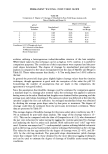
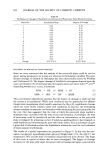
722 JOURNAL OF THE SOCIETY OF COSMETIC CHEMISTS 1.00 ACH vs AICI a (0.44M AI) .8O .7O 30 60 90 120 150 Minutes Figure 4. Impedance of aluminum salt treated membranes as a function of time. of guinea pig stratum corneum by a factor of five when compared to aluminum chloride. Studies from a number of authors (7, 22, 24-28) have established some of the fundamental physical and chemical characteristics required for epidermal penetration or sorption. Scheuplein (22) clearly showed that the barrier to skin permeability was the horny layer and that individual compounds show different permeability characteristics, dependent on their own particular properties of solubility and diffusion. Allenby et al. (13) established by in vitro experiments that the impedance of skin is localized in the horny layer. At low frequencies the impedance approximates the direct current resistance and polarization' is not a problem. Impedance in this case is largely determined by the resistance component of skin (11, 16) and this may be expected to correlate with ion mobility in the skin barrier. For the studies, an alternating current was used to •neasure the hypothetical sorption and/or permeation factors. The use of an alternating current overcomes problems of polarization of both membrane and electrodes by preventing increasing charge accumulation and the resultant falsely high, apparent resistance. However, the higher the alternating current frequency, the more readily current passes via capacitative channels which are not dependent on free ionic movement. Permeability and sorptive factors are thus better represented by the resistive current which dominates at low frequencies. Passage of any electric current at a voltage greater than 1-2 volts across human skin results in non-ohmic behavior indicative of damage to the stratum
Purchased for the exclusive use of nofirst nolast (unknown)
From: SCC Media Library & Resource Center (library.scconline.org)