LYOTROPIC MESOPHASE (LIQUID CRYSTAL) 683 (9) D. G. Hall and B. A. Pethica, Thermodynamics of micelle formation, in M. J. Schick, "Nonionic Surfactants," Marcel Dekker, Inc., New York, 1967, pp 516-557. (10) A. A. Abramzon and Y. B. Moiseeva, Temperature dependence of surface tension, Kolloid. Zh. 30, 795-801 (1968). (11) I. Langmuir, The role of attractive and repulsive forces in the formation of tactoids, thixotrol•ic gels, protein crystals and coacervates, J. Chem. Phys., 6, 873-896 (1938). (12) I. Cohen and P. Economou, Temperature studies of coacervating cationic soap solutions, J. Amer. Oil C hem. Soc., 41,461-464 (1964). (13) D. M. Small and M. Bourges, Lyotropic paracrystalh'ne phases obtained with ternary and quarternary systems of amphiphilic substances in water: studies on aqueous systems of lecithin, bile salt and cholesterol, in G. H. Brown, G. J. Dienes and M. M. Labes, "Liquid Crystals," Gordon and Breach, Science Publishers, New York, 1966, pp 221-241. (14) V. A. Usol'tseva and I. G. Chistyakov, Chemical .characteristics, structure, and properties of liquid crystal, Russian Chem. Rev., 32,495-509 (1963). (15) K. Shinoda, An outline of the solvent properties of surfactant solutions and L. Sjoblom, Pharmaceutical applications and physiological aspects of solubilization, in K. Shinoda, "Solvent Properties of Surfactant Solutions," Marcel Dekker, Inc., New York, 1967, pp 1-26 and 189-262.

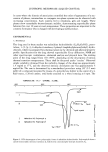
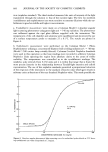
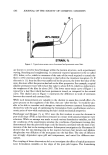
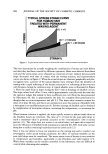
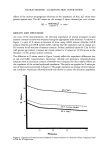
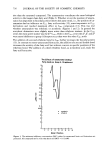
J. Soc. Cosmet. Chem., 29, 685-701 (November 1978) Permanent waving: utilization of the post-yield slope as a formulation parameter DAVID W. CANNELL and LINN E. CAROTHERS Redken Laboratories, Canoga Park, CA 91303. Received September 12, 1977. Presented at An nual Scientific Seminar, Society of Cosmetic Chemists, May 1977, Montreal, Canada. Synopsis The stress-strain curve for keratin had previously been utilized to assess the action of cosmetics on the hair. The POST-YIELD SLOPE of this curve has been correlated with changes occurring to the disulfide bonding under PERMANENT WAVING conditions. The evaluation of this mechanical PARAMETER can be re- lated to the time of processing, rate of penetration of rnercaptan and the level of disulfide cleavage. It can further be utilized to assess the effects of formulation variables such as concentration, pH, structure of the mercaptan and formulation additives. The ease of this technique can save the chemist considerable time in optimizing a PERMANENT WAVE FORMULATION. INTRODUCTION The stress-strain relationship for keratin fibers has been widely studied and the various regions of the stress-strain curve correlated with changes in the molecular conforma- tion (1). When a hair fiber is stretched at a constant rate of elongation, three distinct regions appear, as shown in Figure 1. In the Hookean region of the curve (AB), the stress is linearly related to the strain until an extension of approximately 2%, when the fiber begins to yield as the crystalline •-helices begin to unfold. This yield process continues until about 30% extension where the stress rapidly increases during the so- called post-yield region (CD) until the fiber breaks at 40-50% extension. While the details of changes in molecular conformation in the post-yield region are still under debate, it is generally accepted that the disulfide-rich matrix surrounding the microfibrils is becoming involved. The high disulfide content and thus the high degree of cross-linking in this amorphous matrix are resisting further extensions with a sub- sequent increase in stress. Many workers have investigated keratins which have been partially reduced and alkylated to obtain varying disulfide levels, and shown that the modulus (the slope) of the post-yield region decreases with decreased disulfide content (2-4). The change in mechanical properties of human hair has often been utilized to assess the effect of varying cosmetic treatments on the fiber, particularly cosmetic treatments that 685
Purchased for the exclusive use of nofirst nolast (unknown)
From: SCC Media Library & Resource Center (library.scconline.org)