j. Soc. Cosmet. Chem., 29, 717-725 (November 1978) Characterizing aluminum-skin interaction by an electrometric technique DAVID T. FLOYD Cyanimid Consumer Research Center, 697 Route 46, Clifton, NJ 07015. Present address NL Industries, Inc., P.O. Box 700, Hightstown, NJ 08520. Received December 2, 1977. Presented at Annual Scientific Meeting, Society of Cosmetic Chemists, December 1977, New York, New York. Synopsis Observed differences in the antiperspirant behavior of ALUMINUM chlorohydroxide and aluminum chloride have been attributed to differences in their INTERACTION WITH SKIN. The literature contains many references to methods for measuring the interactions of exogenous materials with skin. The electrical properties of skin have been used successfully as a means by which to describe this effect and it was thought appropriate to investigate this approach with respect to aluminum salts. Instrumentation and techniques for measuring the electrical impedance of excised epidermal membrane were developed. The effecis of two aluminum salt antiperspirants on the impedance of guinea pig stratum corneum were measured. Aluminum chlorohydroxide reduced the impedance five times more than aluminum chloride. The results are in agreement with reported skin sorption behavior for these salts and with their antiperspirant activities in vivo. The hypothesis that antiperspirancy is based in part on antiperspirant/skin interaction is supported by the present study. The ELECTROMETRIC method described herein was found to be a viable TECHNIQUE for studying these interactions. INTRODUCTION The antiperspirant profiles of aluminum chloride and aluminum chlorohydroxide have been studied extensively in recent years (1,2). These studies indicated that at low concentration ( 0.44M AI), aluminum chlorohydroxide exhibited greater antiperspirant activity, but as the concentration and/or the contact time was increased, the effect of the aluminum chloride became more intensified and surpassed that of aluminum chlorohy- droxide. These differences in the bioavailability patterns of the two salts were suggestive of differences in their interactions with stratum comeurn. Dermatological literature describes the stratum comeurn as a barrier which is quite resistant to penetration by exogenous agents (3-10). It has been demonstrated that this barrier function can be related to the electrical impedance properties of the skin (6,11-17). A comprehensive review and discussion of the factors governing the passage of electricity across the skin have been written by Tregear (6), and evaluated by others (11, 13, 14, 18). 717

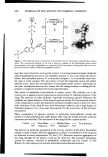
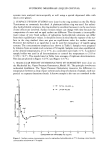
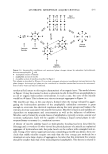
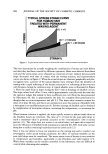
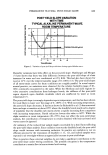
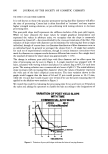
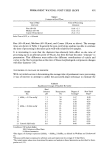
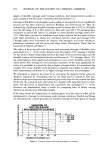
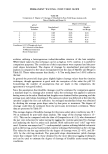
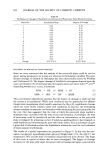
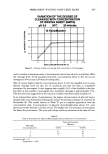
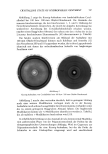
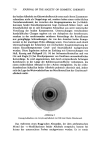
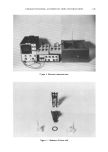
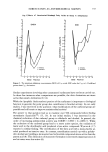
718 JOURNAL OF THE SOCIETY OF COSMETIC CHEMISTS Current flow is determined by the migration of ions across the membrane and is thus related to the permeability of the membrane to the ions. Such relationships may be demonstrated by the Nernst-Planck flux equations and the Nernst-Einstein and Ussing's flux relations for ideal solutions (14, 19, 20), but can best be readily correlated with the analogy between molecular (Fick's Law) and electrical (Ohm's Law) transport. Fick's Law: (intergrated form applicable to steady state) J, = kp where J,, the amount of solute diffusing across an area of membrane per unit time is described by AC,, the concentration difference across the membrane multiplied by k?, the permeability constant. Ohm's Law: I = VR -• where I, the current is equal to V, the potential difference multiplied by R -•, the reciprocal of electrical resistance, a constant. If ions carry current across an epidermal membrane, then J, and I are directly related in the proportionality, kp •-' R -• Therefore, by following changes in conductance (the reciprocal of R) of the skin, it is possible to follow changes in Kp of ions. This inverse relationship between electrical resistance and permeability constant strictly applies only to ions but, in the case of the stratum corneum, most probably extends to the permeability of any small, highly polar molecule as was shown by Dugard and Scheuplein (14) in their work with ionic surfactants. MATERIALS Stratum corneum membrane. Guinea pig stratum corneum was obtained from wax epilated animals. The stratum corneum membrane was separated by ammonia vapors from the tissue. Sample preparation. The aluminum solutions used in this study were made from commercial 50% stocks (The Reheis Company, Berkeley Heights, N.J.). Solution containing 1% aluminum chloride (0.044M A1) was prepared in deionized distilled water at pH 3.42. The ionic strength of the solution was adjusted to 0.5M with sodium chloride. The control and rinse solution in this study was 0.5M sodium chloride. The chlorohydroxide solution was diluted to 0.5% (0.044M A1). The pH of this solution was 4.71 and its ionic strength was adjusted to 0.9M sodium chloride. The control and rinse solutions were 0.9M sodium chloride. The adjustment of ionic strength with sodium chloride was made to negate the effect of ionic differences on the impedance and to reduce the effect, if any, of Na + ions on one side of the membrane by ensuring Na + would be present in both sides of the membrane chamber. Electrical impedance device. The impedance monitoring device was a modified half bridge circuit as shown in the photograph below (Figure 1). The circuit was powered by an audio generator (Heath Company, Benton Harbor, Michigan) adjusted to deliver 1.0V ac (rms) at 5.0 Hz. The resistance decade boxes and capacitance decade boxes both from (Heath Company, Benton Harbor, Michigan) were modified for ranges of 10 ohms to 10
Purchased for the exclusive use of nofirst nolast (unknown)
From: SCC Media Library & Resource Center (library.scconline.org)