734 JOURNAL OF THE SOCIETY OF COSMETIC CHEMISTS those germicides which are aliphatic surfactants. My reason for concentrating on ali- phatic rather than aromatic surfactants is their lower toxicity. In general, the lipophilic group of the aliphatic surfactant is metabolized to carbon dioxide and water. Since 1966, our goal has been to discover a highly effective and relatively nontoxic ger- micide. This review is a summary of these efforts. Our findings combined with others have pointed to certain structure-function (antimicrobial) relationships that may have universal application in the germicide field. CHEMICAL STRUCTURE--GENERAL CONSIDERATIONS Compounds exhibiting surface activity are characterized by an appropriate structural balance between one or more water-attracting groups and one or more water-repellent groups. In light of my discussion, the hydrophobic group may be a hydrocarbon chain, branched or straight. Both saturated and unsaturated chains must be considered. The kind, geometric form (cis, trans) and position of unsaturation on antimicrobial properties also must be studied. It is generally recognized that the antimicrobial property of an aliphatic surfactant is dependent on chain length. This relationship is complex since it varies in a nonlinear fashion and is somewhat dependent on the specific class of organism tested. This non- specific drug action is best understood in terms of Ferguson's principle (4). This prin- ciple is modified to include the statement that on ascending a homologous series, although the potency should increase, equipotent concentrations should require increasing thermodynamic concentrations and beyond one particular member the series should become less active. More simply, the antimicrobial affect of an aliphatic surfactant becomes optimal at some specific chain length. This optimum length will vary depending upon the polar group and test organism used. Whether n or isobranched fatty acids are more active is controversial. Recent studies indicate that branched-chain acids, like those of the straight-chain acids, are specific with regard to the test organism. There appears to be little overall difference in bacteri- cidal effect which can be ascribed to branching (5). With a given chain length, the position of the hydrophilic group(s) is an important variable in determining surface properties and biological activity. The kind, geometric isomer and position of unsaturation can influence biological activity. In general, the acetylenic containing fatty acids are more active than the ethylenic members. In the ethylenic series, the cis form is more effective against microorganism than the trans form. The polar or hydrophilic portion of the surfactant determines its class. Among the various classes of surfactants, the cationic and, more particularly, the quaternary am- monium compounds have high commercial application. The cationic compounds are by far the most effective wide-spectrum germicides (6). This series can kill or inhibit growth of organisms over a rather wide pH range. The anionic surfactants are frequently active only against gram (+) and yeast organisms and are rarely effective against gram (-) strains. Their action is less rapid than the cationics and is more sus- ceptible to changes in the pH of the system. The nonionic surfactants are not generally considered to be germicidal. However our own research on this group has indicated otherwise. Suffice to say that esters of polyhydric alcohols, amides and aminimides are nonionic surfactants but still have good germicidal properties, as will be discussed later.

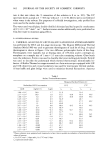
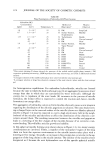
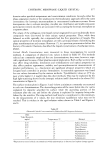
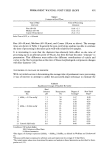
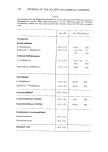
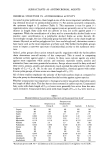
SURFACTANTS AS ANTIMICROBIAL AGENTS 735 CHEMICAL STRUCTURE VS. ANTIMICROBIAL ACTIVITY As noted in prior publication, chain length is one of the more important variables relat- ing chemical structure to antimicrobial activity (7). For anionic-saturated compounds, the optimum length is 12 carbons (Table I). This statement is true for gram (+) organisms alone since compounds active against yeast are generally one or two carbons shorter in length. Fatty acids with six carbons or less, are active against gram (-) organisms. While the esterification of a fatty acid to a monohydric alcohol leads to an inactive ester, esterification to a polyhydric alcohol forms an active biocide (8). Interestingly enough, the size of the polar group has little effect on the chain length op- timum. Glycerol, as well as polyglycerol (trL hexa and decaglycerol), derivatives seem to have lauric acid as the most important acyl fatty acid. The bulkier hydrophilic groups seem to impart a narrower spectrum of antimicrobial activity to the surfactant struc- ture. Indeed, polar groups direct action towards specific organisms while the hydrocarbon chain determines over-all activity of the compound. This is noted in comparing surfactant activity against gram (-) strains. In these cases cationic agents are active against most organisms while anionic and nonionic materials (esters, amides and minimides) have narrower germicidal activities. Except where noted for fatty acids and their esters, amines, amides and aminimides reach optimal biocidal activity with chain lengths of C•4-•C•6 (9, 10). In the case of aminimides, chemical agents with rather diverse polar groups, all were active at a chain length of C•6 (11). All of these studies emphasize the priority of the hydrocarbon chain as compared to the polar group in determining surfactant biocidal activity against a given species. Whether unsaturation was important to biological activity was greatly dependent upon the length of alkyl chain. This fact has not been stressed in earlier reports. Unsaturated fatty acids with chain length of C•2 or lower were generally less active than the satu- rated derivative. Unsaturated fatty acids with chain length of C•4 to C•8 were more ac- Table I Minimal Inhibitory Concentrations of Saturated and Unsaturated Fatty Acids a Streptococcus Streptococcus betahemolytic Pneumococci Group A non-A Candida S. Aureus Caproic NI NI NI NI NI Caprilic NI NI NI NI NI Captic 1.45 1.45 2.9 2.9 2.9 Lauric 0.062 0.124 0.249 2.49 2.49 Myristic 0.218 0.547 2.18 4.37 4.37 Myristoleic 0.110 0.110 0.110 0.552 0.441 Palmitic 0.48 3.9 3.9 NI NI Palmitoleic 0.024 0.098 0.049 0.491 0.983 Stearic NI NI NI NI NI Oleic NI 1.77 NI NI NI Elaidic NI NI NI NI NI Linoleic 0.044 0.089 0.089 0.455 NI Linolenic 0.179 0.35 0.35 NI 1.79 Linolelaidic NI NI NI NI NI Arachidonic NI NI NI NI NI a Results are given in mM. NI = not inhibitory at the concentrations tested (1.0 mg/ml or 3 to 6.0 mM).
Purchased for the exclusive use of nofirst nolast (unknown)
From: SCC Media Library & Resource Center (library.scconline.org)