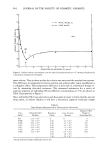
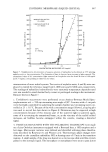
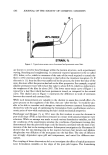
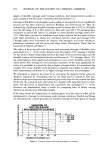
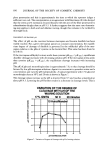
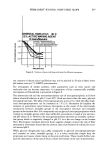
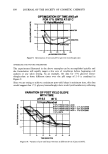
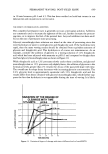
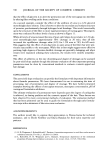
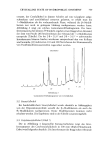
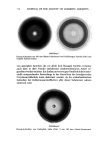
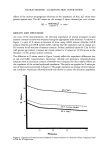
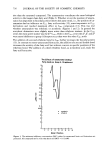
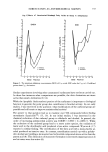
722 JOURNAL OF THE SOCIETY OF COSMETIC CHEMISTS 1.00 ACH vs AICI a (0.44M AI) .8O .7O 30 60 90 120 150 Minutes Figure 4. Impedance of aluminum salt treated membranes as a function of time. of guinea pig stratum corneum by a factor of five when compared to aluminum chloride. Studies from a number of authors (7, 22, 24-28) have established some of the fundamental physical and chemical characteristics required for epidermal penetration or sorption. Scheuplein (22) clearly showed that the barrier to skin permeability was the horny layer and that individual compounds show different permeability characteristics, dependent on their own particular properties of solubility and diffusion. Allenby et al. (13) established by in vitro experiments that the impedance of skin is localized in the horny layer. At low frequencies the impedance approximates the direct current resistance and polarization' is not a problem. Impedance in this case is largely determined by the resistance component of skin (11, 16) and this may be expected to correlate with ion mobility in the skin barrier. For the studies, an alternating current was used to •neasure the hypothetical sorption and/or permeation factors. The use of an alternating current overcomes problems of polarization of both membrane and electrodes by preventing increasing charge accumulation and the resultant falsely high, apparent resistance. However, the higher the alternating current frequency, the more readily current passes via capacitative channels which are not dependent on free ionic movement. Permeability and sorptive factors are thus better represented by the resistive current which dominates at low frequencies. Passage of any electric current at a voltage greater than 1-2 volts across human skin results in non-ohmic behavior indicative of damage to the stratum

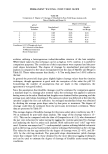
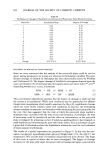
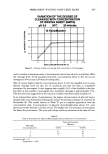
CHARACTERIZING ALUMINUM SKIN INTERACTION 723 corneum (14). Thus the low frequency, low voltage ac conductance can be employed to follow alterations in the barrier function of epidermal membranes during contact with various aluminum solutions. The observed impedance of an epidermal membrane is dependent on the concentration and nature of the current-carrying ions. Thus molarity, ionic strength and pH are important variables in these measurements. Unfortunately when dealing with aluminum compounds, it is often difficult to achieve constant values for all of the above parameters. Thus, within an experiment, values were selectively assigned. In the experiments conducted, each membrane was balanced or stabilized for impedance and this measure- ment was used as a reference for the test. The relationship of impedance values obtained to the type of excised membrane used has been reported (6, 11, 14, 29, 30). Tregear (6), using rabbit and guinea pig stratum comeurn reported values of 10-20 kilaohms. In the studies reported here, our ohmic values varied on the controls from 12.6 to 31.9 kilaohms. Thus good correlation with those reported in the literature was observed. Allenby et al. (13) extensively looked at the effects of both temperature and pH on the electrical impedance of skin. They found that between 25 and 60øC the impedance changes very little. Additionally, between the pH's of 5.0 and 8.0 little variation was noted. However dramatic reductions were noted at pH 2.0 and 10.0. In our experiments, a pH of 4.71 was maintained for the aluminum chlorohydroxide and the aluminum chloride solution was at pH 3.41. It should be noted that the major impedance change was observed with the aluminum chlorohydroxide at a pH value which is not as critical as the pH value of aluminum chloride in regard to impedance. Thus the differences observed in the role of these salts in altering skin impedance cannot be based merely on their self pH values but are based on their differences in their interaction with the tissue. The rates of aluminum chloride and aluminum chlorohydroxide binding to skin has been reported by Putterman et al. (31). These authors found that aluminum chlorohydroxide bound to guinea pig stratum corneum at twice the rate of aluminum chloride. Similar findings for these salts were reported by Fitzgerald and Rand (32) using Sephadex G-25 as the sorption media. Subsequent work by Fitzgerald (33,34) has reaffirmed that aluminum chlorohydroxide binds more quickly than aluminum chloride. Recalling that the Z values for aluminum chloride and aluminum chlorohydroxide are based on R 2, the resistive function of the plot, the differences observed between the salts should be a square of the change due to the sorption. Thus the AZ for aluminum chloride at 30 min was approximately 5% and the corresponding AZ for aluminum chlorohydroxide was roughly 25%. The magnitude is not an exact square since reciprocal frequency and capacitive functions are reflected in the Z values. From analyzing the impedance data and relating this data to recently established sorption times and rates for aluminum chlorohydroxide and aluminum chloride, it now can be stated that the aluminum chlorohydroxide does sorb more quickly than aluminum chloride and that this is shown directly by impedance changes. It now becomes apparent that the onset of antiperspirant activity can be related to the parameter of sorption which can be measured by the impedance change. SUMMARY AND CONCLUSIONS Instrumentation for measuring the electrical conductance of guinea pig skin has been developed. The results were reproducible and in agreement with other studies using similar
Purchased for the exclusive use of nofirst nolast (unknown)
From: SCC Media Library & Resource Center (library.scconline.org)