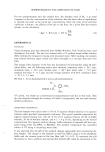
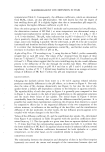
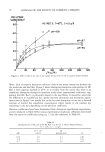
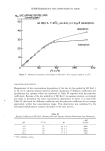
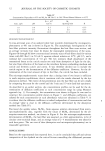
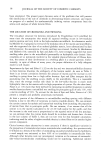
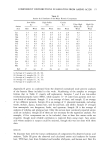
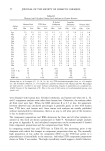
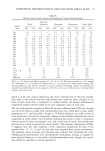
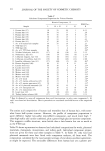
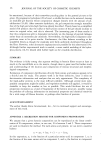
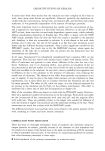
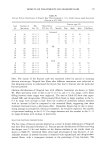
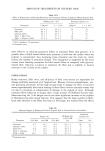
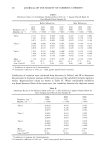
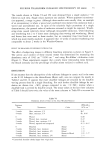
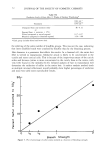
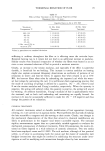
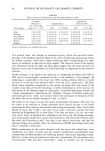
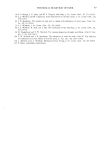
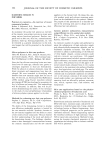
24 JOURNAL OF THE SOCIETY OF COSMETIC CHEMISTS Table V Calculated Component Proportions for Various Keratins Keratin Components, % Sample L H + X C G RMS Dev., R 1. Human hair (27) 38 35 26 1 2. Human hair (35) 48 34 17 1 3. Human hair (38) 45 36 19 0 4. Human hair (39) 38 45 15 2 5. Human hair (40) 49 33 16 2 6. Human hair (41) 47 38 15 0 7. Av. of 6 human hair samples 44 35 19 2 8. TTD hair (27) 80 5 15 0 9. TTD hair (28) 91 3 6 0 10. Av. of 2 TTD hair samples 86 4 10 0 11. X-linked ichthyosis, hair (41) (57) (0) (38) (5) 12. Netherton's, hair (41) (38) (7) (49) (6) 13. Ichthyosis vulgaris, hair (41) (43) (0) (45) (12) 14. Ichthyosis circumflexa, hair (41) (39) (0) (49) (12) 15. Lamellar ichthyosis, hair (41) (57) (38) (5) (0) 16. Human fingernail (40) 69 12 8 11 17. Lincoln wool (42) 66 30 4 0 18. Lincoln•wool (43) 70 28 2 0 19. Merino wool (44) 53 21 14 12 20. Merino wool (42) 63 26 2 9 21. Merino wool (45) 65 25 4 6 22. Merino wool (46) 58 34 0 8 23. Av. of 6 wools 62 28 4 6 24. Av. of 5 merino orthocortex (45) 63 23 8 6 25. Av. of 5 merino paracortex (45) 59 33 7 1 26. Av. of 11 placental mammals (35) 57 26 12 5 27. Av. of 4 marsupials (35) 62 16 12 10 28. Av. of 2 monotremes (35) 41 29 16 14 29. Lizard claw (47) (0) (13) (23) (64) 30. Turkey feather calamus (48) (27) (0) (51) (22) 0.13 .28 .29 .33 .44 .47* .23 .46* .62* .50* 2.35 2.11' 1.95 2.08 .84* .49 .23* 32* 25* 24* 23* 29* 10' 20* 33* 24* .48 .66 3.22 2.13 * Best fit ogtained by using all components from wool fractionations in other cases components L, H, and C were from hair fractionation. Data in parenthesis are considered unreliable because of the magnitude of R. The amino acid composition of human nail resembles that of human hair, with some- what lower half-cystine content. However, the profile of component porportions is quite different: higher low-sulfur (microfibril) component, and much lower high + ultra-high sulfur and cuticle combined, plus a greater high glycine-tyrosine component. This suggests a stiffer structure, more brittle than a hair keratin but not so much so as the TTD hair. Table IV shows representative observed and calculated compositions for wools, placental mammals, marsupials, monotremes, and turkey quill. Individual component propor- tions are given for these and other samples in Table V. In Table IV, only wool and placental mammals were best fitted with component analyses, all from wool. The composition calculated for the wool sample (average of six) shows excellent agreement, as might be expected. The noticeable differences from human hair are a greater pro-

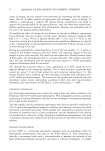
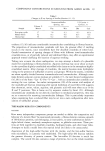
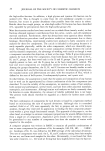
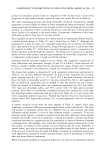
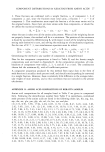
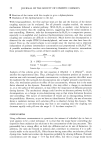
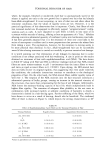
COMPONENT DISTRIBUTIONS IN KERATINS FROM AMINO ACIDS 25 portion of low-sulfur protein (62% as compared to 44% for hair) and a much lower proportion of high-sulfur proteins, especially when the cuticle fraction is added in. The other mammalian keratins also show reasonable calculated compositions, though agreement is worse (higher R values) as lower mammalian orders are reached. Notable in the proportions of components is an increase in both cuticle and high glycine-tyrosine proteins. A component richer in proline and glycine, and deficient in serine and thre- onine, seems to be missing in the lower orders. A taxonomic correlation of this kind, with more extensive data, may be of some interest. Two examples are given of keratins not closely related to mammalian fibrous keratins: a feather keratin shown in Table IV, and a lizard claw in Table V. Although the regression fit is poor for both, the component proportions are of interest. The feather has a large amount of cuticle-like protein, along with high glycine, as can be seen from the analysis in Table IV. Aside from structural arguments, such a composition for feather may have useful hydrophobic behavior. The lizard claw is unusual in its apparent absence of low-sulfur protein and the high proportion of cuticle-like component. Such a composition would suggest a tough non-brittle polymer. Although detailed calculated analyses are not shown, the component composition of wool orthocortex and paracortex, samples 24 and 25 in Table V, show expected dif- ferences, notably a higher sulfur level for the paracortex region. Human hair, exclusive of cuticle, is thought to be paracortex, though not necessarily of this composition. The human hair samples in Appendix II, with component proportions summarized in Table V, are all from different laboratories. In spite of this, regression fits are,,fairly good, ranging from R's of. 13 to .47. An R of 0.5 has been arbitrarily selected as about the limit of reasonably good fit to the data beyond this there is the suggestion that an additional component may be needgd or that the analyses are not accurate. From the average of 6 human hairs, the component proportions are 44% low sulfur, 35% high and ultra-high sulfur, and 19% cuticle, with 2% high glycine-tyrosine proteins. Since there is considerable correlation between the composition of the. high and ultra-high sulfur components and the cuticle (see Table II), it is not certain how much component spillover may occur. Normal hair has been found by fractionation to contain about 40% high-sulfur proteins (27), in good agreement with the calculated amounts. A similar situation occurs with the wool samples of Table V, namely fairly large component proportion differences among samples from various laboratories. The orig- inal analyses in Appendix II bear this out. Whether one can take seriously individual differences among analyses, in view of their different origins, is uncertain. To do this properly would require a number of analyses from the same laboratory using samples prepared identically. Under such conditions, it should be possible to attempt significant correlation between the composition and the mechanical or chemical behavior of normal or damaged hair. For example, since many hair treatments require substantivity to the hair surface, an estimate of the amount of cuticle fraction may be of use. Similarly, as argued before, hair with an overabundance of microfibrils may be more brittle, or hair with an excess of matrix may be tough but flabby. Coupling of component proportions with appropriate mechanical models should provide a base of knowledge to facilitate safer and more effective treatments. Before leaving the problem of component definition, one other set of experiments should
Purchased for the exclusive use of nofirst nolast (unknown)
From: SCC Media Library & Resource Center (library.scconline.org)