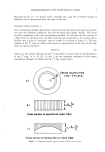
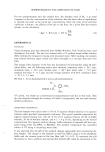
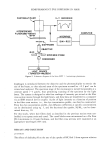
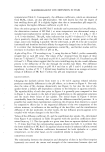
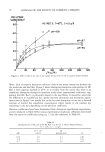
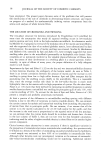
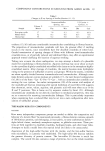
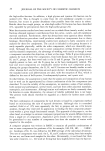
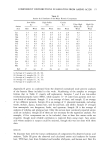
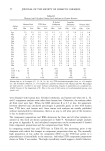
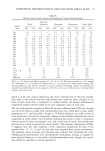
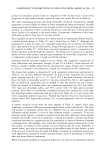
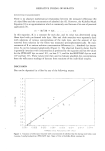
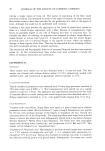
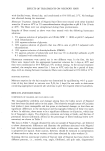
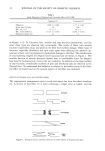
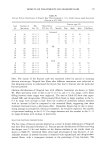
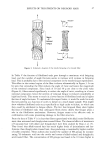
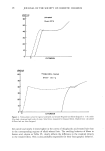
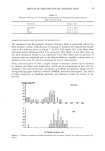
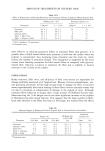
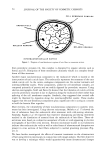
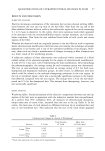
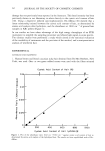
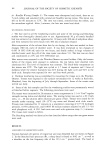
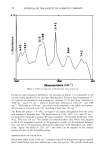
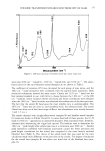
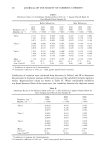
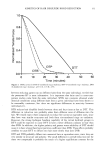
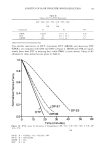
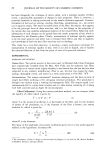
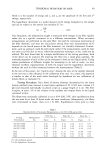
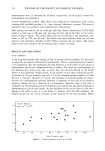
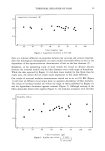
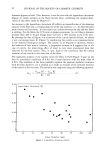
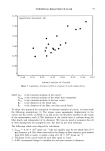
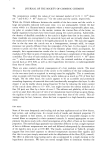
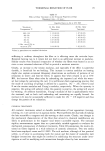
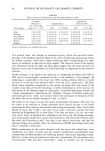
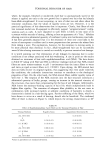
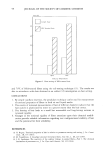
EFFECTS OF TREATMENTS ON NEGROID HAIR 47 Tension Resulton• • Torsion Reo•iøn -torsional fatigue Torsion I• I Resultant Tension Figure 3. Schematic diagram of the tensile fatiguing of a twisted fiber. In Table V the fraction of fibrillated ends goes through a maximum with fatiguing load, and the number of angle fractures seems to increase with increase in fatiguing load. This is probably due to the torsional component in the tensile fatigue experiments. This effect in the twisted region of the fiber is shown schematically in Figure 3. It can be seen that extending the fiber reduces the angle of twist and hence the magnitude of the torsional component. Since loads of 30 and 40 g are close to the yield value (Figure 4), fibers extend significantly to reduce the angle of twist, resulting in a lower torsional component hence the severity of torsional fatigue is reduced considerably at high load levels. This seems to result in a lower fraction of fibrillated ends and a higher fraction of angle fractures. To understand this aspect better, it would be useful to study fracture patterns as a function of cycles to failure on a much larger sample. This might show whether fibrillated ends occur specifically at high cycles to failure, in which case they could be attributed to fatigue effects. The fact that fatigued fibers show higher fractions of fibrillated ends than unfatigued fibers shows clearly that fatigue plays a role in the fibrillation mechanism. However, fatigue seems to be effective only in combination with some preexisting damage to the fiber structure. From the data of Table V it is clear that fibers superrelaxed with alkali resist fibrillation more than untreated and thioglycolate-treated fibers. The chemical effects of treatments of Caucasian hair with alkali and thioglycolate have been studied by Chao eta/. (5). They found that alkali-treated hair has much higher levels of lysinoalanine and lan- thionine than thioglycolate-treated hair, thus producing a considerably higher number of stable crosslinks. These authors also studied the number of SH groups by incorpo- rating 3H-iodoacetic acid into the cuticle and cortex of alkali-relaxed and thioglycolic acid-treated fiber. The concentration of SH groups was found to be 10 times higher in

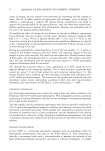
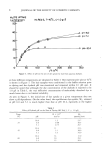
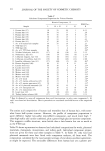
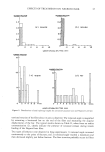
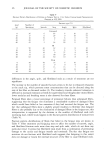
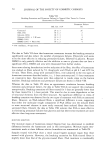
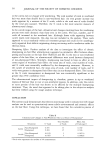
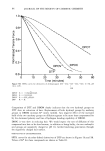
48 JOURNAL OF THE SOCIETY OF COSMETIC CHEMISTS LOAD 50 40 3O 20- I0- /i///'•/• i// Untreated Strain= 3.5 % EXTENSION LOAD (g) 60 50 40 3O I 20 I I I / I0 / / / o o Thioglycolate- treated Strain = :5.1 I / / I EXTENSION Figure 4. Stress-strain curves for typical untreated and treated Negroid hair fibers fatigued to 11 kc under 30-g load, showing high levels of creep. Solid lines: measured for fatigued fibers. Dashed lines: calculated if fibers had not been fatigued. the cuticle and nearly 4 times higher in the cortex of thioglycolic acid-treated hair than in the corresponding regions of alkali-relaxed hair. The swelling behavior of fibers in formic acid, shown in Table VI, clearly reflects the difference in the crosslink density in the treated fibers. This is also probably responsible fbr their fractographic behavior.
Purchased for the exclusive use of nofirst nolast (unknown)
From: SCC Media Library & Resource Center (library.scconline.org)