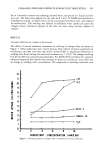
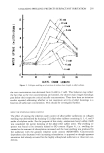
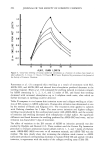
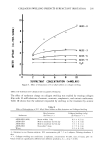
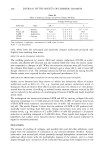
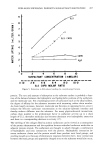
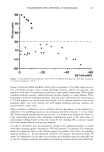
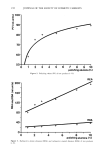
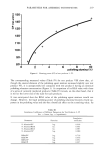
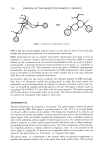
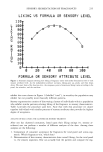
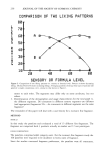
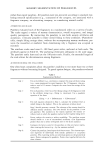
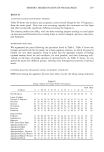
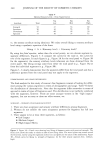
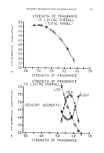
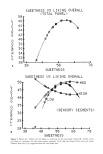
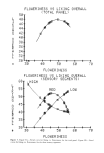
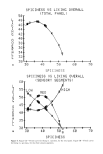
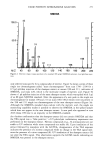
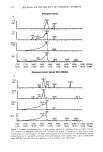
234 JOURNAL OF THE SOCIETY OF COSMETIC CHEMISTS to possess its own needs and wants. One can segment individuals on the basis of demo- graphics (age, income, market) and on the basis of usage pattern (favorite perfume), purchase pattern (stores at which one purchases perfumes), or lifestyle/values (e.g., one's own self image, types of magazines read, etc.). However, these ways of seg- menting do not address the issue of sensory preferences and their variations in the population. The traditional marketing segments may explain differences in the purchase of one fragrance over another, but they rarely explain the significant differences in sensory preference .,among individuals. SENSORY PREFERENCES SEGMENTATION Another way of looking at individual differences consists of accepting the fact that there are probably different segments of individuals in the population, exhibiting distinct and different likes and dislikes. If we can determine which sensory characteristics of a fragrance drive acceptance for each segment, it becomes possible to understand why these individuals differ from each other (e.g., the contribution of sensory factors). One can classify individuals as acceptors vs. rejectors of different sensory notes. After discov- ering these preference segments (responding to different notes of the fragrance), one can look at the distribution of these segments in a specific population. If such an approach succeeds, then the researcher, perfumer, and fragrance marketer have come a step closer to understanding what sensory notes of a fragrance make a specific perfume appeal to some individuals and repel others. (However, this segmentation may require additional correlational analysis with lifestyle, usage, and biological factors for further under- standing). GENERAL APPROACH TO SEGMENTATION Scientific research demonstrates that as the sensory characteristics of a stimulus change, acceptance will vary. If the researcher has the luxury of holding all variables constant but one, and increasing that variable throughout the entire range, then it becomes possible to correlate changes in liking with changes in physical level (or corresponding changes in sensory level). Figure 1 shows an idealized curve, wherein the researcher held all variables constant but one and increased the level of the stimulus. The ratings for liking from the entire panel average out to an inverted U-shaped curve, with an intermediate optimum. In reality, the smooth inverted U-shaped curve in Figure 1 comes from averaging a distribution of individual curves, such as those shown in Figure 2 (also theoretical curves). Although we compute an average curve, in reality individuals may differ quite dramatically from one another. One individual may show peak liking at the lowest formula (or sensory) level, whereas another individual may show peak liking at the highest formula (or sensory) level. Averaging these individuals together would generate the smooth curve shown in Figure 1. SEGMENTING CONSUMERS ACCORDING TO INDIVIDUAL LIKING CURVES Figure 2 shows two hypothetical panelists, who exhibit quite different liking curves vs. a sensory attribute (e.g., fioweriness of the fragrance). Although the total panel might

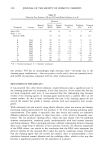
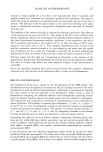
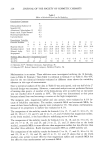
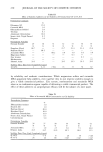
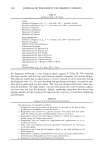
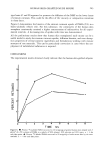
SENSORY SEGMENTATION OF FRAGRANCES 235 LIKING US FORMULA OR SENSORY LEVEL 118 L 188 K I 88 N 78 G G8 R 58 A 48 T I •8 N •8 G 18 8 0 20 40 60 80 100 FORMULA OR SENSORY ATTRIBUTE LEVEL Figure 1. Schematic diagram showing how liking of fragrance varies with either formulation level or with sensory attribute level. As the independent attribute increases, liking goes up, peaks, and then drops down. The exact form of the function (viz., the steepness, point of maximum liking) varies according to the panel, the stimulus, and the attribute. exhibit the curve shown in Figure 1 (labelled "total"), in actuality the population may exhibit two (or possibly more) basically different patterns. Sensory segmentation consists of discovering clusters of individuals within a population who exhibit similar patterns relating liking of the fragrance to sensory characteristics. Table I provides the procedure used here. Note that with this procedure we cluster together individuals with similar patterns of sensory attributes that provoke the highest degree of acceptance. ANALYSIS OF DATA USING THE CLUSTERS OR SENSORY SEGMENTS After one has clustered consumers, based upon their liking ratings (vs. sensory at- tributes) one can perform a number of different analyses of the data. Among these analyses are the following: 1. Comparison of consumer acceptance for fragrances for total panel and across seg- ments. Which fragrances win, which lose? 2. Determination of how sensory characteristics drive overall liking, for the total panel vs. the sensory segments. One can actually find the pattern and compare the seg-
Purchased for the exclusive use of nofirst nolast (unknown)
From: SCC Media Library & Resource Center (library.scconline.org)