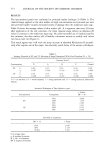
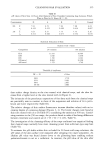
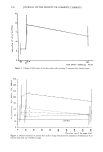
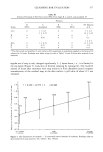
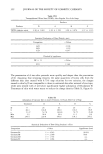
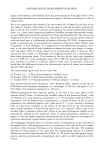
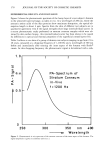
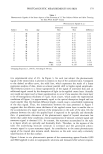
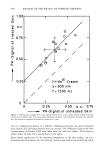
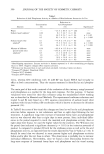
370 JOURNAL OF THE SOCIETY OF COSMETIC CHEMISTS MATERIALS AND METHODS SUBJECTS Nearly 400 volunteers participated in this study. These were mostly healthy females, ages 5 to 88. Informed consent was obtained. THE ADHESIVE FILM Sebutape © (CuDerm, Corp., Dallas, Texas) consists of a hydrophobic, polymeric film within which there are innumerable, tiny air cavities. The surface is coated with a lipid-porous adhesive which enables the tape to be sealed to the skin during the period of collection (5). As sebum reaches the skin surface, it is rapidly absorbed into the tape. As the air within the microcavities is displaced by sebum, the lipid-filled cavities become transparent to light. The output from each follicle forms a sharply defined spot, whose size corresponds to the volume of the droplet. METHOD OF USE The surface is ordinarily prepared by soap and water washing to remove debris and lipid. For greater accuracy, complete defatting can be obtained by wiping with a gauze pad soaked in hexane. The collection period ranged from one to three hours with the subjects sitting quietly. After removal, the film can be handled in different ways ac- cording to the information and precision desired. The pattern of droplets can be imme- diately photographed or the adhesive film may be smoothed out on a glass slide or other non-absorbent surface for a permanent record. The lipid can also be extracted from the film to determine the amount and composition of sebum. Although differences in the size and distribution of sebum droplets can be appreciated by simple inspection, they can be quickly quantified by means of an image analyzing computer such as the Magiscan (6). The program and results obtained by using this system will be described in a separate publication. ANALYSIS OF LIPIDS BY THIN-LATER CHROMATOGRAPHY Prior to extraction, the droplet pattern was recorded by macrophotography with a 35-mm SLR camera using Kodak Hi-Contrast Copy Film. These photographs may also be used for image analysis. The tape was cut into 2 X 2-cm squares and placed in Teflon-lined, screw-capped vials containing 2 ml of hexane with 50 •g of methyl nervonate as an internal standard. After sonication in a Bransome Sonicator for five minutes, the fluid was transferred to another flask and resonicated in an additional 2 ml of hexane followed by vacuum evaporation at 40øC. The samples were stored at -20 ø until processed for thin layer chromatography (TLC) according to the procedure of Ruggieri et al. (7). MEASUREMENT OF SEBUM PRODUCTION Results obtained by hexane extraction of Sebutape were compared to those obtained with the gravimetric technique routinely used in our laboratory (7). The latter entails

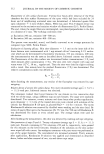
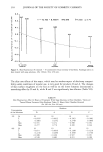
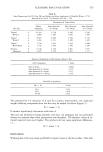
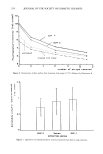
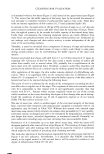
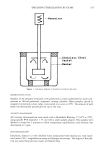
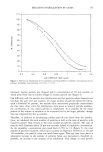
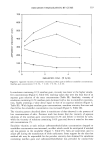
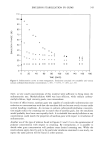
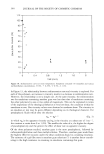
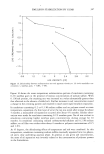
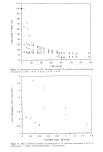
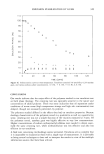
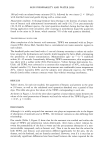
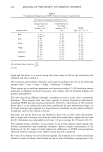
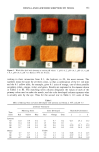
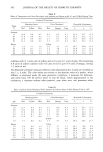
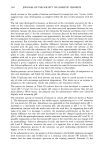
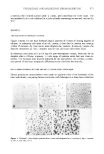
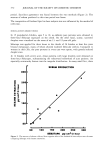
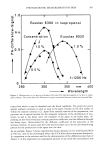
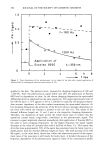
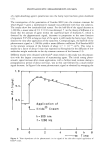
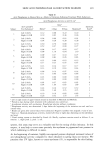
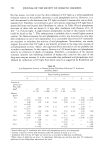
VISUALIZING AND MEASURING SEBUM SECRETION 371 protecting the defatted surface under a plastic, perforated boat for three hours. The accumulated lipids were collected in a glass cylinder containing hexane and analyzed by TLC. RESULTS VISUALIZATION OF DROPLET PATTERNS Figure 1 shows the one hour forehead droplet patterns of women of varying degrees of oiliness. In sebaceous rich areas of an oily person, a clear droplet pattern may emerge within 15 minutes. By three hours, some droplets may coalesce. In non-oily people who describe themselves as "dry," droplets may be tiny and scarce after three hours. In sebaceous poor areas such as the leg of a post-menopausal woman, there may be no droplets after a 24-hour exposure. A wide range of patterns exists between these ex- tremes. The exposure time must be adjusted for site and subject. On the face, a collec- tion period of one hour adequately differentiates the oily from the non-oily. COMPARISON OF SEBUTAPE WITH THE HEXANE EXTRACTION TECHNIQUE Sebum production measurements were made on opposite sides of the foreheads of the nine individuals, comparing hexane extraction with Sebutape in a three-hour collection a Figure 1. Forehead, 1 hour droplet patterns from women self-designated as: a, very dry b, dry c, normal d, oily e, very oily. (2 x ).
Purchased for the exclusive use of nofirst nolast (unknown)
From: SCC Media Library & Resource Center (library.scconline.org)