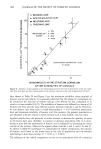
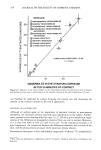
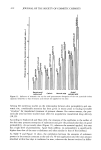
384 JOURNAL OF THE SOCIETY OF COSMETIC CHEMISTS The pH levels in this study varied over a wide range. Future research should examine the effects of chlorination at more subtle variations of pH in the neutral region, where most chlorination of human hair occurs. REFERENCES (1) (2) (3) (4) (5) (6) (7) (8) (9) (lO) (11) (12) (13) 14) 15) 16) 17) 18) 19) N. B. Fair and B. S. Gupta, The chlorine-hair interaction. I. Review of mechanisms and changes in properties of keratin fibers, J. Soc. Cosmet. Chem., this issue. Shrink-resist processes for wool: Part II. Commercial methods, Wool Sci. Rev., 18, 18-37 (1960). K. R. Makinson, Shrinkproofing of Wool (Marcel Dekker, New York, 1979). M. W. Andrews, A. S. Inglis, and V. A. Williams, Chemical changes in the cuticle of oxidized wool, Text. Res. J., 36, 407-412 (1966). J.P. Faust and A. H. Gower, Water-treatment of swimming pools, Kirk-Othmer Encyclopedia of Chem- ical Technology, Vol. 22, 2nd ed., (Interscience Publishers, New York, 1970), pp. 124- 134. F. L. Strand, Swimming Pool Operation Manual (National Swimming Pool Institute, Washington, D.C., 1967). J. Lindberg and N. Gralen, Measurement of friction between single fibers. iI. Frictional properties of wool fibers measured by the fiber-twist method, Text. Res..]., 18, 287-301 (1948). N. Fair and B. S. Gupta, Effects of chlorine on friction and morphology of human hair,J. Soc. Cosmet. Chem., 33, 229-242 (1982). J. A. Maclaren and B. Milligan, Wool Science. The Chemical Reactivity of the Wool F•bre (Science Press, Marrickville, N.S.W., 1981), pp. 289-291. W. E. Morton and J. W. S. Hearle, Physical Properties of Textile Fibers, 2nd ed. (Halsted Press, New York, 1975), a. p. 410, b. pp. 454-455. J. Lindberg and N. Gralen, Measurement of friction between single fibers. lV. Influence of various oxidizing agents on the frictional properties of wool fibers, Text. Res. J., 19, 183-201 (1949). A. K. van der Vegt and G. J. Schuringa, The relation between wool felting and single fiber proper- ties, Text. Res. J., 26, 9-16 (1956). M. Harris and D. Frishman, Some aspects of the chlorination of wool to produce shrink resistance, Am. Dyest. Rep., 37, P52-56 (1948). J. H. Bradbury, The theory of shrinkproofing of wool. II. Chemical modification of the fiber surface and its effect on felting shrinkage, friction and microscopic appearance, •xt Rer. J., 31, 735-743 (1961). J. H. Bradbury, G. E. Rogers, and B. K. Filshie, The theory of shrinkproofing of wool. V. Electron and light microscopy of wool fibers after chemical treatments, Text. Res. J., 33, 617-630 (1963). A. Hepworth, J. Sikorski, D. J. Tucker, and C. S. Whewell, The surface topography of chemically treated wool fibres,J. Text. Inst., 60, 513-546 (1969). J. R. McLaughlin and W. S. Simpson, "Rate Studies of the Chlorination of Wool," in Fibrous Pro- terns.' Scientific, Industrial and Medical Aspects, Vol. 2, D. A. D. Parry and L. K. Creamer, Eds. (Aca- demic Press, New York, 1980), pp. 213-225. G. Valk, Reaction between chlorine and wool proteins, Part I: Nature of the chemical modification of wool including proteins from reaction liquors, Proc. 3rd Intl Wool Text. Res. Conf,, Paris, 2, 371-381 (1965). A. Kantouch and S. H. Abdel-Fattah, Oxidation of wool with chlorine and some chlorinated com- pounds, Appl. Polym. Symp., 18, 317-323 (1971).

j. Soc. Cosmet. Chem., 38, 385-396 (November/December 1987) Decomposition of linalool by cosmetic pigments H. FUKUI, R. NAMBA, M. TANAKA, M. NAKANO, and S. FUKUSHIMA, Shiseido Laboratories, I050, Nippa-cho, Kohoku-ku, Yokohama-shi, Japan 223. Received July 6, I987. Presented at the Catalysis Meeting, Sapporo, Japan, October, 1983. Synopsis The reaction between pigments and linaIool, which is a common component of perfumes, was carried out with a microcatalytic reactor at 178øC. Most of the linalool was decomposed by these pigments with high catalytic activity, and the decomposition products differed depending on the nature of the pigment. The decomposition products were identified by mass spectroscopy and infrared spectroscopy showing that these products were dehydrated linalool such as myrcene, ocimene, and alloocimene, and cyclized products such as limonene, terpinolene, and alpha-terpinene. Furthermore, p-cymene was produced by those pigments having a high catalytic activity. The following decomposition mechanism is suggested for linalool from the decomposition products: Dehy- drated linalool is formed via a carbonium ion intermediate formed on acidic sites on the pigments, and cyclized products are formed after allyl rearrangement. Finally, p-cymene, which is a main cause of un- pleasant odor in some pigmented cosmetics, is formed by dehydrogenation of the cyclized products. INTRODUCTION If metal oxides and clays having catalytic activity are used as pigments for cosmetics, other components in the products, for example, perfumes, oils, and medicaments may be decomposed. In the case of perfumes, the isomerization of 2-pinene over solid acids (1) and the reaction of d-limonene oxide over solid acids or bases (2) have been reported by Tanabe. Dehydrogenation of d-limonene to p-cymene in the presence of sodium was studied by Pines and coworkers (3). Investigations of such reactions have been under- taken to clarify the catalytic action related to perfume synthesis, while deterioration of the perfume in cosmetics, wherein perfumes and pigments exist together, have been scarcely studied. Holzner investigated the degradation of linalool and linalyl acetate by kaolinire and talc. However, he did not describe decomposition products (4). Previously we reported the dehydration and dehydrogenation of isopropyl alcohol and isomerization and polymerization of propylene oxide over pigments using a microcata- lytic reactor (5-8). The microcatalytic reactor is the most suitable method for mea- suring the decomposition of perfumes over pigments since it permits rapid quantitative evaluation of the decomposition reaction. Furthermore, this analytical method has been established by Basserr et al. (9). We selected linalool as the perfume to study because it 385
Purchased for the exclusive use of nofirst nolast (unknown)
From: SCC Media Library & Resource Center (library.scconline.org)