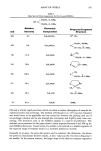
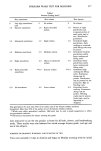
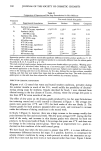
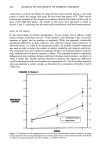
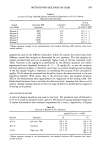
358 JOURNAL OF THE SOCIETY OF COSMETIC CHEMISTS grading, selection, and assignment of subjects, immediately followed by the first wash. Wash sessions (described below) continued morning and afternoon, with the first after- use grading on Friday afternoon (three hours after the ninth wash session and just before the tenth). Sessions then continued twice a day until noon the next Friday (after the 23rd wash session) when the final grading took place. Grading was always scheduled at least three hours after the preceding wash session to assure that the forearms were dry when examined by the grader or tested for transepidermal water loss. This also provides time for any residual perfume on the skin to dissipate, so that the blinding of the grader would not be compromised. WASH PROCEDURES The wash protocol was derived from habit information and by timing the various steps as a group of one hundred consumers washed their forearms. Therefore, the wash pro- tocol is believed to reflect more realistic conditions of product exposure. For example, most people utilize a wash cloth and bathe either once or twice each day. In these observations, the lather-on-towel procedure by consumers averaged six seconds and the wash of the forearm averaged ten seconds. All washings were performed at the test facility either by a technician or by the subjects themselves under supervision of a monitor to assure uniform washing and correct product usage. The water used in all applications (wet, wash, rinse) was controlled at 6-8 grain hardness and kept at 90-100øF. The procedure was as follows: Wet the left forearm liberally with the running water wet a non-woven paper towel (Masslinn Towel, Chicopee Mills, New Brunswick, N.J.) wet the bar rub bar on towel in a six-second lather workup rub lathered towel on the volar surface of the forearm with moderate pressure, going from wrist to elbow joint and back in about one second, for a total of ten seconds discard towel and allow lather to remain on the skin for an addi- tional ninety seconds rinse thoroughly for fifteen seconds pat forearm dry with a paper towel. The process was then repeated with the right forearm. Under certain environmental conditions (discussed below), the wash procedure involved four washes per day: two at the morning visit and two in the afternoon. At each visit, there was a five minute "rest period" after the first wash, and the entire washing proce- dure was repeated. EVALUATION OF SKIN CONDITION During the grading sessions, the same trained examiner evaluated both forearms of each subject with the aid of a Luxo Illuminated Magnifying Lamp (Model KFM-1A) which provided 2.75 X magnification and which had a shadow-free circular fluorescent light source (General Electric Cool White, 22 watt 8" Circline). Grades were assigned for redness (visual assessment), dryness (visual assessment), and smoothness (tactile assess- ment), using a seven-point scale (see Table I) with lower grades indicating better skin condition. Any subject exhibiting excessive skin dryness or redness (i.e., a grade of 5 or higher for either parameter) anytime during the study was not allowed to continue with treatment. To avoid bias in such cases, the maximum observed grade was retained in the data set and included in the final analyses. At the final grading session, the subjects also evaluated the skin of each of their own

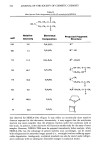
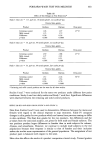
FOREARM WASH TEST FOR MILDNESS 359 forearms. They used visual, tactile, and sensory assessments of softness, dryness, flaking, itching, clean feel, and mildness of the test products. These attributes were rated on a nine-point scale, -4 to + 4, on which negative values indicated poor skin condition and positive values indicated good skin condition. Transepidermal water loss (TEWL) measurements were made with a single-probe evaporimeter (Servo-Med, Stockholm, Sweden, Model EP-1C) equipped with a glass chamber filled with LiC1 dessicant to eliminate air currents and maximize flux. The probe was held in contact with the midpoint of the volar aspect of the forearm for 60 seconds to obtain a reading at equilibrium. STATISTICAL ANALYSIS Pair test. The paired t-test was used on the one-week and two-week skin grades to test for significant treatment effects. Single product tests. An analysis of covariance was performed on the one-week and two- week skin grades for each test product, using the initial grade as the covariate. Fol- lowing this analysis, p-values were calculated for comparison of the adjusted treatment means. RESULTS AND DISCUSSION EFFECT OF FORMULATION VARIABLES (STUDY 1) Table II gives the smoothness, redness, and dryness final-grade means for the ten exper- imental bar soap formulations tested in a single product format in Study 1. These experimental formulations included three mixed soap/synthetic bars and seven soap bars which varied in tallow-coconut ratios (from 100% tallow to 100% coconut), with and without superfatting. Superfatted bars are made with free fatty acid in excess of the caustic component. Clinical results indicate that skin mildness improves with increasing tallow content and decreasing coconut content. A correlation coefficient (r = 0.97) was calculated for the composite grades (average of smoothness, redness, and dryness grades for a product) of the unsuperfatted formulations in Table II vs. tallow-coconut ratio. The composite grades for the all-tallow and the all-coconut formulations are significantly different at p = 0.02. The grades in Table II also indicate that superfatted formulas are milder than unsuperfatted formulas as shown by a comparison of 87T/13Cn with and without su- perfatting. This effect has been confirmed in subsequent paired-comparison studies. Furthermore, skin grades indicate that synthetic formulations range from very mild to very irritating. For example, a soap/synthetic formulation containing only AGS (alkyl [c-12] glyceryl ether sulfonate) was milder than a soap/synthetic formulation containing AGS and AS (alkyl [c-12,14] sulfate) with respect to smoothness (p = 0.03), redness (p = 0.06), and dryness (p = 0.21). This result was consistent with our finding that AS was a more irritating surfactant than AGS in guinea pig patch testing (unpublished results).
Purchased for the exclusive use of nofirst nolast (unknown)
From: SCC Media Library & Resource Center (library.scconline.org)